

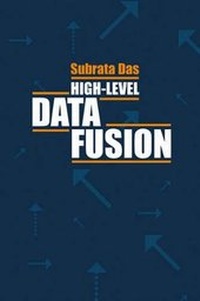
High-Level Data Fusion
Published in June 2008
Book
Hardback
350 pages
978-1-59693-281-4 (ISBN)
Description
Data fusion technologies produce incredibly powerful situation assessment tools with widespread military and non-military applications. This cutting-edge book arms the fast-growing field of fusion system developers and researchers with the essential tools and latest techniques they need to develop next-generation fusion services, select algorithms and software, simulate performance, and evaluate systems with never-before effectiveness. The book explores techniques for applications such as target classification/identification and unit aggregation, assessing their suitability and capabilities in each case. Moreover, it spotlights emerging technologies like particle filtering, clustering, net-centricity, agent formalism, and distributed fusion.
More details
Edition
Unabridged edition
Language
English
Place of publication
Norwood
United States
Target group
Professional and scholarly
Edition type
Unabridged edition
ISBN-13
978-1-59693-281-4 (9781596932814)
Copyright in bibliographic data and cover images is held by Nielsen Book Services Limited or by the publishers or by their respective licensors: all rights reserved.
Schweitzer Classification
Other editions
Additional editions
Subrata Das
High-Level Data Fusion
E-Book
01/2008
1st Edition
Artech House
€139.99
Available for download
Person
Subrata Das is the chief scientist at Charles River Analytics, Inc. in Cambridge, MA, where he leads projects in data fusion, decision-making under uncertainty, intelligent agents, computational artificial intelligence, and machine learning. Dr. Das received his Ph.D. in computer science from Heriot-Watt University, Scotland and his M.Tech degree from the Indian Statistical Institute, Kolkata, India.
Content
Background and Concepts.; Approaches to Handling Uncertainty.; Target Tracking.; Target Classification and Identification.; Unit Aggregation.; Model-Based Situation Abstraction.; Modeling of Time for Situation Assessment.; Level 2 Feedback for Enhanced Level 1 Fusion.; Performance Evaluation.; Distributed Situation Assessment.; References.