

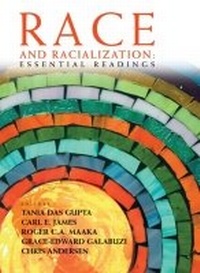
Race and Racialization
Essential Readings
Published on 30. December 2007
Book
Paperback/Softback
384 pages
978-1-55130-335-2 (ISBN)
Description
This provocative volume will influence the way people think of race and racialization. It provides a thorough examination of these complex and intriguing subjects with historical, comparative, and international contributions.
Edited as a theoretically strong, cohesive whole, this book unites a remarkable ensemble of academic thinkers and writers from a diversity of backgrounds. Themes of ethnocentrism, cultural genocide, conquest and colonization, disease and pandemics, slavery, and the social construction of racism run throughout.
Edited as a theoretically strong, cohesive whole, this book unites a remarkable ensemble of academic thinkers and writers from a diversity of backgrounds. Themes of ethnocentrism, cultural genocide, conquest and colonization, disease and pandemics, slavery, and the social construction of racism run throughout.
Reviews / Votes
Before the publication of this book, there was no focused text on racism that challenged the established orthodoxy of the liberal multiculturalist agenda of assimilation and cultural genocide of Indigenous peoples."" - Gerald Taiaiake Alfred, Indigenous Peoples Research Chair, University of VictoriaMore details
Language
English
Place of publication
Toronto
Canada
Dimensions
Height: 279 mm
Width: 216 mm
ISBN-13
978-1-55130-335-2 (9781551303352)
Copyright in bibliographic data and cover images is held by Nielsen Book Services Limited or by the publishers or by their respective licensors: all rights reserved.
Schweitzer Classification
Persons
Lead editor Tania Das Gupta is an established Canadian scholar and Professor of Sociology in the Department of Equity Studies in the Faculty of Liberal Arts & Professional Studies at York University. Her research interests are in race, migration, diaspora as well as women and work.
>Carl E. James, a respected academic and experienced author, teaches in the Faculty of Education and also in the Department of Sociology at York University. His research interests include equity as related to race, class, gender and citizenship.
Roger C.A. Maaka is Head of Native Studies at the University of Saskatchewan. He is a respected academic from New Zealand, a Maori expert and scholar. Dr. Maaka's research interests include Indigenous Peoples' quest for equity.
Grace-Edward Galabuzi is Associate Professor at Ryerson University in the Department of Politics and Public Administration.
Chris Andersen is Metis from Saskatchewan, and Associate Professor at the Faculty of Native Studies, University of Alberta.
>Carl E. James, a respected academic and experienced author, teaches in the Faculty of Education and also in the Department of Sociology at York University. His research interests include equity as related to race, class, gender and citizenship.
Roger C.A. Maaka is Head of Native Studies at the University of Saskatchewan. He is a respected academic from New Zealand, a Maori expert and scholar. Dr. Maaka's research interests include Indigenous Peoples' quest for equity.
Grace-Edward Galabuzi is Associate Professor at Ryerson University in the Department of Politics and Public Administration.
Chris Andersen is Metis from Saskatchewan, and Associate Professor at the Faculty of Native Studies, University of Alberta.
Content
Preface
Part 1: Race Through Time
Part 1A: Early Theories of Race
Chapter 1: Race and Progress, Franz Boas
Chapter 2: The Concept of Race, Ashley Montagu
Chapter 3: The Classification of Races in Europe and North America: 1700-1850, Michael Banton
Part 1B: Colonialism and the Construction of Race
Chapter 4: Towards Scientific Racism, Gustav Jahoda
Chapter 5: Antecedents of the Racial Worldview, Audrey Smedley
Chapter 6: Latent and Manifest Orientalism, Edward W. Said
Chapter 7: The West and the Rest: Discourse and Power, Stuart Hall
Part 1C: Thinking Through Race in the 21st Century
Chapter 8: Does ""Race"" Matter? Transatlantic Perspectives on Racism after ""Race Relations,"" Robert Miles and Rudy Torres
Chapter 9: When Place Becomes Race, Sherene H. Razack
Chapter 10: Is There a ""Neo-Racism""?, Etienne Balibar
Chapter 11: The Relationship between Racism and Antisemitism, Michael Banton
Chapter 12: Global Apartheid? Race and Religion in the New World Order, Ali A. Mazrui
Chapter 13: The Lore of the Homeland: Hindu Nationalism and Indigenist ""Neoracism,"" Chetan Bhatt
Part 2: Experiences Of Colonialism And Racism
Part 2A: Indigeneity and Colonialism
Chapter 14: Settling In: Epidemics and Conquest to the End of the First Century, Noble David Cook
Chapter 15: The Guarani: The Economics of Ethnocide, Richard H. Robbins
Chapter 16: The Indians Are Coming to an End: The Myth of Native Desolation, Matthew Restall
Chapter 17: Saami and Norwegians: Symbols of Peoplehood and Nationhood, Trond Thuen
Part 2B: Colonialism, Slavery, and Indentured Labour
Chapter 18: Of Our Spiritual Strivings, W.E.B. Du Bois
Chapter 19: Capitalism and Slavery, Eric Williams
Chapter 20: Prelude to Settlement: Indians as Indentured Labourers, Verene Shepherd
Part 3: Race, Racism, And Institutions
Part 3A: Racism in the Education System
Chapter 21: Resistance and Renewal: First Nations and Aboriginqal Education in Canada, Celia Haig-Brown
Chapter 22: Toward an Antiracist Agenda in Education: The Case of Malta - Carmel Borg and Peter Mayo
Chapter 23: The Denial of Difference: Reframing Anti-racist Praxis, George J. Sefa De
Part 3B: Racism and Employment
Chapter 24: Working Precariously: The Impact of Race and Immigrant Status on Employment Opportunities and Outcomes in Canada, Cheryl Teelucksingh and Grace-Edward Galabuzi
Chapter 25: The Integration of Racism into Everyday Life: The Story of Rosa N., Philomena Essed
Chapter 26: ""They Can Be Hired in Masses; They Can Be Managed and Controlled like Un-thinking Slaves,"" Tomas Almaguer
Part 3C: Racism, the Media, and Popular Culture
Chapter 27: The Imaginary Indian: The Image of the Indian in Canadian Culture, Daniel Francis
Chapter 28: ""Our Enemies among Us!""--The Portrayal of Arab and Muslim Americans in Post-9/11 American Media, Robert Morlino
Chapter 29: Races, Racism and Popular Culture, John Solomos and Les Back
Part 3D: Racism in the Justice System and Police Force
Chapter 30: Inflammatory Rhetoric? Baseless Accusations? A Response to Gabor's Critique of Racial Profiling Research in Canada, Scot Wortley and Julian Tanner
Chapter 31: The Criminilization of Indigenous People, Chris Cunneen
Part 4: Race, Limitations And Privilege
Part 4A: Race, Privilege, and Identity
Chapter 32: Identity, Belonging, and the Critique of Pure Sameness, Paul Gilroy
Chapter 33: How Jews Became White Folks and What That Says about Race in America, Karen Brodkin
Chapter 34: Between Black and White: Exploring the ""Biracial"" Experience, Kerry A. Rockquemore
Chapter 35: Color and the Changing Racial Landscape, Margaret Hunter
Chapter 36: Language Matters, Vijay Agnew
Part 4B: Working against Racism
Chapter 37: Imperialism, History, Writing and Theory, Linda Tuhiwai Smith
Chapter 38: Anti-racism, Social Movements and Civil Society, Cathie Lloyd
Chapter 39: Racism/Anti-racism, Precarious Employment, and Unions, Tania Das Gupta
Chapter 40: ""Reverse Racism""? Students' Responses to Equity Programs, Carl E. James
Chpater 41: How Gay Stays White and What Kind of White It Stays, Allan Berube
Copyright Acknowledgements
Part 1: Race Through Time
Part 1A: Early Theories of Race
Chapter 1: Race and Progress, Franz Boas
Chapter 2: The Concept of Race, Ashley Montagu
Chapter 3: The Classification of Races in Europe and North America: 1700-1850, Michael Banton
Part 1B: Colonialism and the Construction of Race
Chapter 4: Towards Scientific Racism, Gustav Jahoda
Chapter 5: Antecedents of the Racial Worldview, Audrey Smedley
Chapter 6: Latent and Manifest Orientalism, Edward W. Said
Chapter 7: The West and the Rest: Discourse and Power, Stuart Hall
Part 1C: Thinking Through Race in the 21st Century
Chapter 8: Does ""Race"" Matter? Transatlantic Perspectives on Racism after ""Race Relations,"" Robert Miles and Rudy Torres
Chapter 9: When Place Becomes Race, Sherene H. Razack
Chapter 10: Is There a ""Neo-Racism""?, Etienne Balibar
Chapter 11: The Relationship between Racism and Antisemitism, Michael Banton
Chapter 12: Global Apartheid? Race and Religion in the New World Order, Ali A. Mazrui
Chapter 13: The Lore of the Homeland: Hindu Nationalism and Indigenist ""Neoracism,"" Chetan Bhatt
Part 2: Experiences Of Colonialism And Racism
Part 2A: Indigeneity and Colonialism
Chapter 14: Settling In: Epidemics and Conquest to the End of the First Century, Noble David Cook
Chapter 15: The Guarani: The Economics of Ethnocide, Richard H. Robbins
Chapter 16: The Indians Are Coming to an End: The Myth of Native Desolation, Matthew Restall
Chapter 17: Saami and Norwegians: Symbols of Peoplehood and Nationhood, Trond Thuen
Part 2B: Colonialism, Slavery, and Indentured Labour
Chapter 18: Of Our Spiritual Strivings, W.E.B. Du Bois
Chapter 19: Capitalism and Slavery, Eric Williams
Chapter 20: Prelude to Settlement: Indians as Indentured Labourers, Verene Shepherd
Part 3: Race, Racism, And Institutions
Part 3A: Racism in the Education System
Chapter 21: Resistance and Renewal: First Nations and Aboriginqal Education in Canada, Celia Haig-Brown
Chapter 22: Toward an Antiracist Agenda in Education: The Case of Malta - Carmel Borg and Peter Mayo
Chapter 23: The Denial of Difference: Reframing Anti-racist Praxis, George J. Sefa De
Part 3B: Racism and Employment
Chapter 24: Working Precariously: The Impact of Race and Immigrant Status on Employment Opportunities and Outcomes in Canada, Cheryl Teelucksingh and Grace-Edward Galabuzi
Chapter 25: The Integration of Racism into Everyday Life: The Story of Rosa N., Philomena Essed
Chapter 26: ""They Can Be Hired in Masses; They Can Be Managed and Controlled like Un-thinking Slaves,"" Tomas Almaguer
Part 3C: Racism, the Media, and Popular Culture
Chapter 27: The Imaginary Indian: The Image of the Indian in Canadian Culture, Daniel Francis
Chapter 28: ""Our Enemies among Us!""--The Portrayal of Arab and Muslim Americans in Post-9/11 American Media, Robert Morlino
Chapter 29: Races, Racism and Popular Culture, John Solomos and Les Back
Part 3D: Racism in the Justice System and Police Force
Chapter 30: Inflammatory Rhetoric? Baseless Accusations? A Response to Gabor's Critique of Racial Profiling Research in Canada, Scot Wortley and Julian Tanner
Chapter 31: The Criminilization of Indigenous People, Chris Cunneen
Part 4: Race, Limitations And Privilege
Part 4A: Race, Privilege, and Identity
Chapter 32: Identity, Belonging, and the Critique of Pure Sameness, Paul Gilroy
Chapter 33: How Jews Became White Folks and What That Says about Race in America, Karen Brodkin
Chapter 34: Between Black and White: Exploring the ""Biracial"" Experience, Kerry A. Rockquemore
Chapter 35: Color and the Changing Racial Landscape, Margaret Hunter
Chapter 36: Language Matters, Vijay Agnew
Part 4B: Working against Racism
Chapter 37: Imperialism, History, Writing and Theory, Linda Tuhiwai Smith
Chapter 38: Anti-racism, Social Movements and Civil Society, Cathie Lloyd
Chapter 39: Racism/Anti-racism, Precarious Employment, and Unions, Tania Das Gupta
Chapter 40: ""Reverse Racism""? Students' Responses to Equity Programs, Carl E. James
Chpater 41: How Gay Stays White and What Kind of White It Stays, Allan Berube
Copyright Acknowledgements