

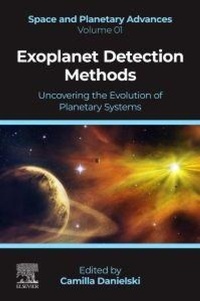
Exoplanet Detection Methods
Uncovering the Evolution of Planetary Systems
Will be published approx. on 1. February 2027
Book
Paperback/Softback
340 pages
978-0-443-31626-5 (ISBN)
Description
Exoplanet Detection Methods: Uncovering the Evolution of Planetary Systems is a comprehensive guide that delves into modern techniques for detecting exoplanets. It explores current methods while unravelling the fascinating story of planetary system evolution. Each chapter is meticulously structured to introduce detection methods, offer step-by-step instructions, analyze datasets, and present available instrumentation. This book caters to both beginners and seasoned researchers, providing them with the means to understand the characteristics and evolutionary timelines of different planetary populations. Beyond methodological insights, the book includes online proposal case studies, curated lists of resources, and further detailed step-by-step methods. This makes it an indispensable companion for those venturing into exoplanetary studies or working on planetary demographics.
More details
Series
Language
English
Place of publication
Philadelphia
United States
Target group
Professional and scholarly
College/higher education
Dimensions
Height: 229 mm
Width: 152 mm
Weight
450 gr
ISBN-13
978-0-443-31626-5 (9780443316265)
Copyright in bibliographic data and cover images is held by Nielsen Book Services Limited or by the publishers or by their respective licensors: all rights reserved.
Schweitzer Classification
Person
Dr Camilla Danielski is an Italian and Brazilian astrophysicist currently working at the Instituto de Astrofisica de Andalucia (Granada, Spain). She is Science Coordinator of the Planetary detection ESA-LISA L3 mission; the Stellar characterisation ESA Ariel M4 mission working group; and the Stellar Characterisation Ariel Consortium working group. Her research is focused on the long-term evolution of planetary systems, from their formation till the last moments of their life, in the framework of Galactic environment and evolution. Dr Danielski has given dozens of invited lectures and talks, and numerous seminars on the science of exoplanets.
Content
Part 1. Introduction
1. General short introduction
2. Historical overview on the search for exoplanets
3. Book purpose and description of book content (this section name will be different)
Part 2. Radial Velocity
4. Introduction
5. Method description
6. Demographics of the detected planets
7. Example of analysis of dataset
Part 3. Transit Photometry
8. Introduction
9. Method description
10. Demographics of the detected planets
11. Example of analysis of dataset
Part 4. Direct Imaging and Interferometry
12. Introduction
13. Method description
14. Interferometry
15. Demographics of the detected planets
16. Example of analysis of dataset
Part 5. Microlensing
17. Introduction
18. Method description
19. Demographics of the detected planets
20. Example of data analysis
Part 6. Astrometry
21. Introduction
22. Method description
23. Demographics of the detected planets
24. Example of data analysis
Part 7. Transit Time Variation
25. Introduction
26. Method description
27. Demographics of the detected planetary systems
28. Example of data analysis
Part 8. Other Detection Methods
29. Gravitational waves
30. Infrared excess
31. Orbital phase modulations
Part 9. Machine Learning and Exoplanets
32. Introduction
33. Overview of ML techniques
Part 10. Future Perspectives
34. Future observatories
35. Development of data analysis through AI techniques
1. General short introduction
2. Historical overview on the search for exoplanets
3. Book purpose and description of book content (this section name will be different)
Part 2. Radial Velocity
4. Introduction
5. Method description
6. Demographics of the detected planets
7. Example of analysis of dataset
Part 3. Transit Photometry
8. Introduction
9. Method description
10. Demographics of the detected planets
11. Example of analysis of dataset
Part 4. Direct Imaging and Interferometry
12. Introduction
13. Method description
14. Interferometry
15. Demographics of the detected planets
16. Example of analysis of dataset
Part 5. Microlensing
17. Introduction
18. Method description
19. Demographics of the detected planets
20. Example of data analysis
Part 6. Astrometry
21. Introduction
22. Method description
23. Demographics of the detected planets
24. Example of data analysis
Part 7. Transit Time Variation
25. Introduction
26. Method description
27. Demographics of the detected planetary systems
28. Example of data analysis
Part 8. Other Detection Methods
29. Gravitational waves
30. Infrared excess
31. Orbital phase modulations
Part 9. Machine Learning and Exoplanets
32. Introduction
33. Overview of ML techniques
Part 10. Future Perspectives
34. Future observatories
35. Development of data analysis through AI techniques