

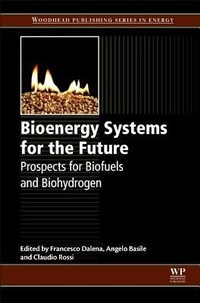
Bioenergy Systems for the Future
Prospects for Biofuels and Biohydrogen
Published on 20. June 2017
Book
Hardback
628 pages
978-0-08-101031-0 (ISBN)
Description
Bioenergy Systems for the Future: Prospects for Biofuels and Biohydrogen examines the current advances in biomass conversion technologies for biofuels and biohydrogen production, including their advantages and challenges for real-world application and industrial-scale implementation.
In its first part, the book explores the use of lignocellulosic biomass and agricultural wastes as feedstock, also addressing biomass conversion into biofuels, such as bioethanol, biodiesel, bio-methane, and bio-gasoline. The chapters in Part II cover several different pathways for hydrogen production, from biomass, including bioethanol and bio-methane reforming and syngas conversion. They also include a comparison between the most recent conversion technologies and conventional approaches for hydrogen production.
Part III presents the status of advanced bioenergy technologies, such as applications of nanotechnology and the use of bio-alcohol in low-temperature fuel cells. The role of advanced bioenergy in a future bioeconomy and the integration of these technologies into existing systems are also discussed, providing a comprehensive, application-oriented overview that is ideal for engineering professionals, researchers, and graduate students involved in bioenergy.
In its first part, the book explores the use of lignocellulosic biomass and agricultural wastes as feedstock, also addressing biomass conversion into biofuels, such as bioethanol, biodiesel, bio-methane, and bio-gasoline. The chapters in Part II cover several different pathways for hydrogen production, from biomass, including bioethanol and bio-methane reforming and syngas conversion. They also include a comparison between the most recent conversion technologies and conventional approaches for hydrogen production.
Part III presents the status of advanced bioenergy technologies, such as applications of nanotechnology and the use of bio-alcohol in low-temperature fuel cells. The role of advanced bioenergy in a future bioeconomy and the integration of these technologies into existing systems are also discussed, providing a comprehensive, application-oriented overview that is ideal for engineering professionals, researchers, and graduate students involved in bioenergy.
More details
Series
Language
English
Place of publication
Cambridge
United Kingdom
Publishing group
Elsevier Science & Technology
Target group
Professional and scholarly
Product notice
sewn/stitched
Cloth over boards
Dimensions
Height: 231 mm
Width: 155 mm
Thickness: 33 mm
Weight
975 gr
ISBN-13
978-0-08-101031-0 (9780081010310)
Copyright in bibliographic data and cover images is held by Nielsen Book Services Limited or by the publishers or by their respective licensors: all rights reserved.
Schweitzer Classification
Other editions
Additional editions
Francesco Dalena | Angelo Basile | Claudio Rossi
Bioenergy Systems for the Future
Prospects for Biofuels and Biohydrogen
E-Book
06/2017
Woodhead Publishing
€265.00
Available for download
Persons
Francesco Dalena, degree in Chemistry with Ph.D. on "Translational medicine? at the Chemistry Department of the University of Calabria (Italy), is expert in "Chemistry of advanced materials". His research field ranges from the bioenergy sector to inorganic membrane reactors, to chemical kinetics and to the chemistry of artistic masterpiece. He is editor of various books, such as: "Hydrogen Production, Separation and Purification for Energy", 2016, IET Pub.; "Alcohol and bioalcohol: characteristic, proprieties and use", 2014, Nova Pub., "Methanol: Science and Engineering?, Elsevier Pub. Angelo Basile is a Full Professor and a leading authority in membrane science and technology. Since 2014, he has served as Full Professor in Systems, Methods and Technologies of Chemical Engineering Processes at CNR-ITM in Rende, Italy. His work covers hydrogen purification and production using membrane reactors, CO? capture, process intensification, and the treatment of industrial effluents with advanced membrane operations. Basile has edited many scientific books and authored numerous book chapters, bridging complex research with clear knowledge for engineers and scientists. Motivated by the role of AI/ML in accelerating membrane process design and automation, he supports integrating data-driven methods for smart plants and reaction-separation optimisation.
Claudio Rossi is full professor of Physical Chemistry at the Department of Biotechnology, Chemistry and Pharmacy of the University of Siena, coordinator of the NMR spectroscopy activity and responsible for the University of Siena of the research in the Agrifood sector. He has authored more than 200 scientific publications in qualified international journals and co-authored 2 Italian patents. Referee of numerous scientific journals in the field of Pure and Applied Chemistry. Claudio Rossi was the coordinator of six European projects funded by EU. He was the Director of the Department of Chemical and Biosystem Sciences of the University of Siena in the period 2002-2008. He was tutor of numerous students during the preparation of their PhD thesis and Master.
Claudio Rossi is full professor of Physical Chemistry at the Department of Biotechnology, Chemistry and Pharmacy of the University of Siena, coordinator of the NMR spectroscopy activity and responsible for the University of Siena of the research in the Agrifood sector. He has authored more than 200 scientific publications in qualified international journals and co-authored 2 Italian patents. Referee of numerous scientific journals in the field of Pure and Applied Chemistry. Claudio Rossi was the coordinator of six European projects funded by EU. He was the Director of the Department of Chemical and Biosystem Sciences of the University of Siena in the period 2002-2008. He was tutor of numerous students during the preparation of their PhD thesis and Master.
Content
Biomass to bioenergy
1. Biomass pretreatment and transformation from agricultural wastes
2. Efficient transformation of non-food agricultural lignocelluloses
3. Production of bio-alcohol and bio-methane
4. Light olefins/biogasoline production from biomass
5. Bioenergy from stillage anaerobic digestion to enhance the energy balance ratio of ethanol production
Hydrogen production
6. Thermodynamic analysis of ethanol reforming for hydrogen production
7. Catalysts for conversion of synthesis gas
8. Distributed H2 production from bio-alcohols and bio-methane in conventional steam reforming units
9. H2 production from bio-alchools and bio-methane steam reforming in conventional and membrane reactors
10. Formation of hydrogen rich gas via conversion of lignocellulosic biomass and its decomposition products
11. Advantages and diadvantages of recent biomass conversion technologies compared to conventional approaches for hydrogen production
Bioenergy technology aspects/status
12. Nanocomposites for ''Nano Green Energy'' Applications
13. Integration of membrane technologies into conventional existing systems in the food industry
14. Integration of microalgae into an existing biofuel industry
15. Low-temperature fuel cell operated with bio-alcohol fuels
16. Syngas cleaning system for power generation
17. Bioenergy production from second and third generation feedstocks
1. Biomass pretreatment and transformation from agricultural wastes
2. Efficient transformation of non-food agricultural lignocelluloses
3. Production of bio-alcohol and bio-methane
4. Light olefins/biogasoline production from biomass
5. Bioenergy from stillage anaerobic digestion to enhance the energy balance ratio of ethanol production
Hydrogen production
6. Thermodynamic analysis of ethanol reforming for hydrogen production
7. Catalysts for conversion of synthesis gas
8. Distributed H2 production from bio-alcohols and bio-methane in conventional steam reforming units
9. H2 production from bio-alchools and bio-methane steam reforming in conventional and membrane reactors
10. Formation of hydrogen rich gas via conversion of lignocellulosic biomass and its decomposition products
11. Advantages and diadvantages of recent biomass conversion technologies compared to conventional approaches for hydrogen production
Bioenergy technology aspects/status
12. Nanocomposites for ''Nano Green Energy'' Applications
13. Integration of membrane technologies into conventional existing systems in the food industry
14. Integration of microalgae into an existing biofuel industry
15. Low-temperature fuel cell operated with bio-alcohol fuels
16. Syngas cleaning system for power generation
17. Bioenergy production from second and third generation feedstocks