

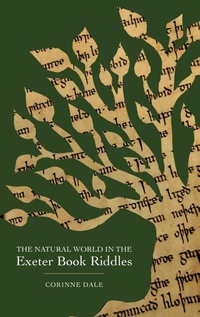
The Natural World in the Exeter Book Riddles
Published on 21. April 2017
Book
Hardback
227 pages
978-1-84384-464-8 (ISBN)
Description
An investigation of the non-human world in the Exeter Book riddles, drawing on the exciting new approaches of eco-criticism and eco-theology.
Humanity is a dominant presence in the Exeter Book riddle collection. It is frequently shown using, shaping and binding the physical world in which it lives. The riddles depict master and craftsman and use the familiar human worldas a point of orientation within a vast, overwhelming cosmos. But the riddles also offer an eco-centric perspective, one that considers the natural origins of man-made products and the personal plight of useful human resources.
This study offers fresh insights into the collection, investigating humanity's interaction with, and attitudes towards, the rest of the created world. Drawing on the principles of eco-criticism and eco-theology, the study considers the cultural and biblical influences on the depiction of nature in the collection, arguing that the texts engage with post-lapsarian issues of exploitation, suffering and mastery. Depictions of marginalised perspectives ofsentient and non-sentient beings, such as trees, ore and oxen, are not just characteristic of the riddle genre, but are actively used to explore the point of view of the natural world and the impact humanity has on its non-human inhabitants. The author not only explores the riddles' resistance to anthropocentrism, but challenges our own tendency to read these enigmas from a human-centred perspective.
Corinne Dale gained her PhD from Royal Holloway, University of London.
Humanity is a dominant presence in the Exeter Book riddle collection. It is frequently shown using, shaping and binding the physical world in which it lives. The riddles depict master and craftsman and use the familiar human worldas a point of orientation within a vast, overwhelming cosmos. But the riddles also offer an eco-centric perspective, one that considers the natural origins of man-made products and the personal plight of useful human resources.
This study offers fresh insights into the collection, investigating humanity's interaction with, and attitudes towards, the rest of the created world. Drawing on the principles of eco-criticism and eco-theology, the study considers the cultural and biblical influences on the depiction of nature in the collection, arguing that the texts engage with post-lapsarian issues of exploitation, suffering and mastery. Depictions of marginalised perspectives ofsentient and non-sentient beings, such as trees, ore and oxen, are not just characteristic of the riddle genre, but are actively used to explore the point of view of the natural world and the impact humanity has on its non-human inhabitants. The author not only explores the riddles' resistance to anthropocentrism, but challenges our own tendency to read these enigmas from a human-centred perspective.
Corinne Dale gained her PhD from Royal Holloway, University of London.
Reviews / Votes
In these analyses combining eco-criticism and eco-theology, Dale makes an original and exciting new contribution to the field. * PARERGON * Refreshing and original. * MODERN LANGUAGE REVIEW * A pioneering contribution that is worth taking into account. . . . [It] deserves a prominent place in the library of any scholar intending to do research on these texts. * MODERN PHILOLOGY * Dale's ecocentric readings provide much food for thought and reveal the critic's discerning attentiveness to the rich and paradoxical qualities of the Old English poems themselves. * SPECULUM * Makes a strong case for the place of 'green studies' in Old English literature. * TIMES LITERARY SUPPLEMENT *More details
Series
Language
English
Place of publication
Cambridge
United Kingdom
Publishing group
Boydell & Brewer Ltd
Target group
Professional and scholarly
Product notice
Cloth over boards
Dimensions
Height: 240 mm
Width: 161 mm
Thickness: 17 mm
Weight
511 gr
ISBN-13
978-1-84384-464-8 (9781843844648)
Copyright in bibliographic data and cover images is held by Nielsen Book Services Limited or by the publishers or by their respective licensors: all rights reserved.
Schweitzer Classification
Other editions
Additional editions
Corinne Dale
The Natural World in the Exeter Book Riddles
E-Book
04/2017
1st Edition
De Gruyter
€48.99
Available for download
Person
Corinne Dale
Content
Introduction
'be sonde, saewealle neah': Locating Non-Human Subjects in an Anthropocentric World
'earfo?a dael': The Groan of Travail in the Ox-Riddles
'wraetlic weorc smi?a': Inverting the Colophon in Riddle 26
'deope gedolgod': Wounding and Shaping in Riddles 53 and 73
'fruman agette / eall of earde': The Principle of Accountability in Riddle 83
'maegene binumen': The Failure of Human Mastery in the Wine and Mead Riddles
'swa ne wena? men': The Limits of Wisdom in Riddle 84 and the Storm Riddles
Conclusion
Bibliography
'be sonde, saewealle neah': Locating Non-Human Subjects in an Anthropocentric World
'earfo?a dael': The Groan of Travail in the Ox-Riddles
'wraetlic weorc smi?a': Inverting the Colophon in Riddle 26
'deope gedolgod': Wounding and Shaping in Riddles 53 and 73
'fruman agette / eall of earde': The Principle of Accountability in Riddle 83
'maegene binumen': The Failure of Human Mastery in the Wine and Mead Riddles
'swa ne wena? men': The Limits of Wisdom in Riddle 84 and the Storm Riddles
Conclusion
Bibliography