

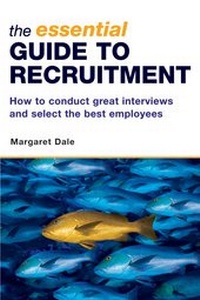
The Essential Guide to Recruitment
How to Conduct Great Interviews and Select the Best Employees
1st Edition
Published on 3. August 2006
Book
Paperback/Softback
240 pages
978-0-7494-4474-7 (ISBN)
Description
Few line managers are given formal training at recruitment processes and poor interviewing skills can cost a company both cash and customers. This book enables managers and HR professionals to master essential recruitment skills and develop an effective interviewing technique.
Since it is the interviewer's responsibility to find the right candidate for the job, it is crucial that the interview is well designed. To be fit for the purpose the interview must be sufficiently demanding but, at the same time, respectful of the candidate. This book not only provides interviewers with tried and tested readymade interview questions, but also enables them to conduct fair and searching interviews.
Since it is the interviewer's responsibility to find the right candidate for the job, it is crucial that the interview is well designed. To be fit for the purpose the interview must be sufficiently demanding but, at the same time, respectful of the candidate. This book not only provides interviewers with tried and tested readymade interview questions, but also enables them to conduct fair and searching interviews.
Reviews / Votes
"Poor hiring decisions and processes can prove very costly or damaging, especially to smaller organisations. In The Essential Guide to Recruitment, the author has distilled best professional practice into practical down-to-earth advice to help busy managers avoid the pitfalls and to recruit the best." Jan Scrine BSc(Econ), MSc, FCIPD, MCIArb, The Minerva Group "A manager's success is dependent on the quality and performance of those he manages and recruitment techniques are key to obtaining the best help: that's why the step-by-step directions of (this book) are so important." California Bookwatch "Dale...offers advice to managers who haven't been extensively trained on strategies for seeking, hiring and keeping the best employees for their team." Reference and Research Book News "Recruitment and selection can be a minefield for the inexperienced and the unwary. This book will lead you safely through the process from defining the job through advertising, shortlisting and the early days of employment. Margaret's book would be a great help to the newly appointed manager or somebody in a small firm seeking to recruit without the assistance of an in-house Human Resources department." Paul Marshall, HR Department, University of Hull "This book is a practical and step-by-step guide to the recruitment process ... the author has distilled best professional practice into practical down-to-earth advice." Managing Risk "This book has been written to support one of the most critical of HR functions - recruitment. Guides the recruiter through the complete cycle. When it comes to looking at questioning techniques, it does come into its own and gives the reader plenty of oppurtunities to practice these, as well as other methodologies, at the end of each chapter. A useful guide for any HR professional aiming to attract talent to, and encourage talent within their organization." Personnel TodayMore details
Language
English
Place of publication
London
United Kingdom
Target group
Professional and scholarly
Product notice
Paperback (trade)
Dimensions
Height: 234 mm
Width: 156 mm
Thickness: 15 mm
Weight
380 gr
ISBN-13
978-0-7494-4474-7 (9780749444747)
Copyright in bibliographic data and cover images is held by Nielsen Book Services Limited or by the publishers or by their respective licensors: all rights reserved.
Schweitzer Classification
Person
Margaret Dale works for a consortium of universities who are using a specially designed competency based approach for analysing roles to support a range of HR functions. She is also a Non-Executive Director of a Primary Care Trust, an employment expert in personal injury and clinical negligence claims, and a mediator. She is author of A Manager's Guide to Recruitment and Selection and Developing Management Skills.
Content
Chapter 1 Why you need the best person for the job Introduction; Your performance depends on your people; Appointing good people costs; Avoiding the common mistakes; Drawing a portrait of the best; What does the description of the job and the specification of the person look like?; Exercise Chapter 2 Fishing in the biggest pond Introduction; Why you should test the field; How do you test the field?; Discrimination; Don't make a fool of yourself in public; Exercise Chapter 3 Interview selection How will people apply?; Helping applicants get to know you; Finding out more about the applicants; Sifting the applications; Short-listing matrix; Getting the candidates to the interview; Preparing the space; Getting ready to interview; Exercise Chapter 4 Greatest questions The interview; Asking the questions; Unusual questions; Dealing with difficult candidates; Questions with dubious value; Questions not to be asked; Questions that need to be asked; Other indicators; Candidates' questions; Stress interviews; Other sources of information; Closing the interview; Exercise Chapter 5 Choosing the best person Introduction; How to avoid being taken in? Take up references; Making the decision; Notifying the unsuccessful candidates; Making the offer; Feedback; Making sure the best candidate accepts your offer; Summary; Exercise Chapter 6 Making sure you keep the best person Between the interview and starting; Getting the team ready to accept the new person; Introducing, inducting and inculcating; Probationary period; Final thoughts; Exercise Chapter 7 Good practice checklist
Chapter 1 Why you need the best person for the job
Introduction; Your performance depends on your people; Appointing good people costs; Avoiding the common mistakes; Drawing a portrait of the best; What does the description of the job and the specification of the person look like?; Exercise
Chapter 2 Fishing in the biggest pond
Introduction; Why you should test the field; How do you test the field?; Discrimination; Don't make a fool of yourself in public; Exercise
Chapter 3 Interview selection
How will people apply?; Helping applicants get to know you; Finding out more about the applicants; Sifting the applications; Short-listing matrix; Getting the candidates to the interview; Preparing the space; Getting ready to interview; Exercise
Chapter 4 Greatest questions
The interview; Asking the questions; Unusual questions; Dealing with difficult candidates; Questions with dubious value; Questions not to be asked; Questions that need to be asked; Other indicators; Candidates' questions; Stress interviews; Other sources of information; Closing the interview; Exercise
Chapter 5 Choosing the best person
Introduction; How to avoid being taken in? Take up references; Making the decision; Notifying the unsuccessful candidates; Making the offer; Feedback; Making sure the best candidate accepts your offer; Summary; Exercise
Chapter 6 Making sure you keep the best person
Between the interview and starting; Getting the team ready to accept the new person; Introducing, inducting and inculcating; Probationary period; Final thoughts; Exercise
Chapter 7 Good practice checklist
Introduction; Your performance depends on your people; Appointing good people costs; Avoiding the common mistakes; Drawing a portrait of the best; What does the description of the job and the specification of the person look like?; Exercise
Chapter 2 Fishing in the biggest pond
Introduction; Why you should test the field; How do you test the field?; Discrimination; Don't make a fool of yourself in public; Exercise
Chapter 3 Interview selection
How will people apply?; Helping applicants get to know you; Finding out more about the applicants; Sifting the applications; Short-listing matrix; Getting the candidates to the interview; Preparing the space; Getting ready to interview; Exercise
Chapter 4 Greatest questions
The interview; Asking the questions; Unusual questions; Dealing with difficult candidates; Questions with dubious value; Questions not to be asked; Questions that need to be asked; Other indicators; Candidates' questions; Stress interviews; Other sources of information; Closing the interview; Exercise
Chapter 5 Choosing the best person
Introduction; How to avoid being taken in? Take up references; Making the decision; Notifying the unsuccessful candidates; Making the offer; Feedback; Making sure the best candidate accepts your offer; Summary; Exercise
Chapter 6 Making sure you keep the best person
Between the interview and starting; Getting the team ready to accept the new person; Introducing, inducting and inculcating; Probationary period; Final thoughts; Exercise
Chapter 7 Good practice checklist