


Organization Theory & Design
13th Edition
Published on 1. January 2020
Book
Hardback
688 pages
978-0-357-44514-3 (ISBN)
Description
Discover the most progressive thinking about organizations today as acclaimed author Richard Daft balances recent, innovative ideas with proven classic theories and effective business practices. Daft's best-selling ORGANIZATION THEORY AND DESIGN presents a captivating, compelling snapshot of contemporary organizations and the concepts driving their success. Learn about the design of new organizational forms, such as platform-based digital organizations (Amazon, Uber, Facebook) and dual-purpose organizations that provide self-sustaining social welfare benefits to society. Recognized as one of the most systematic, well-organized texts in the market, the 13th edition of ORGANIZATION THEORY AND DESIGN helps both current and future managers thoroughly prepare for the challenges of today's business world. This revision showcases some of the most current examples and research alongside time-tested principles. Readers see how many of today's well-known organizations thrive amidst a rapidly changing, highly competitive international environment. New learning features provide opportunities for readers to apply concepts and refine personal business skills and insights.
More details
Other editions
Additional editions
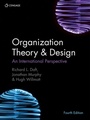
Richard Daft | Jonathan Murphy | Hugh Willmott
Organization Theory & Design
An International Perspective
Book
03/2020
4th Edition
Cengage Learning EMEA
€80.50
Shipment within 15-20 days
Person
Richard L. Daft is the Brownlee O. Currey, Jr. Professor of Management and Principal Senior Lecturer in the Owen Graduate School of Management at Vanderbilt University. Professor Daft specializes in the study of organization theory and leadership and is a fellow of the Academy of Management. He has served on the editorial boards of the Academy of Management Journal, Administrative Science Quarterly and Journal of Management Education. He was the associate editor-in-chief of Organization Science and served for three years as associate editor of Administrative Science Quarterly. Professor Daft has authored or co-authored 14 books and written dozens of scholarly articles, papers and chapters in other books. .
Content
PART I: INTRODUCTION TO ORGANIZATIONS.
1. Organizations and Organization Theory.
PART II: ORGANIZATIONAL PURPOSE AND STRUCTURAL DESIGN.
2. Strategy, Organization Design, and Effectiveness.
3. Fundamentals of Organization Structure.
PART III: OPEN SYSTEM DESIGN ELEMENTS.
4. The External Environment.
5. Interorganizational Relationships.
6. Designing Organizations for the International Environment.
7. Designs for Social Impact: Dual-Purpose Organizations, Corporate Sustainability, and Ethics
PART IV: INTERNAL DESIGN ELEMENTS.
8. Manufacturing and Service Technologies.
9. Designs for Digital Organizations and Big Data.
10. Organization Size, Life Cycle, and Decline.
PART V: MANAGING DYNAMIC PROCESSES.
11. Organizational Culture and Control.
12. Innovation and Change.
13. Decision-Making Processes.
14. Conflict, Power, and Politics.
Integrative Cases.
Glossary.
Name Index.
1. Organizations and Organization Theory.
PART II: ORGANIZATIONAL PURPOSE AND STRUCTURAL DESIGN.
2. Strategy, Organization Design, and Effectiveness.
3. Fundamentals of Organization Structure.
PART III: OPEN SYSTEM DESIGN ELEMENTS.
4. The External Environment.
5. Interorganizational Relationships.
6. Designing Organizations for the International Environment.
7. Designs for Social Impact: Dual-Purpose Organizations, Corporate Sustainability, and Ethics
PART IV: INTERNAL DESIGN ELEMENTS.
8. Manufacturing and Service Technologies.
9. Designs for Digital Organizations and Big Data.
10. Organization Size, Life Cycle, and Decline.
PART V: MANAGING DYNAMIC PROCESSES.
11. Organizational Culture and Control.
12. Innovation and Change.
13. Decision-Making Processes.
14. Conflict, Power, and Politics.
Integrative Cases.
Glossary.
Name Index.