

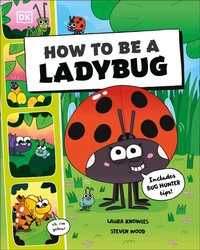
How to Be a Ladybug
Published on 10. June 2025
Book
Paperback/Softback
64 pages
978-0-593-96539-9 (ISBN)
Description
Shrink to the size of a garden bug and enter the world of ladybug in this first graphic novel for children.
This graphic novel of garden life, made in collaboration with the Royal Entomological Society, is a perfect introduction to ladybugs for bug-obsessed little ones aged 5-7.
Follow a newly hatched ladybug as she learns the ins and outs of ladybughood, and meet plenty of fascinating bug characters along the way, in this first graphic novel. Narrated by a wise old grasshopper, offering tips and tricks on how to be a ladybug, children will love to follow the story of Dotty the larva.
This bug book for children offers:
Our tale begins with a cluster of tiny eggs resting peacefully on a leaf-but life for a ladybug larva is far from peaceful. There are dastardly harlequins to contend with and giant predators in the form of birds. Not to mention the confusing fact that our leading larva doesn't look anything like a ladybug at all! With transformations to look forward to-including gaining a pair of wings-and plenty of friendly bugs to meet, our heroine will soon learn that life in the garden isn't all bad.
This graphic novel of garden life, made in collaboration with the Royal Entomological Society, is a perfect introduction to ladybugs for bug-obsessed little ones aged 5-7.
Follow a newly hatched ladybug as she learns the ins and outs of ladybughood, and meet plenty of fascinating bug characters along the way, in this first graphic novel. Narrated by a wise old grasshopper, offering tips and tricks on how to be a ladybug, children will love to follow the story of Dotty the larva.
This bug book for children offers:
- A graphic novel format to engage children in non fiction topics.
- Content made in partnership with the Royal Entomological Society providing scientific information about insects.
- An engaging story about a newly hatched larva, Dotty, as she learns how to navigate life as a ladybug.
Our tale begins with a cluster of tiny eggs resting peacefully on a leaf-but life for a ladybug larva is far from peaceful. There are dastardly harlequins to contend with and giant predators in the form of birds. Not to mention the confusing fact that our leading larva doesn't look anything like a ladybug at all! With transformations to look forward to-including gaining a pair of wings-and plenty of friendly bugs to meet, our heroine will soon learn that life in the garden isn't all bad.
More details
Series
Language
English
Place of publication
United States
Target group
Children/juvenile
US School Grade: From Kindergarten to Second Grade, Interest Age: From 5 to 7 years
Product notice
Paperback (trade)
Flexible plastic/vinyl cover
Dimensions
Height: 229 mm
Width: 185 mm
Thickness: 10 mm
Weight
272 gr
ISBN-13
978-0-593-96539-9 (9780593965399)
Copyright in bibliographic data and cover images is held by Nielsen Book Services Limited or by the publishers or by their respective licensors: all rights reserved.
Schweitzer Classification
Person
Laura Knowles has worked in children’s publishing for over 15 years. Her picture books about animals and nature have so far been translated into 11 languages. She is the author of several titles, including It Starts with a Seed, which was awarded the 2017 Margaret Mallett Award for Children’s Non-fiction.
Steven Wood has illustrated for Scholastic, Penguin Random House Children's, Usborne, and more. His focus is always on the characters that bring life and movement to the picture. Steven loves adding humor to his work, influenced by the adventure stories he read as a child.
The Royal Entomological Society was founded in 1833 to promote the understanding and development of insect science. The society aims to show every person how remarkable and valuable insects are.
Steven Wood has illustrated for Scholastic, Penguin Random House Children's, Usborne, and more. His focus is always on the characters that bring life and movement to the picture. Steven loves adding humor to his work, influenced by the adventure stories he read as a child.
The Royal Entomological Society was founded in 1833 to promote the understanding and development of insect science. The society aims to show every person how remarkable and valuable insects are.