

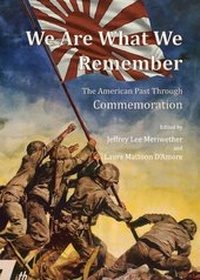
We Are What We Remember
The American Past Through Commemoration
Published on 19. October 2012
Book
Hardback
415 pages
978-1-4438-4101-6 (ISBN)
Description
Commemorative practices are revised and rebuilt based on the spirit of the time in which they are re/created. Historians sometimes imagine that commemoration captures history, but actually commemoration creates new narratives about history that allow people to interact with the past in a way that they find meaningful. As our social values change (race, gender, religion, sexuality, class), our commemorations do, too. We Are What We Remember: The American Past Through Commemoration, analyzes current trends in the study of historical memory that are particularly relevant to our own present - our biases, our politics, our contextual moment - and strive to name forgotten, overlooked, and denied pasts in traditional histories. Race, gender, and sexuality, for example, raise questions about our most treasured myths: where were the slaves at Jamestowne? How do women or lesbians protect and preserve their own histories, when no one else wants to write them? Our current social climate allows us to question authority, and especially the authoritative definitions of nation, patriotism, and heroism, and belonging. How do we "un-commemorate" things that were "mis-commemorated" in the past? How do we repair the damage done by past commemorations? The chapters in this book, contributed by eighteen emerging and established scholars, examine these modern questions that entirely reimagine the landscape of commemoration as it has been practiced, and studied, before.
Reviews / Votes
"Based on experiential fieldwork and rigorous archival research, as well as discourses grounded in critical theory and current scholarly conversations, each contributor poses questions about myth, memorials - and, when called for, counter-memorials - from a range of disciplines. Indeed, We Are What We Remember inventories the ways in which we wrestle over control of public memory, the battlefields and ideologies over which that memory is fought, and the tools by which history is cemented and toppled: the monument, the burial ground, the presidential speech, the museum, the political cartoon. We Are What We Remember is an important contribution to discourse and will be an excellent resource for the upper-division undergraduate or graduate classroom, as well as a vital tool for researchers and practitioners."- Scott Magelssen, author of Living History Museums: Undoing History Through Performance"This is an impressive book, wisely organized, skillfully introduced, and graced with apt illustrations ... every reader will be struck by the overall high quality. Each essay satisfies exacting standards of research, lucidity, and insight. These original and important contributions are often hard-hitting and provocative. Collectively they are bound to make a stir among established scholars; university students new to the field of American/memory studies will be intrigued and inspired."- David Mayers, author of Dissenting Voices in America's Rise to Power"A first-rate collection that directly and profitably addresses the role of history in national and other identities (and vice versa). A series of perceptive and ably-presented essays assess the process by which America's history and identity are reflected in and sustained through commemoration. Important not only for those concerned with the history, but also for comparable studies elsewhere."- Jeremy Black, author of Using History, The Curse of History, and Historiography: Contesting the Past; Claiming the Future"The essays in We Are What We Remember present valuable case studies of commemorative practices in the United States that remind us how constant efforts to honor and control the past have worked to define the present throughout US history. Many of these essays are particularly valuable because they expose unexpected consequences of commemorations or practices that function to mark public memory in ways that challenge dominant historical narratives. Examining everything from African American Civil War reenactors to lesbian community historians to white supremacist rituals at the University of Vermont, these essays will interest readers in a variety of disciplines who want to consider some of the less familiar aspects of commemoration. Meriwether and D'Amore have collected essays that anyone working on memory studies will want to consider."- Sarah J. Purcell, author of Sealed with Blood: War, Sacrifice, and Memory in Revolutionary AmericaMore details
Edition
Unabridged edition
Language
English
Place of publication
Newcastle upon Tyne
United Kingdom
Target group
College/higher education
Professional and scholarly
Edition type
Unabridged edition
Product notice
With dust jacket
Dimensions
Height: 212 mm
Width: 148 mm
ISBN-13
978-1-4438-4101-6 (9781443841016)
Copyright in bibliographic data and cover images is held by Nielsen Book Services Limited or by the publishers or by their respective licensors: all rights reserved.
Schweitzer Classification
Other editions
Additional editions
Book
02/2013
Cambridge Scholars Publishing
€57.13
Shipment within 15-20 days
Jeffrey Lee Meriwether | Laura Mattoon D'Amore
We Are What We Remember
The American Past Through Commemoration
E-Book
01/2013
1st Edition
Cambridge Scholars Publishing
€147.29
Available for download
Persons
Jeffrey Lee Meriwether is Associate Professor of History and Chair of History and American Studies at Roger Williams University. He has published in the Military History Journal, Archives, and the New England Journal of History, as well as Stephen Miller's Soldiers and Settlers in Africa, 1850-1918 (Brill, 2009). He works in the areas of British military history, the Spanish-American War, and reenactment studies. He is an historical reenactor of the British army.Laura Mattoon D'Amore is Assistant Professor of American Studies at Roger Williams University. She is editor of Bound by Love: Familial Bonding in Film and Television since 1950 (Cambridge Scholars Publishing, 2011). Her research interests lay in the intersectionality of feminism, gender representation, history, and popular culture. She maintains a blog at www.americansupermom.com.