

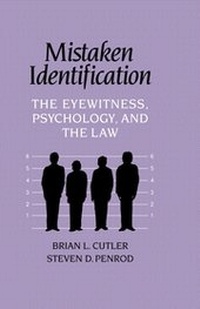
Mistaken Identification
The Eyewitness, Psychology and the Law
Published on 25. August 1995
Book
Hardback
300 pages
978-0-521-44553-5 (ISBN)
Description
The criminal justice system has devised several procedural safeguards to protect defendants from erroneous conviction resulting from mistaken eyewitness identification. Mistaken Identification: The Eyewitness, Psychology and the Law reviews the empirical research bearing on the adequacy of those safeguards. This body of literature converges on the conclusion that traditional safeguards such as presence of counsel at line-ups, cross-examination, and judges' instructions, are ineffective safeguards against mistaken eyewitness identification. Expert psychological testimony on eyewitness memory, designed to educate the jury about how memory processes work and how eyewitness testimony should be evaluated, shows much greater promise as a safeguard against mistaken identifications and erroneous convictions. Mistaken Identification is an invaluable text for advanced psychology students, law students and researchers of memory.
Reviews / Votes
"...drives yet another nail into the coffin of the so-called criminal justice system. You could not find a more meticulous presentation of just how unreliable witnesses are." New Scientist "Eyewitness evidence is often fraught with inaccuracies, nevertheless, it has the power of a sledgehammer and it can swiftly put an innocent man behind bars. Cutler and Penrod's book will assist the advocate in mounting an effective attack against this highly damaging evidence." Rene L. Valladares, The Champion "It is an impressive work, though not without its flaws. It represents the state of the art and will unquestionably become required reading for anyone interested in the work in this area....The book is, overall, an impressive and important work." Solomon M. Fulero, Contemporary PsychologyMore details
Language
English
Place of publication
Cambridge
United Kingdom
Target group
Professional and scholarly
Illustrations
27 Tables, unspecified; 1 Halftones, unspecified; 6 Line drawings, unspecified
Dimensions
Height: 243 mm
Width: 163 mm
Thickness: 26 mm
Weight
696 gr
ISBN-13
978-0-521-44553-5 (9780521445535)
Copyright in bibliographic data and cover images is held by Nielsen Book Services Limited or by the publishers or by their respective licensors: all rights reserved.
Schweitzer Classification
Other editions
New editions
Book
08/1995
Cambridge University Press
€55.80
Shipment within 15-20 days
Additional editions
Book
08/1995
Cambridge University Press
€55.80
Shipment within 15-20 days
Persons
Content
1. Eyewitness identification errors; 2. The admissibility of expert testimony on the psychology of eyewitness identification; 3. Eyewitness experts in the courts of appeal; 4. The scientific psychology of eyewitness identifications; 5. Summarizing eyewitness research findings; 6. Factors that influence eyewitness memory: witness factors; 7. Factors that influence eyewitness memory: perpetrator and event factors; 8. The effects of suggestive identification procedures on identification accuracy; 9. Legal representation at identification procedures; 10. Attorney sensitivity to factors influencing eyewitness reliability; 11. Surveying lay knowledge about sources of eyewitness unreliability; 12. The ability of jurors to differentiate accurate from inaccurate eyewitnesses; 13. Jury sensitivity to factors that influence eyewitness reliability; 14. Expert testimony and its possible impacts on the jury; 15. Improving juror knowledge, integration and decision making; 16. Court-appointed and opposing experts: better alternatives?; 17. Instructing the jury about problems of mistaken identification.