

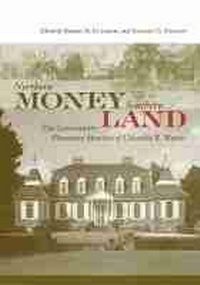
Northern Money, Southern Land
The Lowcountry Plantation Sketches of Chlotilde R. Martin
Published on 1. September 2009
Book
Hardback
272 pages
978-1-57003-822-8 (ISBN)
Description
This is an enchanting mix of gossip and history from the era when parts of the Old South met its new owners. In the early 1930s Chlotilde R. Martin of Beaufort, South Carolina, wrote a series of articles for the ""Charleston News and Courier"" documenting the social and economic transformation of the lowcountry coast as an influx of wealthy Northerners began buying scores of old plantations. Her articles combined the name-dropping chatter of the lowcountry social register with reflections on the conflict between past and present in the old rice and cotton kingdoms of South Carolina. Edited by Robert B. Cuthbert and Stephen G. Hoffius, ""Northern Money, Southern Land"" collects Martin's articles and augments them with photographs and historical annotations to carry their stories forward to the present. As Martin recounted, the new owners of these coastal properties ranked among the most successful businessmen in the country and included members of the Doubleday, Du Pont, Hutton, Kress, Whitney, Guggenheim, and Vanderbilt families. The plantation houses they bought and the homes they built are some of the most important architectural structures in the Palmetto State - although many are rarely seen by the public. In some fifty articles drawn from interviews with property owners and visits to their newly acquired lands, Martin described almost eighty estates covering three hundred thousand acres of Beaufort, Jasper, Hampton, Colleton, and Berkeley counties. Martin's lively sketches included stories of wealthy young playboys who brought Broadway showgirls down for decadent parties, tales of the first nudist colony in America, and exchanges with African American farmhands who wanted to travel to New York to see their employers' primary homes, which they had been assured were piled high with gold and silver. In the process, Martin painted a fascinating landscape of a Southern coastline changing hands and on the verge of dramatic redevelopment. Her tales, here updated by Cuthbert and Hoffius, will bring modern readers onto many little-known plantations in the southern part of South Carolina and provide a wealth of information about the history of vexing tensions between development and conservation that remain a defining aspect of lowcountry life.
Reviews / Votes
Mrs. Martin's guide to lowcountry plantations and their post-Civil War owners is three-fourths fact, one-fourth gossip, and one hundred percent fun to read. Modern day editors Cuthbert and Hoffius have done a great service to those interested in history, hunting, architecture, farming, landscaping, environmental protection, finances, nudism, showgirls, the wearing of tuxedo jackets with waders, black magic, and the gentle art of living well. - William P. Baldwin, author of The Hard to Catch Mercy and Lowcountry Plantations TodayMore details
Language
English
Place of publication
South Carolina
United States
Illustrations
81 illustrations
ISBN-13
978-1-57003-822-8 (9781570038228)
Copyright in bibliographic data and cover images is held by Nielsen Book Services Limited or by the publishers or by their respective licensors: all rights reserved.
Schweitzer Classification
Persons
Chlotilde R. Martin (1895-1991) wrote extensively about South Carolina's southern coast for the Charleston News and Courier and other publications. In addition to her 1930s plantation sketches, she wrote the weekly column ""Lowcountry Gossip"" for more than three decades. Robert B. Cuthbert, a native of Summerville, has served on the staff of the U.S. Vegetable Lab at Charleston for more than forty years. An active member of the South Carolina Historical Society, he has an avid interest in researching the history of the South Carolina coast. Stephen G. Hoffius is a freelance writer and editor in Charleston and the former director of publications for the South Carolina Historical Society. He is coeditor with Angela D. Mack of Landscape of Slavery: The Plantation in American Art.