


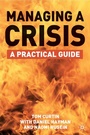
Managing A Crisis
A Practical Guide
Published on 28. October 2004
Book
Paperback/Softback
XI, 180 pages
978-1-349-52190-6 (ISBN)
Description
This new practical guide explains what makes a crisis and who are the key players. It shows the importance of prior preparation and testing so that the company fully understands the crisis management environment and the importance of communications. Also included are checklists that should form part of the company's crisis management handbook and discussion of training and learning opportunities. This is a fully comprehensive approach to crisis management planning and implementation.
Reviews / Votes
'Includes checklists that should form part of a company's crisis management handbook and should be the first thing to reach for after the telephone' - Keith Clack, Best Business Books, The Bookseller
More details
Edition
1st ed. 2005
Language
English
Place of publication
London
United Kingdom
Target group
Professional and scholarly
Product notice
Paperback (trade)
Unsewn / adhesive bound
Illustrations
XI, 180 p.
Dimensions
Height: 216 mm
Width: 140 mm
Thickness: 11 mm
Weight
254 gr
ISBN-13
978-1-349-52190-6 (9781349521906)
DOI
10.1057/9780230509306
Schweitzer Classification
Other editions
Additional editions
Book
10/2004
Palgrave Macmillan
€64.19
Shipment within 10-20 days
Person
TOM CURTIN is a consultant and writer who specialises in crisis management, green issues and corporate communications. He is the Managing Director of Green Issues Communications and the author of,
Managing Green Issues
, (Palgrave Macmillan). He is consultant to a number of companies and organisations and lectures at universities and management schools, including IMD in Lausanne.
Content
Introduction PART I: WHAT MAKES A CRISIS The Three Types of Crisis Evolution of a Crisis -The Crisis Curve Predicting a Crisis Why Managing a Crisis Matters PART II: THE ORGANISATION AND ITS UNIVERSE Organisations and their Leadership The Media in Crisis The Politicians and Regulators The Activists - Making Crisis Happen Other Stakeholders - Dealing with the Public, Customers and Suppliers PART III: DESIGN, TESTING AND IMPLEMENTATION Overview of the Process The Importance of Third Party Advocates The Crisis Management Teams Responsibilities and Logistics The Crisis Management Handbook Managing Media Relations Internal Communications Managing Politicians and the Public Training, Testing and Refinement Business Continuity Conclusion