

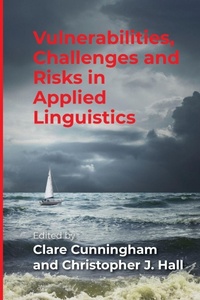
Vulnerabilities, Challenges and Risks in Applied Linguistics
Published on 9. September 2021
Book
Paperback/Softback
264 pages
978-1-78892-822-9 (ISBN)
Description
The chapters in this book call attention to vulnerabilities, challenges and risks for applied linguistics researchers and the communities they work with across a broad range of contexts from the Global North and South, and in both signed and spoken languages. Together they provide insights on both academic and professional practice across several areas: the vulnerabilities involved in researching, the limitations of traditional epistemologies, the challenges inherent in the repertoire of methodologies and pedagogies employed by applied linguists, and the effectiveness of practical responses to language-related problems. The book encourages those involved in applied linguistics to consider their own practice and their relationship with the communities, policies and educational contexts they engage with in the course of their teaching, research and activism.
Reviews / Votes
This is an exciting volume of varied yet conceptually coherent chapters, challenging dominant paradigms in the field of applied linguistics. Established and emerging scholars are brought together, each with an authoritative voice and a committed activist stance. The collection broadens the scope of the field, encouraging it towards a thoughtful, critical, and socially relevant future. * James Simpson, Hong Kong University of Science & Technology, Hong Kong * Risk, vulnerability and challenge are crucial concepts for a responsive and socially engaged discipline such as applied linguistics. This important volume explores the dynamics of risk in challenging contemporary times and the ways the vulnerability of being 'at risk' can be transformed into resistance and activism. Essential reading for researchers and practitioners engaged in applied linguistic research that aims to make a difference. * Mike Baynham, University of Leeds, UK *More details
Language
English
Place of publication
Bristol
United Kingdom
Target group
College/higher education
Dimensions
Height: 234 mm
Width: 156 mm
Thickness: 14 mm
Weight
401 gr
ISBN-13
978-1-78892-822-9 (9781788928229)
DOI
10.21832/CUNNIN8236
Copyright in bibliographic data and cover images is held by Nielsen Book Services Limited or by the publishers or by their respective licensors: all rights reserved.
Schweitzer Classification
Other editions
Additional editions
Clare Cunningham | Christopher J. Hall
Vulnerabilities, Challenges and Risks in Applied Linguistics
Book
09/2021
Multilingual Matters
€158.40
Shipment within 3-4 weeks
Clare Cunningham | Christopher J. Hall
Vulnerabilities, Challenges and Risks in Applied Linguistics
E-Book
09/2021
Multilingual Matters
€24.49
Available for download
Persons
Clare Cunningham is Senior Lecturer in Linguistics in the School of Education, Language and Psychology, York St John University, UK. Her research interests include teachers' attitudes, beliefs and knowledge about multilingualism; the development of writing confidence in students; students' perceptions of ecojustice in the curriculum; and ecolinguistics.
Christopher J. Hall is Professor of Applied Linguistics at York St John University, UK. His current research focuses on conceptualisations of English from the perspective of Global Englishes. He is the co-author of Mapping Applied Linguistics (Routledge, 2nd edn, 2017) and co-editor of Ontologies of English (CUP, 2020).
Christopher J. Hall is Professor of Applied Linguistics at York St John University, UK. His current research focuses on conceptualisations of English from the perspective of Global Englishes. He is the co-author of Mapping Applied Linguistics (Routledge, 2nd edn, 2017) and co-editor of Ontologies of English (CUP, 2020).
Content
Contributors
Chapter 1. Clare Cunningham and Christopher J. Hall: Introduction
Part 1: Communities
Chapter 2. Cristine Gorski Severo and Sinfree B. Makoni: Can Southern Epistemological and Indigenous Ontological Orientations to Applied Linguistics Challenge its Ethnocentrism?
Chapter 3. Luz A. Murillo: Late Capitalism and New Challenges: Indigenous Communities Taking Risks in Defense of Vulnerable Languages and Territories in Guatemala and Colombia
Chapter 4. John Bosco Conama: The Bumpy Journey Towards the Irish Sign Language Act: Critical Considerations and Personal Reflections of a Deaf Activist-Scholar
Chapter 5. Helen Sauntson: 'Befriending' Risks, Vulnerabilities and Challenges: Researching Sexuality and Language in Educational Sites
Part 2: Policy
Chapter 6. Johanna Ennser-Kananen and Taina Saarinen: Challenging Constitutional Bilingualism with 'What if...': Counterfactual Histories and At-risk Minorities in Finland
Chapter 7. Ursula Lanvers: UK Language Policy Quo Vadis? Language Learning in the UK Post Brexit
Chapter 8. Kristin Snoddon and Erin Wilkinson: Vulnerabilities, Challenges, and Risks in Sign Language Recognition in Canada
Part 3: Research
Chapter 9. Kate Barber: From the Outside Looking in: The Risks and Challenges of Analysing Extremist Discourses on Far-right and Manosphere Websites
Chapter 10. Sal Consoli: Critical Incidents in a Teacher-Researcher and Student-Participant Relationship: What Risks Can We Take?
Chapter 11. Annika Norlund Shaswar: Taking Risks in Literacy Research: Using an Interpreter in Multilingual Research Interviews
Part 4: Education
Chapter 12. Liana Konstantinidou and Ursula Stadler: A Challenge for Applied Linguistics: Developing a Novel Curriculum in the Field of Language and Integration
Chapter 13. Michael Hepworth: Teaching Controversial Issues in the Language Education of Adult Migrants to the UK: A Risk Worth Taking
Chapter 14. Sham Haidar: Access to English in Pakistan: Differences in Instruction as a Risk to Social Integration
Chapter 15: Christopher J. Hall and Clare Cunningham: Afterword
Index
Chapter 1. Clare Cunningham and Christopher J. Hall: Introduction
Part 1: Communities
Chapter 2. Cristine Gorski Severo and Sinfree B. Makoni: Can Southern Epistemological and Indigenous Ontological Orientations to Applied Linguistics Challenge its Ethnocentrism?
Chapter 3. Luz A. Murillo: Late Capitalism and New Challenges: Indigenous Communities Taking Risks in Defense of Vulnerable Languages and Territories in Guatemala and Colombia
Chapter 4. John Bosco Conama: The Bumpy Journey Towards the Irish Sign Language Act: Critical Considerations and Personal Reflections of a Deaf Activist-Scholar
Chapter 5. Helen Sauntson: 'Befriending' Risks, Vulnerabilities and Challenges: Researching Sexuality and Language in Educational Sites
Part 2: Policy
Chapter 6. Johanna Ennser-Kananen and Taina Saarinen: Challenging Constitutional Bilingualism with 'What if...': Counterfactual Histories and At-risk Minorities in Finland
Chapter 7. Ursula Lanvers: UK Language Policy Quo Vadis? Language Learning in the UK Post Brexit
Chapter 8. Kristin Snoddon and Erin Wilkinson: Vulnerabilities, Challenges, and Risks in Sign Language Recognition in Canada
Part 3: Research
Chapter 9. Kate Barber: From the Outside Looking in: The Risks and Challenges of Analysing Extremist Discourses on Far-right and Manosphere Websites
Chapter 10. Sal Consoli: Critical Incidents in a Teacher-Researcher and Student-Participant Relationship: What Risks Can We Take?
Chapter 11. Annika Norlund Shaswar: Taking Risks in Literacy Research: Using an Interpreter in Multilingual Research Interviews
Part 4: Education
Chapter 12. Liana Konstantinidou and Ursula Stadler: A Challenge for Applied Linguistics: Developing a Novel Curriculum in the Field of Language and Integration
Chapter 13. Michael Hepworth: Teaching Controversial Issues in the Language Education of Adult Migrants to the UK: A Risk Worth Taking
Chapter 14. Sham Haidar: Access to English in Pakistan: Differences in Instruction as a Risk to Social Integration
Chapter 15: Christopher J. Hall and Clare Cunningham: Afterword
Index