

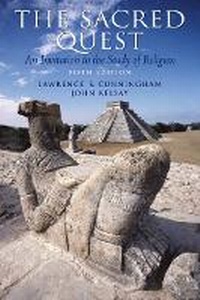
The Sacred Quest
5th Edition
Published on 15. September 2009
Book
Paperback/Softback
176 pages
978-0-13-606152-6 (ISBN)
Description
This text provides a thematic and comparative approach to the study of religion. The focus of individual chapters gives equal weight to both theoretical issues and to practices as they are reflected in the major religions of the world. It examines the main ideas that characterize all religious thought and practice, focusing on such fundamental topics as ritual, sacred language, ethics, salvation, and the problem of evil.
More details
Edition
5th edition
Language
English
Place of publication
United States
Publishing group
Pearson Education (US)
Target group
College/higher education
Dimensions
Height: 152 mm
Width: 230 mm
Thickness: 9 mm
Weight
236 gr
ISBN-13
978-0-13-606152-6 (9780136061526)
Copyright in bibliographic data and cover images is held by Nielsen Book Services Limited or by the publishers or by their respective licensors: all rights reserved.
Schweitzer Classification
Other editions
New editions
Lawrence Cunningham | John Kelsay
The Sacred Quest
An invitation to the Study of Religion Plus MySearchLab with eText -- Access Card Package
Book
10/2012
6th Edition
Pearson
€62.62
Article is exhausted; no reprint
Lawrence Cunningham | Lawrence S. Cunningham | John Kelsay
Sacred Quest, The: An invitation to the Study of Religion
An invitation to the Study of Religion
Book
01/2012
6th Edition
Pearson
€88.99
Article not available for order
Previous edition
Book
07/2005
4th Edition
Pearson
€30.94
Article exhausted; check for reprint
Persons
Lawrence Cunningham is a Rev. John A. O'Brien Professor of Theology in the Department of Theology at Notre Dame University. Cunningham's research interests are in the history and practice of Catholic spirituality as well as the intersection of theology and culture. The author or editor of twenty books, he writes regularly for journals both learned and pastoral. Twice honored by the university for his teaching, he also received a Presidential Award in 2001 for his service to the church and the academy. He is currently finishing a book on Roman Catholicism for Cambridge University Press and is the Christianity editor for the the forthcoming Norton Anthology of World Religions.
John Kelsay is Distinguished Research Professor in the Department of Religion at Florida State University. He is the author of Arguing the Just War in Islam (Cambridge, Mass: Harvard University Press, 2007) and other works dealing with Muslim and Christian teaching about war. A past recipient of a Guggenheim Fellowship, he also serves as co-editor of the Journal of Religious Ethics.
John Kelsay is Distinguished Research Professor in the Department of Religion at Florida State University. He is the author of Arguing the Just War in Islam (Cambridge, Mass: Harvard University Press, 2007) and other works dealing with Muslim and Christian teaching about war. A past recipient of a Guggenheim Fellowship, he also serves as co-editor of the Journal of Religious Ethics.
Content
Preface.
Introduction.
The Breadth and Depth of Religious Experience
A Brief Outline of the Phenomenological Method
Attitudes and Institutions in the Study of Religion
A Final Word
Notes
Suggestions for Further Reading.
1. Toward a Definition of Religion.
The Search for a Definition of Religion
Elements of Religion
Religion and Human Thought
Religion and Feeling
Religion and Action
Individual and Social Existence
Values and Religion
Substance or Function?
Toward Resolution
A Proposal
In Conclusion
Notes
Suggestions for Further Reading.
2. The Nature of the Sacred.
The Complex Character of the Sacred
The Concept of Sacred Reality
Specially Distinctive
To Some Extent, Beyond the Volitional Control of Human Beings
Specially Prominent with Respect to Human Welfare
Properly Determinative of Various Aspects of Human Existence
Summary
Notes
Suggestions for Further Reading
3. The Appearance of the Sacred.
Types of Sacred Appearance
Varieties of Media
Sacred Objects
Sacred Time
Sacred Space
Sacred Appearance and the Complexity of Traditions
Notes
Suggestions for Further Reading
4. The Language(s) of the Sacred.
Myth
Stories
Story as Parable
The Preservation of Sacred Language
Oral Cultures
Scriptural Cultures
A Summary and Synthesis
The Language of Theology
The Visual Language of Religion
Language and Truth
Notes
Suggestions for Further Reading.
5. Ritual.
Myth(os) and Ritual
The Passover
Holy Communion (The Eucharist)
Rites of Passage
Birth Rituals
Rituals of Initiation
Rituals of Mourning and Death
Temporal Rites and Celebrations
The Religious Meaning(s) of Ritual
Adoration
Thanksgiving
Petition
Penance/Purification
Ritual as a Problem
Ritual as a System
Notes
Suggestions for Further Reading.
6. Sacred Communities.
The Social Character of Religion
Religion and Social Resistance
Heresy/Schism/Division
Tradition and Innovation
The Social Aspects of Worship
A Word of Conclusion
Notes
Suggestions for Further Reading.
7. The Problem of Evil.
Identifying Evil
Responses to Evil: Some Classic Patterns
Evil and Karma: The Indian Context
The Consolation of Promise
The Appeal to Sovereignty
Dualism
Are the Answers Adequate?
Notes
Suggestions for Further Reading.
8. Religion and Morality.
Defining the Issues
Religion, Morality, and Justification
Justification: General Considerations
Practical Justification: Three Cases
Hinduism: The Caste System
Islam: The Justification and Limitation of War
Christianity: Why Pray?
Religion and Morality: Patterns
Notes
Suggestions for Further Reading.
9. The Quest for Salvation.
Concepts of Salvation
Individual Salvation in This World
The Search for Meaning
The Desire to Be Remembered
The Ideal of Completion
Individual Salvation in Another World
Joining the Spirit World
Cosmic Cycling or Expansion
The Idea of Judgment
Group Salvation in This World
Salvation Through the People
Salvation Through the Tradition
Salvation in the Kingdom of God in This World
Group Salvation in Another World
Now That Distinctions Have Been Made
Paths to Salvation
The Path of Knowledge
The Path of Action
The Path of Aesthetics
The Path of Submission
The Path of Grace
A Closing Reminder
Notes
Suggestions for Further Reading.
Glossary.
Index
Introduction.
The Breadth and Depth of Religious Experience
A Brief Outline of the Phenomenological Method
Attitudes and Institutions in the Study of Religion
A Final Word
Notes
Suggestions for Further Reading.
1. Toward a Definition of Religion.
The Search for a Definition of Religion
Elements of Religion
Religion and Human Thought
Religion and Feeling
Religion and Action
Individual and Social Existence
Values and Religion
Substance or Function?
Toward Resolution
A Proposal
In Conclusion
Notes
Suggestions for Further Reading.
2. The Nature of the Sacred.
The Complex Character of the Sacred
The Concept of Sacred Reality
Specially Distinctive
To Some Extent, Beyond the Volitional Control of Human Beings
Specially Prominent with Respect to Human Welfare
Properly Determinative of Various Aspects of Human Existence
Summary
Notes
Suggestions for Further Reading
3. The Appearance of the Sacred.
Types of Sacred Appearance
Varieties of Media
Sacred Objects
Sacred Time
Sacred Space
Sacred Appearance and the Complexity of Traditions
Notes
Suggestions for Further Reading
4. The Language(s) of the Sacred.
Myth
Stories
Story as Parable
The Preservation of Sacred Language
Oral Cultures
Scriptural Cultures
A Summary and Synthesis
The Language of Theology
The Visual Language of Religion
Language and Truth
Notes
Suggestions for Further Reading.
5. Ritual.
Myth(os) and Ritual
The Passover
Holy Communion (The Eucharist)
Rites of Passage
Birth Rituals
Rituals of Initiation
Rituals of Mourning and Death
Temporal Rites and Celebrations
The Religious Meaning(s) of Ritual
Adoration
Thanksgiving
Petition
Penance/Purification
Ritual as a Problem
Ritual as a System
Notes
Suggestions for Further Reading.
6. Sacred Communities.
The Social Character of Religion
Religion and Social Resistance
Heresy/Schism/Division
Tradition and Innovation
The Social Aspects of Worship
A Word of Conclusion
Notes
Suggestions for Further Reading.
7. The Problem of Evil.
Identifying Evil
Responses to Evil: Some Classic Patterns
Evil and Karma: The Indian Context
The Consolation of Promise
The Appeal to Sovereignty
Dualism
Are the Answers Adequate?
Notes
Suggestions for Further Reading.
8. Religion and Morality.
Defining the Issues
Religion, Morality, and Justification
Justification: General Considerations
Practical Justification: Three Cases
Hinduism: The Caste System
Islam: The Justification and Limitation of War
Christianity: Why Pray?
Religion and Morality: Patterns
Notes
Suggestions for Further Reading.
9. The Quest for Salvation.
Concepts of Salvation
Individual Salvation in This World
The Search for Meaning
The Desire to Be Remembered
The Ideal of Completion
Individual Salvation in Another World
Joining the Spirit World
Cosmic Cycling or Expansion
The Idea of Judgment
Group Salvation in This World
Salvation Through the People
Salvation Through the Tradition
Salvation in the Kingdom of God in This World
Group Salvation in Another World
Now That Distinctions Have Been Made
Paths to Salvation
The Path of Knowledge
The Path of Action
The Path of Aesthetics
The Path of Submission
The Path of Grace
A Closing Reminder
Notes
Suggestions for Further Reading.
Glossary.
Index