

The Scythians
Nomad Warriors of the Steppe
Published on 9. September 2021
Book
Paperback/Softback
410 pages
978-0-19-882013-0 (ISBN)
Description
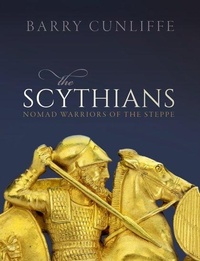
Brilliant horsemen and great fighters, the Scythians were nomadic horsemen who ranged wide across the grasslands of the Asian steppe from the Altai mountains in the east to the Great Hungarian Plain in the first millennium BC. Their steppe homeland bordered on a number of sedentary states to the south - the Chinese, the Persians and the Greeks - and there were, inevitably, numerous interactions between the nomads and their neighbours. The Scythians fought the Persians on a number of occasions, in one battle killing their king and on another occasion driving the invading army of Darius the Great from the steppe.
Relations with the Greeks around the shores of the Black Sea were rather different - both communities benefiting from trading with each other. This led to the development of a brilliant art style, often depicting scenes from Scythian mythology and everyday life. It is from the writings of Greeks like the historian Herodotus that we learn of Scythian life: their beliefs, their burial practices, their love of fighting, and their ambivalent attitudes to gender. It is a world that is also brilliantly illuminated by the rich material culture recovered from Scythian burials, from the graves of kings on the Pontic steppe, with their elaborate gold work and vividly coloured fabrics, to the frozen tombs of the Altai mountains, where all the organic material - wooden carvings, carpets, saddles and even tattooed human bodies - is amazingly well preserved.
Barry Cunliffe here marshals this vast array of evidence - both archaeological and textual - in a masterful reconstruction of the lost world of the Scythians, allowing them to emerge in all their considerable vigour and splendour for the first time in over two millennia.
Relations with the Greeks around the shores of the Black Sea were rather different - both communities benefiting from trading with each other. This led to the development of a brilliant art style, often depicting scenes from Scythian mythology and everyday life. It is from the writings of Greeks like the historian Herodotus that we learn of Scythian life: their beliefs, their burial practices, their love of fighting, and their ambivalent attitudes to gender. It is a world that is also brilliantly illuminated by the rich material culture recovered from Scythian burials, from the graves of kings on the Pontic steppe, with their elaborate gold work and vividly coloured fabrics, to the frozen tombs of the Altai mountains, where all the organic material - wooden carvings, carpets, saddles and even tattooed human bodies - is amazingly well preserved.
Barry Cunliffe here marshals this vast array of evidence - both archaeological and textual - in a masterful reconstruction of the lost world of the Scythians, allowing them to emerge in all their considerable vigour and splendour for the first time in over two millennia.
Reviews / Votes
The volume is an excellent appetizer for people unfamiliar with the Scythians and the significance of the immense steppe world for ancient history * KOSTAS VLASSOPOULOS, Greece and Rome * A scintillating tour de force from probably the greatest scholar of European archaeology. * Simon Sebag Montefiore, BBC History Magazine, Books of the Year 2019 * Cunliffe writes in an uncluttered style and with a seemingly effortless authority about a complex people ... The book is beautifully produced with plenty of colour illustrations, including excellent maps of unfamiliar places. It will surely become the standard introduction to a remarkable lost world. * Tony Spawforth, Literary Review * Not to be missed. * Timeless Travels * The Scythians, superbly written and lavishly illustrated, is the best account of these hard-riding nomads we are likely to have for a long time to come. Especially worthy of note are the excellent maps and diagrams, expertly placed to help the reader chart the wanderings of the Scythians in some of the world's most remote locations. * Ed Voves, Art Eyewitness * Cunliffe masterfully blends archaeology, anthropology, and visual and written evidence with dazzling images, delightful stories, and clear writing. * Jason Linn, H-Net Reviews * Sir Barry Cunliffe's monograph is important both for readers interested in little-known pages of the history of the ancient world and for specialists. Researchers of Eurasian steppe cultures of the 1st millennium BC would be additionally attracted to the book by the possibility of further discussion that it invites-which can help to produce significant results. * Sophia Zinchenko, Journal of Indo-European Studies * Sir Barry Cunliffe's monograph is important both for readers interested in little-known pages of the history of the ancient world and for specialists. Researchers of Eurasian steppe cultures of the 1st millennium BC would be additionally attracted to the book by the possibility of further discussion that it invites-which can help to produce significant results. * Sophia Zinchenko, Journal of Indo-European Studies *More details
Language
English
Place of publication
Oxford
United Kingdom
Illustrations
258 figures, images and maps
Dimensions
Height: 242 mm
Width: 186 mm
Thickness: 20 mm
Weight
882 gr
ISBN-13
978-0-19-882013-0 (9780198820130)
Copyright in bibliographic data and cover images is held by Nielsen Book Services Limited or by the publishers or by their respective licensors: all rights reserved.
Schweitzer Classification
Person
Barry Cunliffe taught archaeology at the Universities of Bristol and Southampton and was Professor of European Archaeology at the University of Oxford from 1972 to 2008, thereafter becoming Emeritus Professor. He has excavated widely in Britain (Fishbourne, Bath, Danebury, Hengistbury Head, Brading) and in the Channel Islands, Brittany, and Spain, and has been President of the Council for British Archaeology and of the Society of Antiquaries, a Governor of the Museum of London, a Commissioner of English Heritage, and a Trustee of the British Museum. His many publications include Facing the Ocean (2001), The Druids: A Very Short Introduction (2010), Britain Begins (2012), By Steppe, Desert, and Ocean (2015), and On the Ocean (2017), all published by Oxford University Press. He received a knighthood in 2006.
Content
Introduction 1: Discovering the Scythians 2: Observing the other 3: Landscape and people 4: Enter the predatory nomad 5: The rise of the European Scythians 6: Scythians in Central Asia 7: Bodies clothed in skins: economy and society 8: Bending the bow 9: Death and the gods 10: The flood continues 11: Reflections on the longue duree Further reading Index Introduction 1: Discovering the Scythians 2: Observing the other 3: Landscape and people 4: Enter the predatory nomad 5: The rise of the European Scythians 6: Scythians in Central Asia 7: Bodies clothed in skins: economy and society 8: Bending the bow 9: Death and the gods 10: The flood continues 11: Reflections on the longue duree Further reading Index