

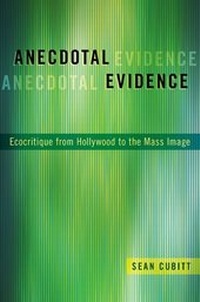
Anecdotal Evidence
Ecocritiqe from Hollywood to the Mass Image
Published on 20. February 2020
Book
Hardback
306 pages
978-0-19-006571-3 (ISBN)
Description
Ecocritique is a practice of radical questioning, as essential to the critical armoury as feminism and postcolonialism have become. Like them, it extends beyond judgements about texts with clear ecological themes, demonstrating the significance of ecocriticism for any advanced understanding of cultural forms. Anecdotal method is ecocritical because it focuses on encounters, concentrated moments of crisis when social ordering and ecological forces clash. The anecdote's power to produce events, meanings and history forms a methodological entry to aesthetic politics. Anecdotal Evidence provides an outline of the need for and principles of anecdotal method; a case study of eco-critical themes in Hollywood films shaped by the Global Financial Crisis; and a confrontation with mass image databases of social and streaming media that due to their scale and organisation appear at first immune to anecdotal method. Only because the environment has a history is it possible to intervene environmentally. Because we continually misrecognise the historical production of environments, the first task of ecocritique is to bring our formative concept of ecology into crisis. Its final task will be to achieve the good life for everything connected by the historical implication of humans in ecology, and ecology in humans. No politics can be undertaken in our times except through media: ecocritical humanities have a key role in rethinking ecopolitics in the 21st century.
Reviews / Votes
Anecdotal Evidence offers an impressive, insightful, and unquestionably inspiring set of film critiques that convincingly demonstrates the ecocritical potential of the concept of the anecdote. * Film Philosophy * As one of ecomedia's long-standing leading scholars, Cubitt's Anecdotal Evidence challenges its readers to break from our entrenched and unsustainable current path dependencies. The point is not to imagine some better but endlessly deferred future but to recover what is possible in the present. * Critical Inquiry *More details
Language
English
Place of publication
New York
United States
Target group
Professional and scholarly
Illustrations
17 screen stills; 2 illus.
Dimensions
Height: 160 mm
Width: 243 mm
Thickness: 39 mm
Weight
680 gr
ISBN-13
978-0-19-006571-3 (9780190065713)
Copyright in bibliographic data and cover images is held by Nielsen Book Services Limited or by the publishers or by their respective licensors: all rights reserved.
Schweitzer Classification
Other editions
Additional editions
Book
02/2020
Oxford University Press Inc
€75.50
Shipment within 15-20 days
E-Book
01/2020
OUP eBook
€33.99
Available for download
E-Book
01/2020
OUP eBook
€33.99
Available for download
Person
Sean Cubitt is Professor of Screen Studies at the University of Melbourne. His publications include The Cinema Effect (2004), EcoMedia (2005), The Practice of Light (2014), and Finite Media: Environmental Implications of Digital Technologies (2017). He is a co-editor of The Ecocinema Reader: Theory and Practice (2012) and of Ecomedia: Key Issues (2015). A member of the editorial boards of leading journals arts including Screen, Cultural Politics, Animation and MIRAJ: The Moving Image Review and Art Journal, he is series editor for Leonardo Books.
Content
Introduction
Section 1: Ecocritique and Anecdote
Section 2: Ecocritique, Popular Cinema, and the Global Financial Crisis
2.1 Rango and appearance
2.2 A Glitch in time: Deja Vu
2.3 Becoming human: Iron Man 2
2.4 Otherwise than human: Oblivion
2.5 The Non-identical world: Source Code
2.6 Those Dying Generations: No Country for Old Men
2.7 Hope in Children of Men and Serenity
2.8 Posthumous Media: The Voyager Animations
Section 3: Ecocritique, Anecdote, and the Mass Image
Part 1: Making the Mass Image
Part 2: Remaking the Mass Image
References
Index
Section 1: Ecocritique and Anecdote
Section 2: Ecocritique, Popular Cinema, and the Global Financial Crisis
2.1 Rango and appearance
2.2 A Glitch in time: Deja Vu
2.3 Becoming human: Iron Man 2
2.4 Otherwise than human: Oblivion
2.5 The Non-identical world: Source Code
2.6 Those Dying Generations: No Country for Old Men
2.7 Hope in Children of Men and Serenity
2.8 Posthumous Media: The Voyager Animations
Section 3: Ecocritique, Anecdote, and the Mass Image
Part 1: Making the Mass Image
Part 2: Remaking the Mass Image
References
Index