

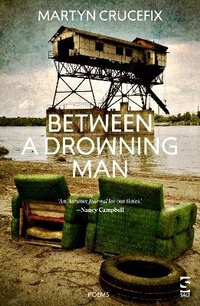
Between a Drowning Man
Will be published approx. on 15. September 2023
Book
Paperback/Softback
96 pages
978-1-78463-305-9 (ISBN)
Description
Martyn Crucefix's new collection of poems trace the forensic unfolding of two landscapes - contemporary Britain post-2016 and the countryside of the Marche in central, eastern Italy. Both places are vividly evoked - the coffee shops, traffic tailbacks, shopping malls, tourist-dotted hillsides and valleys of modern Britain appear in stark contrast to the hilltop villages, church spires, deep gorges, natural history and Classical ruins of Italy. Both landscapes come to represent psychic journeys: closer to home there is division everywhere - depicted in both tragic and comic detail - that only a metaphorical death of the self seems able to counteract. Closer to the Mediterranean, the geographical and personal, or romantic, divisions are also shown ultimately to offer possibilities of transcendence.
The poems of the longer sequence, 'Works and Days', are startlingly free-wheeling, allusive - brilliantly deploying source materials and inspiration from Hesiod's original and the 10/12th century Indian vacana poems - all bound together by the repeated refrain of bridges breaking down. The Italian poems, as a crown of sonnets, are more formally controlled but the repeating of first and last lines of the individual poems likewise serves to suggest the presence of an overarching unity.
In the end, both sequences travel towards death which - while not denying the reality of human mortality, the passage of time - is intended to represent a challenge to the powerful dividing walls between Thee and Me, the liberation of empathetic feeling, even the Daoist erasure of the assumed gulf between self and not-self: 'these millions of us aspiring to the condition / of ubiquitous dust on the fiery water'.
The poems of the longer sequence, 'Works and Days', are startlingly free-wheeling, allusive - brilliantly deploying source materials and inspiration from Hesiod's original and the 10/12th century Indian vacana poems - all bound together by the repeated refrain of bridges breaking down. The Italian poems, as a crown of sonnets, are more formally controlled but the repeating of first and last lines of the individual poems likewise serves to suggest the presence of an overarching unity.
In the end, both sequences travel towards death which - while not denying the reality of human mortality, the passage of time - is intended to represent a challenge to the powerful dividing walls between Thee and Me, the liberation of empathetic feeling, even the Daoist erasure of the assumed gulf between self and not-self: 'these millions of us aspiring to the condition / of ubiquitous dust on the fiery water'.
Reviews / Votes
That repeated refrain, "All the bridges are down", exactly captures the mood - no way of escape, and no reliable communication, even with a continent to which we belong, or always thought we belonged. And most of all, no apparent way to bridge the divide in the country. It is certainly a time when poets should be raising their voices, and playwrights too. I hope you may help to start a revival of conscience. -- Ann Wroe I looked at the Brexit poems and they are wonderful! ... I was truly blown away. -- Caroline Carver These are very powerful poems. -- Clarissa Aykroyd? A sort of phenomenological response to undergoing the experience of Brexit. -- Bill Herbert Among the consequences of ageing (Crucefix is now in his late sixties) is a growing awareness of mortality-and the illusory nature of the material world. There are a number of poems in Between a Drowning Man that look unflinchingly at his own fragile humanity, including the painfully physical "before the doctor asks to examine" and the vividly colourful "after so many years". Poems, too, that reflect on his parents' frailty and the pain of their loss, or his continuing genetic presence in the lives of his children. Yet the overall mood is not of gloom, but wonder-almost puzzlement at times. The clarity of the language begets a kind of luminosity... -- Stuart Henson * London Grip * [T]hese poems speak more to grounding a modern and disconnected world ... in timeless themes like love and desire, parenting, ageing, joy in nature, false idols, and much more, and this is just in the first twenty or so pages. -- Mat Riches * The High Window * These poems, offering no resolution, are powerful, understated, affecting. What emerges is an intense realisation of the fragility of our human condition. -- Shanta Acharya * Everybody's Reviewing *More details
Series
Language
English
Place of publication
Cambridge
United Kingdom
Product notice
Paperback (UK-B)
Illustrations
Not illustrated
Dimensions
Height: 198 mm
Width: 129 mm
Thickness: 7 mm
ISBN-13
978-1-78463-305-9 (9781784633059)
Copyright in bibliographic data and cover images is held by Nielsen Book Services Limited or by the publishers or by their respective licensors: all rights reserved.
Schweitzer Classification
Person
Martyn Crucefix's recent publications include Cargo of Limbs (Hercules Editions, 2019) and The Lovely Disciplines (Seren, 2017). These Numbered Days, translations of poems by Peter Huchel (Shearsman, 2019) won the Schlegel-Tieck Translation Prize, 2020. A Rilke Selected is forthcoming from Pushkin Press, 2023, as is a translation of Lutz Seiler's essays, Sundays I Thought of God (And Other Stories). Currently a Royal Literary Fund Fellow at The British Library, Martyn blogs on poetry, translation and teaching at http://www.martyncrucefix.com.