

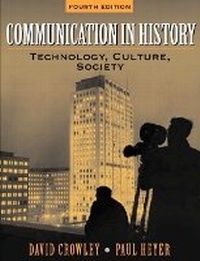
Communication in History
Technology, Culture, and Society: United States Edition
4th Edition
Published on 21. October 2002
Book
Paperback/Softback
352 pages
978-0-321-08805-5 (ISBN)
Description
Communication in History's outstanding selection of readings from classic and contemporary sources gives an extensive overview of the most important ideas in the field.
Encompassing topics as wide-ranging as the role of printing in the rise of the modern state and the role of the Internet in the Information Age, this anthology reveals how media have been influential both in maintaining social order and as powerful agents of change. Revised with new readings for the Fourth Edition, Communication in History continues to be, as one reviewer wrote, "the only text in the sea of History of Mass Communication texts that introduces students to a more expansive, intellectually enlivening study of the relationship between human history and communication history."
Encompassing topics as wide-ranging as the role of printing in the rise of the modern state and the role of the Internet in the Information Age, this anthology reveals how media have been influential both in maintaining social order and as powerful agents of change. Revised with new readings for the Fourth Edition, Communication in History continues to be, as one reviewer wrote, "the only text in the sea of History of Mass Communication texts that introduces students to a more expansive, intellectually enlivening study of the relationship between human history and communication history."
More details
Edition
4th edition
Language
English
Place of publication
New York
United States
Publishing group
Taylor & Francis Inc
Target group
Professional and scholarly
Dimensions
Height: 177 mm
Width: 231 mm
Thickness: 16 mm
Weight
495 gr
ISBN-13
978-0-321-08805-5 (9780321088055)
Copyright in bibliographic data and cover images is held by Nielsen Book Services Limited or by the publishers or by their respective licensors: all rights reserved.
Schweitzer Classification
Other editions
New editions
David Crowley | Paul Heyer
Communication in History
Technology, Culture, Society: United States Edition
Book
07/2006
5th Edition
Routledge
Unfortunately, price unknown
Article exhausted; check for reprint
Previous edition

David Crowley | Paul Heyer
Communication in History
Book
12/1998
3rd Edition
Routledge
Unfortunately, price unknown
No shipping information available
Content
I. THE MEDIA OF EARLY CIVILIZATION.
1. The Art and Symbols of Ice Age Man, Alexander Marshack.
2. The Evolution of Symbols in Prehistory, Denise Schmandt-Besserat.
3. The New Rosetta Stone, Richard Rudgley.
4. Media in Ancient Empires, Harold Innis.
5. Civilizations without Writing-the Incas and the Quipu, Marcia Ascher and Robert Ascher.
6. The Origins of Writing, Andrew Robinson.
II. THE TRADITION OF WESTERN LITERACY.
7. The Alphabet, Johanna Drucker.
8. The Greek Legacy, Eric Havelock.
9. Writing and the Alphabetic Effect, Robert K. Logan.
10. Orality, Literacy, and Modern Media, Walter Ong.
11. A Medieval Library, Umberto Eco.
12. Communication in the Middle Ages, James Burke.
III. THE PRINT REVOLUTION.
13. Paper and Block Printing-From China to Europe, T. F. Carter.
14. The Invention of Printing, Lewis Mumford.
15. The Rise of the Reading Public, Elizabeth Eisenstein.
16. Early Modern Literacies, Harvey J. Graff.
17. The Trade in News, John B. Thompson.
18. Files, Bureaucrats, and Intellectuals, Robert Darnton.
IV. ELECTRICITY CREATES THE WIRED WORLD.
19. The Optical Telegraph, Daniel Headrick.
20. Telegraphy-The Victorian Internet, Tom Standage.
21. The New Journalism, Michael Schudson.
22. The Telephone Takes Command, Claude S. Fischer.
23. Inventing the Expert, Carolyn Marvin.
24. Time, Space, and the Telegraph, James Carey.
V. IMAGE TECHNOLOGIES AND THE EMERGENCE OF MASS SOCIETY.
25. On Photography, Susan Sontag.
26. Early Photojournalism, Ulrich Keller.
27. Dream Worlds of Consumption, Rosalyn Williams.
28. Early Motion Pictures, Daniel Czitrom.
29. Mass Media and the Star System, Jib Fowles.
30. Advertising and the Idea of Mass Society, Jackson Lears.
VI. RADIO DAYS.
31. Wireless World, Stephen Kern.
32. Early Radio, Susan J. Douglas.
33. Movies Talk, Scott Eyman.
34. The Golden Age of Programming, Christopher Sterling and John M. Kittross.
35. Radio and Race, Gerald Nachman.
36. Understanding Radio, Marshall McLuhan.
VII. TV TIMES.
37. Television Begins, William Boddy.
38. The New Languages, Edmund Carpenter.
39. Making Room for TV, Lynn Spigel.
40. The Sixties Counterculture on TV, Aniko Bodroghkozy.
41. Television Transforms the News, Mitchell Stephens.
42. Two Cultures-Television versus Print, Neil Postman and Camille Paglia.
VIII. NEW MEDIA AND OLD IN THE INFORMATION AGE.
43. The Control Revolution, James Beniger.
44. How Media Became New, Lev Manovich.
45. The Hypermedia Environment, Ronald J. Deibert.
46. Popularizing the Internet, Janet Abbate.
47. From Codex to Homepage, James J. O'Donnell.
48. A World Wide Web, Jay David Bolter and Richard Grusin.
Suggested Readings.
1. The Art and Symbols of Ice Age Man, Alexander Marshack.
2. The Evolution of Symbols in Prehistory, Denise Schmandt-Besserat.
3. The New Rosetta Stone, Richard Rudgley.
4. Media in Ancient Empires, Harold Innis.
5. Civilizations without Writing-the Incas and the Quipu, Marcia Ascher and Robert Ascher.
6. The Origins of Writing, Andrew Robinson.
II. THE TRADITION OF WESTERN LITERACY.
7. The Alphabet, Johanna Drucker.
8. The Greek Legacy, Eric Havelock.
9. Writing and the Alphabetic Effect, Robert K. Logan.
10. Orality, Literacy, and Modern Media, Walter Ong.
11. A Medieval Library, Umberto Eco.
12. Communication in the Middle Ages, James Burke.
III. THE PRINT REVOLUTION.
13. Paper and Block Printing-From China to Europe, T. F. Carter.
14. The Invention of Printing, Lewis Mumford.
15. The Rise of the Reading Public, Elizabeth Eisenstein.
16. Early Modern Literacies, Harvey J. Graff.
17. The Trade in News, John B. Thompson.
18. Files, Bureaucrats, and Intellectuals, Robert Darnton.
IV. ELECTRICITY CREATES THE WIRED WORLD.
19. The Optical Telegraph, Daniel Headrick.
20. Telegraphy-The Victorian Internet, Tom Standage.
21. The New Journalism, Michael Schudson.
22. The Telephone Takes Command, Claude S. Fischer.
23. Inventing the Expert, Carolyn Marvin.
24. Time, Space, and the Telegraph, James Carey.
V. IMAGE TECHNOLOGIES AND THE EMERGENCE OF MASS SOCIETY.
25. On Photography, Susan Sontag.
26. Early Photojournalism, Ulrich Keller.
27. Dream Worlds of Consumption, Rosalyn Williams.
28. Early Motion Pictures, Daniel Czitrom.
29. Mass Media and the Star System, Jib Fowles.
30. Advertising and the Idea of Mass Society, Jackson Lears.
VI. RADIO DAYS.
31. Wireless World, Stephen Kern.
32. Early Radio, Susan J. Douglas.
33. Movies Talk, Scott Eyman.
34. The Golden Age of Programming, Christopher Sterling and John M. Kittross.
35. Radio and Race, Gerald Nachman.
36. Understanding Radio, Marshall McLuhan.
VII. TV TIMES.
37. Television Begins, William Boddy.
38. The New Languages, Edmund Carpenter.
39. Making Room for TV, Lynn Spigel.
40. The Sixties Counterculture on TV, Aniko Bodroghkozy.
41. Television Transforms the News, Mitchell Stephens.
42. Two Cultures-Television versus Print, Neil Postman and Camille Paglia.
VIII. NEW MEDIA AND OLD IN THE INFORMATION AGE.
43. The Control Revolution, James Beniger.
44. How Media Became New, Lev Manovich.
45. The Hypermedia Environment, Ronald J. Deibert.
46. Popularizing the Internet, Janet Abbate.
47. From Codex to Homepage, James J. O'Donnell.
48. A World Wide Web, Jay David Bolter and Richard Grusin.
Suggested Readings.