


Hearing the Future
The Music and Magic of the Sanguma Band
Will be published approx. on 31. January 2016
Book
Hardback
200 pages
978-0-8248-5156-9 (ISBN)
Description
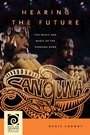
During the turbulent decades of the 1970s and 1980s, Papua New Guinea gained political independence from a colonial hold that had lasted almost a century. It was an exciting time for a diverse group of pioneering musicians who formed a band they named ""Sanguma."" These Melanesian artists heard an imagined future and performed it during a socially and politically critical time for the region. They were united under one goal: to create a sound that represented the birth of a new, sovereign, and distinctly Melanesian nation; and to express their values, identities, and cosmology through their music and performance. Sanguma's experimental music sounded the complex expectations and pressures of their modern nation and helped to steer its postcolonial journey through music.
In Hearing the Future, Australian ethnomusicologist Denis Crowdy documents and analyzes the music and activities of the Sanguma band, arguing that their music was a vital form of cultural expression in sync with sociopolitical change then taking place in PNG. Drawing from rock, jazz, and nascent ""world music"" influences, Sanguma reached audiences far from their home nation, introducing the world to modern music, Melanesia-style, with its fusion of old and new, local and global. Performances ranged from ensembles of Melanesian log drums (garamuts) to extended songs and improvisations involving electric guitars, synthesizers, saxophone, trumpet, bamboo percussion, panpipes, and kuakumba flutes. The band sang in a variety of local vernacular languages, as well as in Tok Pisin and English. To further emphasize their ancestral style, the musicians wore decorative headdresses and body decoration from all around the nation, along with distinctive pants featuring indigenous designs.
As the optimism of the early years of the nation faded due to harsh economic and social realities, and as an increasingly commercial popular music scene came to dominate public music culture, tensions between a once heard future and the sounding present emerged. Continuing a theoretical trajectory in ethnomusicology, Crowdy explores the role of music in imagining, constructing, and representing national and regional identity. The analysis reveals inherent tensions between distinctly Melanesian ideals and the complexities in navigating the realities of local neoliberal capitalism.
In Hearing the Future, Australian ethnomusicologist Denis Crowdy documents and analyzes the music and activities of the Sanguma band, arguing that their music was a vital form of cultural expression in sync with sociopolitical change then taking place in PNG. Drawing from rock, jazz, and nascent ""world music"" influences, Sanguma reached audiences far from their home nation, introducing the world to modern music, Melanesia-style, with its fusion of old and new, local and global. Performances ranged from ensembles of Melanesian log drums (garamuts) to extended songs and improvisations involving electric guitars, synthesizers, saxophone, trumpet, bamboo percussion, panpipes, and kuakumba flutes. The band sang in a variety of local vernacular languages, as well as in Tok Pisin and English. To further emphasize their ancestral style, the musicians wore decorative headdresses and body decoration from all around the nation, along with distinctive pants featuring indigenous designs.
As the optimism of the early years of the nation faded due to harsh economic and social realities, and as an increasingly commercial popular music scene came to dominate public music culture, tensions between a once heard future and the sounding present emerged. Continuing a theoretical trajectory in ethnomusicology, Crowdy explores the role of music in imagining, constructing, and representing national and regional identity. The analysis reveals inherent tensions between distinctly Melanesian ideals and the complexities in navigating the realities of local neoliberal capitalism.
More details
Series
Language
English
Place of publication
Honolulu, HI
United States
Target group
Professional and scholarly
Product notice
sewn/stitched
Cloth over boards
Illustrations
25 black & white illustrations
Dimensions
Height: 231 mm
Width: 152 mm
Thickness: 20 mm
Weight
476 gr
ISBN-13
978-0-8248-5156-9 (9780824851569)
Copyright in bibliographic data and cover images is held by Nielsen Book Services Limited or by the publishers or by their respective licensors: all rights reserved.
Schweitzer Classification
Other editions
Additional editions
E-Book
01/2016
University of Hawaii Press
€128.95
Available for download