

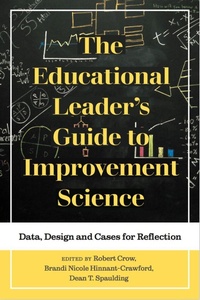
The Educational Leader's Guide to Improvement Science
Data, Design and Cases for Reflection
Will be published approx. on 28. February 2019
Book
Hardback
230 pages
978-1-9755-0094-8 (ISBN)
Description
The Educational Leader's Guide to Improvement Science: Data, Design and Cases for Reflection is a collection of edited chapters illustrating applied organizational problem-solving using methods of Improvement Science in educational leadership. Early chapters introduce Improvement Science, along with an overview, rationale, and challenges for exploring this emerging field. The reader is led through a logical sequence of inquiry, presented with cases of educational dilemma matched with principles of improvement science and provided examples of research methodology applied in context. Because Improvement Science research is so quickly becoming a signature pedagogy and core subject area of inquiry in the field of educational leadership, the literature is scant in its coverage of improvement science models; it is the purpose of this publication to fill the void by providing concrete examples, through case studies, of instances where improvement research methods and analyses can be embedded to enhance and strengthen efforts at organizational improvement. This text concentrates on the elements faculty, students, and administrators need; specific models where improvement science frameworks enhance the reliability and validity of improvement or quality enhancement efforts.
More details
Series
Language
English
Place of publication
Gorham
United States
Target group
Professional and scholarly
Product notice
sewn/stitched
Cloth over boards
Dimensions
Height: 231 mm
Width: 155 mm
Thickness: 25 mm
Weight
612 gr
ISBN-13
978-1-9755-0094-8 (9781975500948)
Copyright in bibliographic data and cover images is held by Nielsen Book Services Limited or by the publishers or by their respective licensors: all rights reserved.
Schweitzer Classification
Other editions
Additional editions
E-Book
05/2019
Myers Education Press
€52.99
Available for download
Persons
Robert Crow is an Assistant Professor of Educational Research at Western Carolina University.
Brandi Nicole Hinnant-Crawford is an Assistant Professor of Educational Research at Western Carolina University.
Dean T. Spaulding is the Vice President and Director of Grant Writng and Program Evaluation with Z Score Inc. He is also former chair of the Teaching Evaluation SIG for the American Evaluation Association. Dr. Spaulding is one of the authors of Methods in Educational Research: From Theory to Practice, Jossey-Bass Wiley, and the author of Program Evaluation in Practice: Core Concepts and Examples for Discussion and Analysis. He is also the co-author of Action Research for School Leaders, Instructional Coaches and the Instructional Leadership Team and What Does Your School Data Team Sound Like? Strategies to Improve the Conversation Around Data.
Brandi Nicole Hinnant-Crawford is an Assistant Professor of Educational Research at Western Carolina University.
Dean T. Spaulding is the Vice President and Director of Grant Writng and Program Evaluation with Z Score Inc. He is also former chair of the Teaching Evaluation SIG for the American Evaluation Association. Dr. Spaulding is one of the authors of Methods in Educational Research: From Theory to Practice, Jossey-Bass Wiley, and the author of Program Evaluation in Practice: Core Concepts and Examples for Discussion and Analysis. He is also the co-author of Action Research for School Leaders, Instructional Coaches and the Instructional Leadership Team and What Does Your School Data Team Sound Like? Strategies to Improve the Conversation Around Data.
Content
Foreword
SECTION ONE - The Science of Improvement Science
Chapter 1 - ConsideringImprovement Science in Educational Leadership by Robert Crow
Chapter 2 - Tools forToday's Educational Leaders: The Basic Tool Box by Dean T. Spaulding &Brandi Nicole Hinnant-Crawford
Chapter3 - PracticalMeasurement in Improvement Science -by Brandi Nicole Hinnant-Crawford
SECTION TWO - Contextualizing Improvement Science inHigher Education
Chapter 4 - Crossing theStreams: Improvement Science, Educational Development and Systems Theory inHigher Education by Amy B. Chan Hilton & Laura Cruz
Chapter5 - Navigating theImprovement Journey with an Equity Compass by Manuelito Biag
Chapter 6 - The UCEA'sProgram Design Network: Roles and Opportunities for Professional Learning UsingImprovement Science by Kathleen M.W. Cunningham, Michelle D. Young, David Eddy Spicer
Chapter 7 - DevelopingStewards of the Practice: Understanding the Role of Improvement Sciencein EdD Programs by Jill A. Perry & Debbie Zambo
Chapter8 - Preparing SchoolLeaders to Effectively Lead School Improvement Efforts: Improvement Scienceby Deborah S. Peterson & Susan P. Carlile
Chapter 9 - LeveragingImprovement Science to Include Culture Shift by Richard J. Corman
Chapter 10 - Redesign ofthe Licensure Field-Based Experience Using Improvement Science by Susan P.Carlile & Deborah S. Peterson
Chapter11- UnravellingGateway Course Complexity by Brandon Smith
Chapter12 - Learning toImprove While Improving Assessment of Family Medicine Residents on an OB/GYNRotation by Brook Hubner, Cecil Robinson & Michael Lawson
SECTION THREE - Contextualizing Improvement Science in K-12Education
Chapter13 - Growth andGrading: Overcoming "Grades Don't Matter" in Middle School by CassandraThonstad
Chapter 14 - UsingImprovement Science in Professional Learning Communities: From Theory toPractice by Ryan Carpenter & Deborah S. Peterson
Chapter15 - ImplementingProfessional Learning Communities: Improvement Required by JacquelineHawkins, Gary Henry, Kristi Santi & Keith Butcher
Chapter 16 - Applying thePlan-Do-Study-Act Framework to Building a Social-Emotional Student SupportFramework by KenFacin & Patrick Dailey
Chapter17 - Conclusion -Dean T. Spaulding &Brandi Nicole Hinnant-Crawford
SECTION ONE - The Science of Improvement Science
Chapter 1 - ConsideringImprovement Science in Educational Leadership by Robert Crow
Chapter 2 - Tools forToday's Educational Leaders: The Basic Tool Box by Dean T. Spaulding &Brandi Nicole Hinnant-Crawford
Chapter3 - PracticalMeasurement in Improvement Science -by Brandi Nicole Hinnant-Crawford
SECTION TWO - Contextualizing Improvement Science inHigher Education
Chapter 4 - Crossing theStreams: Improvement Science, Educational Development and Systems Theory inHigher Education by Amy B. Chan Hilton & Laura Cruz
Chapter5 - Navigating theImprovement Journey with an Equity Compass by Manuelito Biag
Chapter 6 - The UCEA'sProgram Design Network: Roles and Opportunities for Professional Learning UsingImprovement Science by Kathleen M.W. Cunningham, Michelle D. Young, David Eddy Spicer
Chapter 7 - DevelopingStewards of the Practice: Understanding the Role of Improvement Sciencein EdD Programs by Jill A. Perry & Debbie Zambo
Chapter8 - Preparing SchoolLeaders to Effectively Lead School Improvement Efforts: Improvement Scienceby Deborah S. Peterson & Susan P. Carlile
Chapter 9 - LeveragingImprovement Science to Include Culture Shift by Richard J. Corman
Chapter 10 - Redesign ofthe Licensure Field-Based Experience Using Improvement Science by Susan P.Carlile & Deborah S. Peterson
Chapter11- UnravellingGateway Course Complexity by Brandon Smith
Chapter12 - Learning toImprove While Improving Assessment of Family Medicine Residents on an OB/GYNRotation by Brook Hubner, Cecil Robinson & Michael Lawson
SECTION THREE - Contextualizing Improvement Science in K-12Education
Chapter13 - Growth andGrading: Overcoming "Grades Don't Matter" in Middle School by CassandraThonstad
Chapter 14 - UsingImprovement Science in Professional Learning Communities: From Theory toPractice by Ryan Carpenter & Deborah S. Peterson
Chapter15 - ImplementingProfessional Learning Communities: Improvement Required by JacquelineHawkins, Gary Henry, Kristi Santi & Keith Butcher
Chapter 16 - Applying thePlan-Do-Study-Act Framework to Building a Social-Emotional Student SupportFramework by KenFacin & Patrick Dailey
Chapter17 - Conclusion -Dean T. Spaulding &Brandi Nicole Hinnant-Crawford