

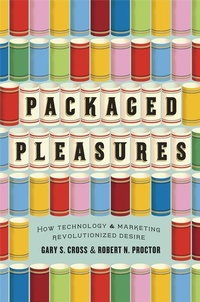
Packaged Pleasures
How Technology and Marketing Revolutionized Desire
Will be published approx. on 30. September 2014
Book
Hardback
336 pages
978-0-226-12127-7 (ISBN)
Description
From the candy bar to the cigarette, records to roller coasters, a technological revolution during the last quarter of the nineteenth century precipitated a colossal shift in human consumption and sensual experience. Food, drink, and many other consumer goods came to be mass-produced, bottled, canned, condensed, and distilled, unleashing new and intensified surges of pleasure, delight, thrill - and addictions. In Packaged Pleasures, Gary S. Cross and Robert N. Proctor delve into an unchartered chapter of American history, shedding new light on the origins of modern consumer culture and how technologies have transformed human sensory experience. In the space of only a few decades, junk foods, cigarettes, movies, recorded sound, and thrill rides brought about a revolution in what it means to taste, smell, see, hear, and touch. New techniques of boxing, labeling, and tubing gave consumers virtually unlimited access to pleasures they could simply unwrap and enjoy. Manufacturers generated a seemingly endless stream of sugar-filled, high-fat foods that were delicious but detrimental to health. Mechanically rolled cigarettes entered the market and quickly addicted millions.
And many other packaged pleasures dulled or displaced natural and social delights. Yet many of these same new technologies also offered convenient and effective medicines, unprecedented opportunities to enjoy music and the visual arts, and more hygienic, varied, and nutritious food and drink. For better or for worse, sensation became mechanized, commercialized, and, to a large extent, democratized by being made cheap and accessible. Cross and Proctor have delivered an ingeniously constructed history of consumerism and consumer technology that will make us all rethink some of our favorite things.
And many other packaged pleasures dulled or displaced natural and social delights. Yet many of these same new technologies also offered convenient and effective medicines, unprecedented opportunities to enjoy music and the visual arts, and more hygienic, varied, and nutritious food and drink. For better or for worse, sensation became mechanized, commercialized, and, to a large extent, democratized by being made cheap and accessible. Cross and Proctor have delivered an ingeniously constructed history of consumerism and consumer technology that will make us all rethink some of our favorite things.
Reviews / Votes
"This book persuasively addresses one of the key questions in modern history: how human experience has been reshaped by mass marketing. It includes but goes beyond attention to advertising, to a fascinating exploration of technology's impact on products and packaging, and how the result has transformed sensory response. A groundbreaking effort." -Peter N. Stearns, author of The Industrial Revolution in World HistoryMore details
Language
English
Place of publication
Chicago
United States
Publishing group
The University of Chicago Press
Target group
Professional and scholarly
Product notice
sewn/stitched
Cloth over boards
Dimensions
Height: 240 mm
Width: 164 mm
Thickness: 29 mm
Weight
618 gr
ISBN-13
978-0-226-12127-7 (9780226121277)
Copyright in bibliographic data and cover images is held by Nielsen Book Services Limited or by the publishers or by their respective licensors: all rights reserved.
Schweitzer Classification
Other editions
Additional editions
Cross Gary S. Cross | Proctor Robert N. Proctor
Packaged Pleasures
How Technology and Marketing Revolutionized Desire
E-Book
09/2014
University of Chicago Press
€46.99
Available for download
Persons
Gary S. Cross is distinguished professor of modern history at Pennsylvania State University and the author of many books, including An All-Consuming Century: Why Commercialism Won in Modern America and The Playful Crowd: Pleasure Places in the Twentieth Century. Robert N. Proctor is professor of history of science at Stanford University and the author of many books, including Racial Hygiene: Medicine Under the Nazis and Value-Free Science? Purity and Power in Modern Knowledge.
Content
1. The Carrot and the Candy Bar 2. Containing Civilization, Preserving the Ephemeral, Going Tubular 3. The Cigarette Story 4. Superfoods and the Engineered Origins of the Modern Sweet Tooth 5. Portable Packets of Sound: The Birth of the Phonograph and Record 6. Packaging Sight: Projections, Snapshots, and Motion Pictures 7. Packaging Fantasy: The Amusement Park as Mechanized Circus, Electric Theater, and Commercialized Spectacle 8. Pleasure on Speed and the Calibrated Life: Fast Forwarding through the Last Century 9. Red Raspberries All the Time? Notes Index