

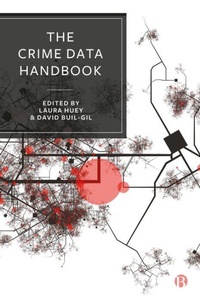
The Crime Data Handbook
Bristol University Press
1st Edition
Published on 30. April 2024
Book
Hardback
352 pages
978-1-5292-3203-5 (ISBN)
Description
Crime research has grown substantially over the past decade, with a rise in evidence-informed approaches to criminal justice, statistics-driven decision-making and predictive analytics. The fuel that has driven this growth is data - and one of its most pressing challenges is the lack of research on the use and interpretation of data sources.
This accessible, engaging book closes that gap for researchers, practitioners and students. International researchers and crime analysts discuss the strengths, perils and opportunities of the data sources and tools now available and their best use in informing sound public policy and criminal justice practice.
This accessible, engaging book closes that gap for researchers, practitioners and students. International researchers and crime analysts discuss the strengths, perils and opportunities of the data sources and tools now available and their best use in informing sound public policy and criminal justice practice.
Reviews / Votes
"This text brings together relevant topical areas with contributions that should be foundational readings for both academics and practitioners." Grant Drawve, Vice President of Research & Innovation, CAP Index "Statistics on crime promise to open a window on the victims, situations and consequences of one of the pressing problems of our time. But rather than educating and advising, crime data are often misunderstood and misapplied. This timely volume surveys the data terrain and provides clear guidance for properly using a variety of crime and justice measures." Wesley G. Skogan, Northwestern UniversityMore details
Edition
First Edition
Language
English
Place of publication
Bristol
United Kingdom
Target group
Professional and scholarly
College/higher education
Product notice
Unsewn / adhesive bound
Cloth over boards
Illustrations
22 s/w Abbildungen, 13 s/w Tabellen
13 Tables, black and white; 22 Illustrations, black and white
Dimensions
Height: 234 mm
Width: 156 mm
Thickness: 21 mm
Weight
671 gr
ISBN-13
978-1-5292-3203-5 (9781529232035)
Copyright in bibliographic data and cover images is held by Nielsen Book Services Limited or by the publishers or by their respective licensors: all rights reserved.
Schweitzer Classification
Other editions
Additional editions
Book
04/2024
1st Edition
Bristol University Press
€47.00
Shipment within 3-4 weeks
E-Book
04/2024
1st Edition
Bristol University Press
€48.99
Available for download
Persons
Laura Huey is Professor of Sociology at the University of Western Ontario.
David Buil-Gil is Lecturer in Quantitative Criminology at the University of Manchester and Academic Lead for Digital Technologies and Crime at the Manchester Centre for Digital Trust and Society.
David Buil-Gil is Lecturer in Quantitative Criminology at the University of Manchester and Academic Lead for Digital Technologies and Crime at the Manchester Centre for Digital Trust and Society.
Contributions
University of Surrey
Nederlands Studiecentrum Criminaliteit en Rechtshandhaving (NCCR)
Nederlands Studiecentrum Criminaliteit en Rechtshandhaving (NSCR)
Nederlands Studiecentrum Criminaliteit en Rechtshandhaving
RMIT University
Evidence Based Policing Centre (New Zealand Police)
Evidence Based Policing Centre (New Zealand Police)
The University of Waikato
UNIVERSITAS Miguel Hernandez, Crimina Research Center
UNIVERSITAS Miguel Hernandez, Crimina Research Center
Content
Introduction - Laura Huey and David Buil-Gil
PART 1 - CRIME DATA SOURCES
Chapter 1 Forewarned Is Forearmed: The Hidden Curriculum of Working With Police Crime Data - Sophie Curtis-Ham, Lisa Tompson and Sarah Czarnomski
Chapter 2 Local Safety and Victimization Surveys as a Data Source for Evidence-Based Prevention Policies - Marta Murria Sangenis, Cristina Sobrino Garces and Jose Maria Lopez-Riba
Chapter 3 National Crime Surveys in the 21st Century - Mark Mills
Chapter 4 Self-Reported Data - Raquel Bartolome Gutierrez, Esther Fernandez-Molina and Rosemary Barberet
Chapter 5 Using Synthetic Crime Data to Understand Patterns of Police Undercounting at the Local Level - Ian Brunton-Smith, David Buil-Gil, Jose Pina-Sanchez, Alexandru Cernat and Angelo Moretti
Chapter 6 Health Data: Complementing Police Data to Know How Violent Places Are and Whether Interventions Are Effective - Alex Sutherland and Adrian Boyle
Chapter 7 Social Media Data as a Gateway to Victims' Experiences - Jesus C. Aguerri and Fernando Miro-Llinares
PART 2 - USING CRIME AND CRIMINAL JUSTICE DATA
Chapter 8 Police Involvement in Mental Health Call-Outs - Stuart D.M. Thomas
Chapter 9 Exploring Unsolved Homicides in Great Britain Through the FOIA: Implications for Practitioner Approaches to Investigations - Kirsty Bennett
Chapter 10 Obscured by Its Omnipresence? Conceptual and Practical Issues Around Measuring Alcohol-Related Crime in England and Wales - Carly Lightowlers, Lucy Bryant and Olivia Horsefield
Chapter 11 Connecting the Corrupt: Data Sources to Study Networks of Serious Financial Crime in the United Kingdom - Tomas Diviak and Nicholas Lord
Chapter 12 the Limits of Deadly Force Databases for Studying Lethal Force by Police - Bryce Jenkins, Tori Semple and Craig Bennell
PART 3 - CRIME DATA IN THEORY, POLICY AND PRACTICE
Chapter 13 Measuring Attitudes From General Purpose Surveys: A Pragmatic Approach for Criminology - Jack Cunliffe
Chapter 14 on the Use of Inferential Statistics on Administrative Police Data - Tim Verlaan and Samuel Langton
Chapter 15 Bad Outcomes, Good Intentions: Approaching the Potential Misuse of Crime Data by Policy Makers - Francisco J. Castro-Toledo and Ana B. Gomez-Bellvis
Chapter 16 the Collection and Understanding of Administrative Data in UK Police Forces - Scott Keay and Jude Towers
PART 4 - COMPARING, CONTRASTING AND COMBINING CRIME DATA
Chapter 17 Using Financial Transaction Data to Analyze, Detect and Disrupt Technologically Facilitated Crime - Timothy I.C. Cubitt
Chapter 18 A Framework for Measuring the Quality of Police Recorded Cybercrime Data, Illustrated Through a UK/USA Comparison - Sara Correia-Hopkins
Chapter 19 The Dark Figure of Prison Violence in Uruguay: An Exploratory Mixed-Method Study - Nicolas Trajtenberg and Olga Sanchez De Ribera
Chapter 20 Measuring Intimate Partner Violence Using Different Data Sources: Reflections on a Global Shadow Pandemic - Anthony Morgan and Hayley Boxall
Chapter 21 Surveying Domestic Abuse Victims: The Inimical Lack of Common Ground - Leticia Couto
PART 1 - CRIME DATA SOURCES
Chapter 1 Forewarned Is Forearmed: The Hidden Curriculum of Working With Police Crime Data - Sophie Curtis-Ham, Lisa Tompson and Sarah Czarnomski
Chapter 2 Local Safety and Victimization Surveys as a Data Source for Evidence-Based Prevention Policies - Marta Murria Sangenis, Cristina Sobrino Garces and Jose Maria Lopez-Riba
Chapter 3 National Crime Surveys in the 21st Century - Mark Mills
Chapter 4 Self-Reported Data - Raquel Bartolome Gutierrez, Esther Fernandez-Molina and Rosemary Barberet
Chapter 5 Using Synthetic Crime Data to Understand Patterns of Police Undercounting at the Local Level - Ian Brunton-Smith, David Buil-Gil, Jose Pina-Sanchez, Alexandru Cernat and Angelo Moretti
Chapter 6 Health Data: Complementing Police Data to Know How Violent Places Are and Whether Interventions Are Effective - Alex Sutherland and Adrian Boyle
Chapter 7 Social Media Data as a Gateway to Victims' Experiences - Jesus C. Aguerri and Fernando Miro-Llinares
PART 2 - USING CRIME AND CRIMINAL JUSTICE DATA
Chapter 8 Police Involvement in Mental Health Call-Outs - Stuart D.M. Thomas
Chapter 9 Exploring Unsolved Homicides in Great Britain Through the FOIA: Implications for Practitioner Approaches to Investigations - Kirsty Bennett
Chapter 10 Obscured by Its Omnipresence? Conceptual and Practical Issues Around Measuring Alcohol-Related Crime in England and Wales - Carly Lightowlers, Lucy Bryant and Olivia Horsefield
Chapter 11 Connecting the Corrupt: Data Sources to Study Networks of Serious Financial Crime in the United Kingdom - Tomas Diviak and Nicholas Lord
Chapter 12 the Limits of Deadly Force Databases for Studying Lethal Force by Police - Bryce Jenkins, Tori Semple and Craig Bennell
PART 3 - CRIME DATA IN THEORY, POLICY AND PRACTICE
Chapter 13 Measuring Attitudes From General Purpose Surveys: A Pragmatic Approach for Criminology - Jack Cunliffe
Chapter 14 on the Use of Inferential Statistics on Administrative Police Data - Tim Verlaan and Samuel Langton
Chapter 15 Bad Outcomes, Good Intentions: Approaching the Potential Misuse of Crime Data by Policy Makers - Francisco J. Castro-Toledo and Ana B. Gomez-Bellvis
Chapter 16 the Collection and Understanding of Administrative Data in UK Police Forces - Scott Keay and Jude Towers
PART 4 - COMPARING, CONTRASTING AND COMBINING CRIME DATA
Chapter 17 Using Financial Transaction Data to Analyze, Detect and Disrupt Technologically Facilitated Crime - Timothy I.C. Cubitt
Chapter 18 A Framework for Measuring the Quality of Police Recorded Cybercrime Data, Illustrated Through a UK/USA Comparison - Sara Correia-Hopkins
Chapter 19 The Dark Figure of Prison Violence in Uruguay: An Exploratory Mixed-Method Study - Nicolas Trajtenberg and Olga Sanchez De Ribera
Chapter 20 Measuring Intimate Partner Violence Using Different Data Sources: Reflections on a Global Shadow Pandemic - Anthony Morgan and Hayley Boxall
Chapter 21 Surveying Domestic Abuse Victims: The Inimical Lack of Common Ground - Leticia Couto