

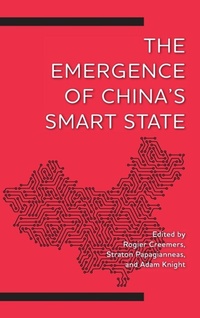
The Emergence of China's Smart State
Published on 16. October 2023
Book
Hardback
260 pages
978-1-5381-8441-7 (ISBN)
Description
China's emergence as a technology leader has become a major factor in geopolitics, transforming global political and economic relationships. In its bid to achieve digital great power status, China's government has reformed laws and policies, drastically increased investment, and become more assertive internationally. Chinese companies have expanded at home and abroad, but relationships between government and the private sector have sometimes been fractious.
This open access book assesses the extent to which the Chinese government has been able to achieve its ambitious digital goals, and more broadly, how this reflects rapidly changing domestic and international political and economic dynamics surrounding China's rise as a major technology player. This is the first book of its kind, interrogating the complex, dynamic interactions between political, market, and technological factors that structure China's digital development. It will provide information and intellectual frameworks for scholars, policymakers, and professionals to appreciate the complexity of China's digital policy landscape, the process of learning and iteration the Party continues to experience as external events impact the policy process, and the impact China's innovation policies, regulations, and achievements have had, or may have, in the future.
The ebook editions of this book are available open access under a CC BY-NC-ND 4.0 licence on bloomsburycollections.com. Open access was funded by Netherlands Ministry of Foreign Affairs
This open access book assesses the extent to which the Chinese government has been able to achieve its ambitious digital goals, and more broadly, how this reflects rapidly changing domestic and international political and economic dynamics surrounding China's rise as a major technology player. This is the first book of its kind, interrogating the complex, dynamic interactions between political, market, and technological factors that structure China's digital development. It will provide information and intellectual frameworks for scholars, policymakers, and professionals to appreciate the complexity of China's digital policy landscape, the process of learning and iteration the Party continues to experience as external events impact the policy process, and the impact China's innovation policies, regulations, and achievements have had, or may have, in the future.
The ebook editions of this book are available open access under a CC BY-NC-ND 4.0 licence on bloomsburycollections.com. Open access was funded by Netherlands Ministry of Foreign Affairs
Reviews / Votes
This excellent compilation of essays on a complex topic, how the government guides development of the digital economy and how it has evolved, is a breath of fresh air and adds a much-needed facts-based and non-ideological corpus of understanding to our knowledge of this important topic. The book is free from some of the ideological spin of recent efforts to track and describe particularly the role of government in driving China's rise as a technology power. The authors all appear to have first-hand and fresh knowledge of their subject areas, and avoid relying on second and third hand sources in ways that can sometimes become an echo chamber of analysis of China and technology in the age of highly geopolitically charged US-China technology competition. Well done all around. -- Paul Triolo, senior vice president for China, global technology policy lead at Albright Stonebridge Group At a time of growing geo-political tensions between China and the West, the importance of understanding China's strategies in the critical area of advanced technologies cannot be overstated. This volume draws on extensive research and expertise to provide a nuanced and authoritative account of China's technology ambitions and capabilities-and the sometimes wide gap between the two. It should be mandatory reading for all policy-makers dealing with China. -- Nigel Inkster, senior advisor for China at IISS and author of "The Great Decoupling: China, America and the Struggle for Technological Supremacy" The Emergence of China's Smart State should be essential reading for anyone who seeks to understand China's technological rise from a Beijing-centric perspective. Policymakers in particular will benefit from the way authors in the book have unpacked the complexity and contradictions present in China's digital development and ambitions. -- Meia Nouwens, senior fellow for Chinese security and defence policy, The International Institute for Strategic StudiesMore details
Series
Language
English
Place of publication
United States
Publishing group
Bloomsbury Publishing Plc
Target group
Professional and scholarly
Illustrations
6 tables; 6 charts;
Dimensions
Height: 235 mm
Width: 157 mm
Thickness: 20 mm
Weight
581 gr
ISBN-13
978-1-5381-8441-7 (9781538184417)
Copyright in bibliographic data and cover images is held by Nielsen Book Services Limited or by the publishers or by their respective licensors: all rights reserved.
Schweitzer Classification
Persons
Rogier Creemers is a lecturer in modern Chinese studies at Leiden University. His research focuses on Chinese domestic digital technology policy, as well as China's growing importance in global digital affairs. He is the principal investigator of the NWO Vidi Project "The Smart State: Big Data, Artificial Intelligence and the Law in China". For the Leiden Asia Centre, he directs a project on China and global cybersecurity, funded by the Dutch Ministry of Foreign Affairs. He is also a co-founder of DigiChina, a joint initiative with Stanford University and New America.
Straton Papagianneas is a PhD candidate at Leiden University for Area Studies (LIAS). His PhD project will evaluate the role of smart systems in the post-4th Plenum legal reform agenda. This agenda intends to enhance the professionalization of courts and law enforcement bodies, strengthen courts' autonomy from local governments, broaden access to justice, and give priority to formal litigation.
Adam Knight is a PhD candidate at the Leiden Institute for Area Studies (LIAS) where he focuses on the design, implementation, and consequences of the Chinese social credit system. He is a regular media commentator as well as speaker on the topic of smart governance and internet policy in China.
Straton Papagianneas is a PhD candidate at Leiden University for Area Studies (LIAS). His PhD project will evaluate the role of smart systems in the post-4th Plenum legal reform agenda. This agenda intends to enhance the professionalization of courts and law enforcement bodies, strengthen courts' autonomy from local governments, broaden access to justice, and give priority to formal litigation.
Adam Knight is a PhD candidate at the Leiden Institute for Area Studies (LIAS) where he focuses on the design, implementation, and consequences of the Chinese social credit system. He is a regular media commentator as well as speaker on the topic of smart governance and internet policy in China.
Content
Introduction by Rogier Creemers
Part I: Digital Concepts and Institutions
Chapter 1: The Cyberspace Administration of China: A Portrait by Jamie Horsley and Rogier Creemers
Chapter 2: The Stumbling Smart State: Fragmented Policy Experimentation & Dubious Consolidation by Straton Papagianneas & Adam Knight
Part II: Strategic Emerging Technologies
Chapter 3: China's Industrial Policy for Semiconductors by John Lee
Chapter 4: Fintech in China: Trading off Growth and Risk, Innovation and Control by Martin Chorzempa
Part III: International Engagement and Confrontation
Chapter 5: China: A Technical Standardisation Power? by Tim Ruehlig
Chapter 6: China and Global Data Transfers: Implications for Future Rulemaking by Hunter Dorwart
Chapter 7: China and Global Internet Governance: ITU, ICANN and the World Internet Conference by Gianluigi Negro
Chapter 8: Becoming a Cyber Superpower: China Builds Offensive Capability with Military, Government and Private Sector Forces by Mei Danowski
Part IV: Local Dynamics
Part I: Digital Concepts and Institutions
Chapter 1: The Cyberspace Administration of China: A Portrait by Jamie Horsley and Rogier Creemers
Chapter 2: The Stumbling Smart State: Fragmented Policy Experimentation & Dubious Consolidation by Straton Papagianneas & Adam Knight
Part II: Strategic Emerging Technologies
Chapter 3: China's Industrial Policy for Semiconductors by John Lee
Chapter 4: Fintech in China: Trading off Growth and Risk, Innovation and Control by Martin Chorzempa
Part III: International Engagement and Confrontation
Chapter 5: China: A Technical Standardisation Power? by Tim Ruehlig
Chapter 6: China and Global Data Transfers: Implications for Future Rulemaking by Hunter Dorwart
Chapter 7: China and Global Internet Governance: ITU, ICANN and the World Internet Conference by Gianluigi Negro
Chapter 8: Becoming a Cyber Superpower: China Builds Offensive Capability with Military, Government and Private Sector Forces by Mei Danowski
Part IV: Local Dynamics