

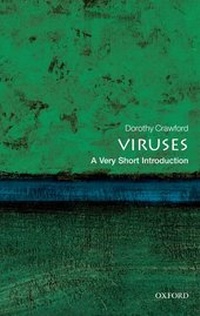
Viruses: A Very Short Introduction
A Very Short Introduction
Published on 28. July 2011
Book
Paperback/Softback
176 pages
978-0-19-957485-8 (ISBN)
Description
Viruses are big news. From pandemics such as HIV, swine flu, and SARS, we are constantly being bombarded with information about new lethal infections. In this Very Short Introduction Dorothy Crawford demonstrates how clever these entities really are. From their discovery and the unravelling of their intricate structures, Crawford demonstrates how these tiny parasites are by far the most abundant life forms on the planet. With up to two billion of them in
each litre of sea water, viruses play a vital role in controlling the marine environment and are essential to the ocean's delicate ecosystem.
Analyzing the threat of emerging virus infections, Crawford recounts stories of renowned killer viruses such as Ebola and rabies as well as the less known bat-borne Nipah and Hendra viruses. Pinpointing wild animals as the source of the most recent pandemics, she discusses the reasons behind the present increase in potentially fatal infections, as well as evidence suggesting that long term viruses can eventually lead to cancer.
By examining our lifestyle in the 21st century, Crawford looks to the future to ask whether we can ever live in harmony with viruses, and considers the ways in which we may need to adapt to prevent emerging viruses with devastating consequences.
ABOUT THE SERIES: The Very Short Introductions series from Oxford University Press contains hundreds of titles in almost every subject area. These pocket-sized books are the perfect way to get ahead in a new subject quickly. Our expert authors combine facts, analysis, perspective, new ideas, and enthusiasm to make interesting and challenging topics highly readable.
each litre of sea water, viruses play a vital role in controlling the marine environment and are essential to the ocean's delicate ecosystem.
Analyzing the threat of emerging virus infections, Crawford recounts stories of renowned killer viruses such as Ebola and rabies as well as the less known bat-borne Nipah and Hendra viruses. Pinpointing wild animals as the source of the most recent pandemics, she discusses the reasons behind the present increase in potentially fatal infections, as well as evidence suggesting that long term viruses can eventually lead to cancer.
By examining our lifestyle in the 21st century, Crawford looks to the future to ask whether we can ever live in harmony with viruses, and considers the ways in which we may need to adapt to prevent emerging viruses with devastating consequences.
ABOUT THE SERIES: The Very Short Introductions series from Oxford University Press contains hundreds of titles in almost every subject area. These pocket-sized books are the perfect way to get ahead in a new subject quickly. Our expert authors combine facts, analysis, perspective, new ideas, and enthusiasm to make interesting and challenging topics highly readable.
Reviews / Votes
a diminutive volume that provides a surprisinly complete and beautifully readable overview to this topic - all without resorting to specialist jargon. * The Guardian *More details
Series
Language
English
Place of publication
Oxford
United Kingdom
Target group
General readers with an interest in viruses and how they infect and cause disease, readers interested in recent pandemics such as swine flu, HIV, and SARS, as well as science and medical students looking for a short introduction and summary of viruses.
Illustrations
19 black and white halftones
Dimensions
Height: 168 mm
Width: 107 mm
Thickness: 10 mm
Weight
146 gr
ISBN-13
978-0-19-957485-8 (9780199574858)
Copyright in bibliographic data and cover images is held by Nielsen Book Services Limited or by the publishers or by their respective licensors: all rights reserved.
Schweitzer Classification
Other editions
New editions
Book
10/2022
3rd Edition
Oxford University Press
€13.00
Available immediately
Person
Professor Crawford took the Robert Irvine Chair of Medical Microbiology at the University of Edinburgh in 1997, headed the school of Biomedical Sciences from 2004-2007, and was appointed Assistant Principal for Public Understanding of Medicine in 2007. She has previously published two books on microbes for a general audience, The Invisible Enemy (OUP, 2000), and more recently Deadly Companions (OUP, 2007). She was elected a Fellow of both the Royal
Society of Edinburgh and the Academy of Medical Sciences in 2001 and awarded an OBE for services to medicine and higher education in 2005.
Society of Edinburgh and the Academy of Medical Sciences in 2001 and awarded an OBE for services to medicine and higher education in 2005.
Content
1. What are viruses? ; 2. Viruses are everywhere ; 3. Kill or be killed ; 4. Emerging virus infections ; 5. Epidemics and pandemics ; 6. Persistent viruses ; 7. Tumour viruses ; 8. Turning the tables on viruses ; 9. Viruses past, present and future