

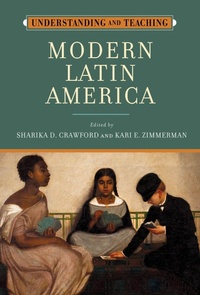
Understanding and Teaching Modern Latin America
Will be published approx. on 3. February 2026
Book
Hardback
376 pages
978-0-299-35190-8 (ISBN)
Description
Understanding and Teaching Modern Latin America combines engaging, clearly written overviews of key themes with fresh and well-tested classroom approaches for teaching today's students about a complex historical subject. This volume comprises an introduction and sixteen chapters divided into three parts, including a reflection from a senior professor about the ways in which teaching Latin American history have changed over the past few decades, as public calls to internationalize high school and college students have led to the growth of world history courses. Chapters explore a wide range of themes-including slavery, revolution, race, labor, gender, and the environment. This volume also offers innovative and practical teaching strategies, from using maps to incorporating food, to enrich any K-16 curriculum. By presenting multiple viewpoints, this book functions as a springboard for instructors hoping to encourage students to negotiate the various contradictions in historical study.
Reviews / Votes
"This thoughtful and carefully produced book presents the challenges and promises of teaching Latin American history to a predominantly US audience of students." - Jacob Blanc, McGill UniversityMore details
Series
Language
English
Place of publication
Wisconsin
United States
Target group
Primary & secondary/elementary & high school
College/higher education
Product notice
sewn/stitched
Cloth over boards
Illustrations
9 b&w illus., 14 tables
Dimensions
Height: 230 mm
Width: 154 mm
Thickness: 18 mm
Weight
567 gr
ISBN-13
978-0-299-35190-8 (9780299351908)
Copyright in bibliographic data and cover images is held by Nielsen Book Services Limited or by the publishers or by their respective licensors: all rights reserved.
Schweitzer Classification
Persons
Sharika D. Crawford is a historian of modern Latin America and the circum-Caribbean. Her book The Last Turtlemen of the Caribbean: Waterscapes of Labor, Conservation, and Boundary Making received an honorable mention by the Association of Caribbean Historians 2021 Elsa Goveia Book Prize Committee. She is the former Higher Education chair of the AP World History Modern Test Development Committee.
Kari E. Zimmerman is an associate professor of history and the director of Latin American and Caribbean studies at the University of St. Thomas, Minnesota. Focusing on gender and the economy in nineteenth-century Brazil, her scholarship explores the gendered histories of African slavery, female entrepreneurship, and international patents. Her teaching and community engagement have been honored by the McKnight Foundation: Youthprise, University Advocates for Women and Equity, and UST Student Diversity and Inclusion Services.
Kari E. Zimmerman is an associate professor of history and the director of Latin American and Caribbean studies at the University of St. Thomas, Minnesota. Focusing on gender and the economy in nineteenth-century Brazil, her scholarship explores the gendered histories of African slavery, female entrepreneurship, and international patents. Her teaching and community engagement have been honored by the McKnight Foundation: Youthprise, University Advocates for Women and Equity, and UST Student Diversity and Inclusion Services.
Content
Introduction: Navigating the Boundaries of Modern Latin American History
Sharika D. Crawford and Kari E. Zimmerman
Part One: Major Themes in Modern Latin American History
Republicanism and Democracy in Latin America
James E. Sanders
The Role of the Haitian Revolution in a Modern Latin American History
Joshua Rosenthal
African Slavery in Latin America
Kari E. Zimmerman
Twentieth-Century Latin American Revolutions
Marc Becker
Teaching the Dirty Wars: Challenges, Approaches, Sources
Steven S. Volk
Part Two: Critical Topics in Modern Latin American History
Understanding Race, Racialization, and Racial Thinking in Modern Latin America
Sharika D. Crawford
The Nations with Immigrants: Teaching Immigration to Latin America
Mollie Louis Nouwen
Labor in Latin America: Teaching the History of Working People and Labor Movements
Angela Vergara
Teaching Environmental Histories of the Caribbean and Latin America
John Soluri
Teaching Gender in Modern Latin America
Cassia Roth
Part Three: Approaches, Methods, and Sources in Teaching Modern Latin American History
Testimonios: Witnessing the Past and Teaching with Biographical and Autobiographical Sources
Emily Wakild
What's the Story? Engaging Literature in the Modern Latin American History Course
Suzanne M. Litrel and Sharika D. Crawford
Teaching Latin American History with Maps
MarIa de los Angeles Picone
Spicing up the Latin American Survey: Food as Evidence
Rick Warner
Latin American Themes and Content in the Spanish-Language Classroom: Teaching Languages in the Twenty-First Century
Silvia M. Peart
Afterword: What I Learned from Teaching Latin American History
George Reid Andrews
Contributors
Index
Sharika D. Crawford and Kari E. Zimmerman
Part One: Major Themes in Modern Latin American History
Republicanism and Democracy in Latin America
James E. Sanders
The Role of the Haitian Revolution in a Modern Latin American History
Joshua Rosenthal
African Slavery in Latin America
Kari E. Zimmerman
Twentieth-Century Latin American Revolutions
Marc Becker
Teaching the Dirty Wars: Challenges, Approaches, Sources
Steven S. Volk
Part Two: Critical Topics in Modern Latin American History
Understanding Race, Racialization, and Racial Thinking in Modern Latin America
Sharika D. Crawford
The Nations with Immigrants: Teaching Immigration to Latin America
Mollie Louis Nouwen
Labor in Latin America: Teaching the History of Working People and Labor Movements
Angela Vergara
Teaching Environmental Histories of the Caribbean and Latin America
John Soluri
Teaching Gender in Modern Latin America
Cassia Roth
Part Three: Approaches, Methods, and Sources in Teaching Modern Latin American History
Testimonios: Witnessing the Past and Teaching with Biographical and Autobiographical Sources
Emily Wakild
What's the Story? Engaging Literature in the Modern Latin American History Course
Suzanne M. Litrel and Sharika D. Crawford
Teaching Latin American History with Maps
MarIa de los Angeles Picone
Spicing up the Latin American Survey: Food as Evidence
Rick Warner
Latin American Themes and Content in the Spanish-Language Classroom: Teaching Languages in the Twenty-First Century
Silvia M. Peart
Afterword: What I Learned from Teaching Latin American History
George Reid Andrews
Contributors
Index