

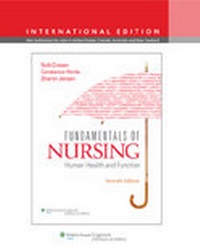
Fundamentals of Nursing
Human Health and Function
Published on 28. February 2012
Book
Hardback
1512 pages
978-1-4511-7205-8 (ISBN)
Description
Summary:
This groundbreaking text emphasizes critical thinking by weaving it throughout each chapter. Chapters open with a case scenario and include critical thinking questions, Apply Your Knowledge Boxes, Collaborating with the Healthcare Team Boxes, and Ethical-Legal Boxes to build students' decision-making abilities and clinical judgment. The Seventh Edition includes new features such as concept maps and end of chapter NCLEX style questions.
Features:
Case Scenarios: Clinical "vignettes' related to the chapter's content open each chapter and emphasize the real world of nursing practice. Related critical thinking questions accompany the vignettes. In the clinical chapters, the vignettes also tie into the concept maps found before the nursing procedure section.
Outcome-Based Teaching Plans: This feature contains patient-focused methods for teaching, geared toward health promotion and the underlying concepts of fundamentals. The plans present brief scenarios and the related desired outcomes. They then explain targeted strategies for helping patients achieve their goals.
Applying Evidence-Based Research to Your Practice: These displays assist the beginning student to understand how to use the evidence obtained through research to support nursing interventions.
Evidence-Based IHI Bundles for Patient Safety: In addition to continued emphasis on evidence-based nursing, IHI bundles (from the Institute for Healthcare Improvement) are included in appropriate chapters in this edition. A bundle is a small, straightforward set of practices - generally three to five - that, when performed collectively and reliably, have been proven to improve patient outcomes.
Therapeutic Dialogues: These displays provide examples of "less effective" and "more effective" communication with clients and colleagues. Critical Thinking Challenges appear at the end of each display.
Collaborating with the Healthcare Team: These displays demonstrate examples of effective communication using the SBAR technique. The SBAR (Situational-Background-Assessment-Recommendation) technique provides a framework for more effective and safer communication between members of the healthcare team.
Safety Alerts. These small boxes appear close to related text issues and address specific safety concerns for nurses.
Ethical/Legal Issues: These displays present scenarios related to the chapter topic, focusing on an ethical or legal dilemma. Critical Thinking Challenges appear at the end of each display.
Apply Your Knowledge. These features ask students to answer questions based on knowledge they have gained from the chapter and previous chapters.
Client Plans of Care: These displays are found in chapters 22-42. These sample plans are linked with nursing diagnoses used in the chapters to enrich the students understanding.
Concept Maps: Walk the student through the nursing process for the patient in the opening case scenarios in chapters 16-42.
Icons in the text direct you to relevant Watch & Learn video clips, Practice & Learn activities, and Concepts in Action animations on thePoint.
Nursing Procedures. A step-by-step photo atlas approach that offers a pictorial guide to the latest techniques, procedures, and equipment.
>Practicing for the NCLEX.
References: Provide students with classic readings, current nursing resources, and a broad base of substantive reading material.
Student Resource DVD
Student Resources on thePoint
Instructor's Resource DVD
Instructor Resources on thePoint
This groundbreaking text emphasizes critical thinking by weaving it throughout each chapter. Chapters open with a case scenario and include critical thinking questions, Apply Your Knowledge Boxes, Collaborating with the Healthcare Team Boxes, and Ethical-Legal Boxes to build students' decision-making abilities and clinical judgment. The Seventh Edition includes new features such as concept maps and end of chapter NCLEX style questions.
Features:
Case Scenarios: Clinical "vignettes' related to the chapter's content open each chapter and emphasize the real world of nursing practice. Related critical thinking questions accompany the vignettes. In the clinical chapters, the vignettes also tie into the concept maps found before the nursing procedure section.
Outcome-Based Teaching Plans: This feature contains patient-focused methods for teaching, geared toward health promotion and the underlying concepts of fundamentals. The plans present brief scenarios and the related desired outcomes. They then explain targeted strategies for helping patients achieve their goals.
Applying Evidence-Based Research to Your Practice: These displays assist the beginning student to understand how to use the evidence obtained through research to support nursing interventions.
Evidence-Based IHI Bundles for Patient Safety: In addition to continued emphasis on evidence-based nursing, IHI bundles (from the Institute for Healthcare Improvement) are included in appropriate chapters in this edition. A bundle is a small, straightforward set of practices - generally three to five - that, when performed collectively and reliably, have been proven to improve patient outcomes.
Therapeutic Dialogues: These displays provide examples of "less effective" and "more effective" communication with clients and colleagues. Critical Thinking Challenges appear at the end of each display.
Collaborating with the Healthcare Team: These displays demonstrate examples of effective communication using the SBAR technique. The SBAR (Situational-Background-Assessment-Recommendation) technique provides a framework for more effective and safer communication between members of the healthcare team.
Safety Alerts. These small boxes appear close to related text issues and address specific safety concerns for nurses.
Ethical/Legal Issues: These displays present scenarios related to the chapter topic, focusing on an ethical or legal dilemma. Critical Thinking Challenges appear at the end of each display.
Apply Your Knowledge. These features ask students to answer questions based on knowledge they have gained from the chapter and previous chapters.
Client Plans of Care: These displays are found in chapters 22-42. These sample plans are linked with nursing diagnoses used in the chapters to enrich the students understanding.
Concept Maps: Walk the student through the nursing process for the patient in the opening case scenarios in chapters 16-42.
Icons in the text direct you to relevant Watch & Learn video clips, Practice & Learn activities, and Concepts in Action animations on thePoint.
Nursing Procedures. A step-by-step photo atlas approach that offers a pictorial guide to the latest techniques, procedures, and equipment.
>Practicing for the NCLEX.
References: Provide students with classic readings, current nursing resources, and a broad base of substantive reading material.
Student Resource DVD
Student Resources on thePoint
Instructor's Resource DVD
Instructor Resources on thePoint
More details
Edition
7th revised international ed
Language
English
Place of publication
Philadelphia
United States
Target group
Professional and scholarly
Product notice
Cloth over boards
Dimensions
Height: 203 mm
Width: 254 mm
Weight
2722 gr
ISBN-13
978-1-4511-7205-8 (9781451172058)
Copyright in bibliographic data and cover images is held by Nielsen Book Services Limited or by the publishers or by their respective licensors: all rights reserved.
Schweitzer Classification