

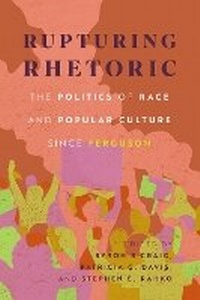
Rupturing Rhetoric
The Politics of Race and Popular Culture Since Ferguson
Published on 20. June 2024
Book
Hardback
277 pages
978-1-4968-5233-5 (ISBN)
Description
Contributions by Maksim Bugrov, Byron B Craig, Patricia G. Davis, Peter Ehrenhaus, Whitney Gent, Christopher Gilbert, Oscar Giner, J. Scott Jordan, Euni Kim, Melanie Loehwing, Jaclyn S. Olson, A. Susan Owen, Stephen E. Rahko, Nick J. Sciullo, Arthur D. Soto-Vasquez, and Erika M. Thomas
The events surrounding the 2014 killing of Michael Brown in Ferguson, Missouri, marked a watershed moment in US history. Though this instance of police brutality represented only the latest amid decades of similar unjust patterns, it came to symbolize state complicity in the deployment of violence to maintain racial order. Rupturing Rhetoric: The Politics of Race and Popular Culture since Ferguson responds to the racial rhetoric of American popular culture in the years since Brown's death. Through close readings of popular media produced during the late Obama and Trump eras, this volume details the influence of historical and contemporary representations of race on public discourse in America.
Using Brown's death and the ensuing protests as a focal point, contributors argue that Ferguson marks the rupture of America's postracial fantasy. An ideology premised on colorblindness, the notion of the ""postracial"" suggests that the United States has largely achieved racial equality and that race is no longer a central organizing category in American society. Postracialism is partly responsible for ahistorical, romanticized narratives of slavery, Jim Crow segregation, and American exceptionalism. The legitimacy of this fantasy, the editors contend, was the first casualty of the tanks, tear gas, and rubber bullets wielded against protesters during the summer of 2014. From these protests emerged a new political narrative organized around #BlackLivesMatter, which directly challenged the fantasy of a postracial American society.
Essays in Rupturing Rhetoric cover such texts as Fresh Off the Boat; Hamilton; The Green Book; NPR's American Anthem; Lovecraft Country; Disney remakes of Dumbo, The Lion King, and Lady and the Tramp; BlacKkKlansman; Crazy Rich Asians; The Hateful Eight; and Fences. As a unified body of work, the collection interrogates the ways contemporary media in American popular culture respond to and subvert the postracial fantasy underlying the politics of our time.
The events surrounding the 2014 killing of Michael Brown in Ferguson, Missouri, marked a watershed moment in US history. Though this instance of police brutality represented only the latest amid decades of similar unjust patterns, it came to symbolize state complicity in the deployment of violence to maintain racial order. Rupturing Rhetoric: The Politics of Race and Popular Culture since Ferguson responds to the racial rhetoric of American popular culture in the years since Brown's death. Through close readings of popular media produced during the late Obama and Trump eras, this volume details the influence of historical and contemporary representations of race on public discourse in America.
Using Brown's death and the ensuing protests as a focal point, contributors argue that Ferguson marks the rupture of America's postracial fantasy. An ideology premised on colorblindness, the notion of the ""postracial"" suggests that the United States has largely achieved racial equality and that race is no longer a central organizing category in American society. Postracialism is partly responsible for ahistorical, romanticized narratives of slavery, Jim Crow segregation, and American exceptionalism. The legitimacy of this fantasy, the editors contend, was the first casualty of the tanks, tear gas, and rubber bullets wielded against protesters during the summer of 2014. From these protests emerged a new political narrative organized around #BlackLivesMatter, which directly challenged the fantasy of a postracial American society.
Essays in Rupturing Rhetoric cover such texts as Fresh Off the Boat; Hamilton; The Green Book; NPR's American Anthem; Lovecraft Country; Disney remakes of Dumbo, The Lion King, and Lady and the Tramp; BlacKkKlansman; Crazy Rich Asians; The Hateful Eight; and Fences. As a unified body of work, the collection interrogates the ways contemporary media in American popular culture respond to and subvert the postracial fantasy underlying the politics of our time.
Reviews / Votes
This book helps make sense of the last half-decade plus in US politics and culture, filling out what 'postrace' means in the post-Ferguson environment and how culture is grappling with it." - Paul Elliot Johnson, author of I the People: The Rhetoric of Conservative Populism in the United States"Rupturing Rhetoric joins important ongoing scholarly dialogues and moves us toward clear-headed and sobering insights about the stakes of postrace at the present moment as well as for the future." - Roopali Mukherjee, coeditor of Racism Postrace and Professor of race, media, and communication at UMass Amherst
More details
Series
Language
English
Place of publication
Jackson
United States
Target group
Professional and scholarly
Product notice
Paper over boards
Illustrations
15 b&w illustrations
Dimensions
Height: 229 mm
Width: 152 mm
ISBN-13
978-1-4968-5233-5 (9781496852335)
Copyright in bibliographic data and cover images is held by Nielsen Book Services Limited or by the publishers or by their respective licensors: all rights reserved.
Schweitzer Classification
Other editions
Additional editions
Byron B. Craig | Patricia G. Davis | Stephen E. Rahko
Rupturing Rhetoric
The Politics of Race and Popular Culture since Ferguson
E-Book
06/2024
NYU Press
€29.49
Available for download
Persons
Byron B Craig is assistant professor in the School of Communication at Illinois State University. His work has been published in the edited volumes Beyonce in the World: Making Meaning with Queen Bey in Troubled Times and The Gig Economy: Workers and Media in the Age of Convergence, and has appeared in such publications as Cultural Studies Oaoe Critical Methodologies.
Patricia G. Davis is associate professor of communication studies at Northeastern University. She is author of Laying Claim: African American Cultural Memory and Southern Identity.
Stephen E. Rahko is assistant professor in the School of Communication at Illinois State University. His work has been published in the edited volumes Beyonce in the World: Making Meaning with Queen Bey in Troubled Times and The Gig Economy: Workers and Media in the Age of Convergence, and has appeared in such publications as Cultural Studies Oaoe Critical Methodologies.
Patricia G. Davis is associate professor of communication studies at Northeastern University. She is author of Laying Claim: African American Cultural Memory and Southern Identity.
Stephen E. Rahko is assistant professor in the School of Communication at Illinois State University. His work has been published in the edited volumes Beyonce in the World: Making Meaning with Queen Bey in Troubled Times and The Gig Economy: Workers and Media in the Age of Convergence, and has appeared in such publications as Cultural Studies Oaoe Critical Methodologies.
Content
Acknowledgments
Introduction: Taking Stock of the (Post)Racial Order of Things
Byron B Craig, Patricia G. Davis, and Stephen E. Rahko
Part 1: Symbolic Violence and Cultural Appropriation
Chapter 1
Blackness as Spectral Presence: Postracial Discourses in Fresh Off the Boat
Patricia G. Davis
Chapter 2
A Notebook for Hamilton
Oscar Giner
Part 2: The Identity Scripts of Whiteness
Chapter 3
From Noose to "Nuse": The Green Book, "Woke" Whiteness, and the Postracial Buddy Film
Stephen E. Rahko and Byron B Craig
Chapter 4
"The Songs That Unite [Us]": White Liberalism and Postracial Promises in NPR's American Anthem
Jaclyn S. Olson
Chapter 5
Excavating the Ruins of Tulsa's Greenwood District: Lovecraft Country and the Epistemic Violence of Postracial Trauma
Byron B Craig, Stephen E. Rahko, and J. Scott Jordan
Part 3: Postrace Rereleased
Chapter 6
Making America Bamboozled Again
Christopher Gilbert
Chapter 7
The Postracial Fantasyland of Live-Action Disney Remakes
Arthur D. Soto-Vasquez
Part 4: Crafting Memory in the Postrace Era
Chapter 8
Strategies of Memory Construction in Spike Lee's BlacKkKlansman
A. Susan Owen and Peter Ehrenhaus
Chapter 9
The Necropolitics of Memory: How Subjects (Don't) Matter in Crazy Rich Asians Discourse
Euni Kim
Chapter 10
The Hateful Eight as a Contemporary Allegory of Anti-Blackness and Postracial Rifts
Erika M. Thomas and Maksim Bugrov
Part 5: The Spatial and Social Class Dynamics of Postrace
Chapter 11
Police Brutality without Race: The Postracial Enthymeme's Portrayal of Collective Organizing in The Public
Whitney Gent and Melanie Loehwing
Chapter 12
Pittsburgh's Postracial Hill District? Mediated Challenges to Governmental Discourses about the Hill District in Fences and Steve Mellon's "A Life on the Hill"
Nick J. Sciullo
About the Contributors
Index
Introduction: Taking Stock of the (Post)Racial Order of Things
Byron B Craig, Patricia G. Davis, and Stephen E. Rahko
Part 1: Symbolic Violence and Cultural Appropriation
Chapter 1
Blackness as Spectral Presence: Postracial Discourses in Fresh Off the Boat
Patricia G. Davis
Chapter 2
A Notebook for Hamilton
Oscar Giner
Part 2: The Identity Scripts of Whiteness
Chapter 3
From Noose to "Nuse": The Green Book, "Woke" Whiteness, and the Postracial Buddy Film
Stephen E. Rahko and Byron B Craig
Chapter 4
"The Songs That Unite [Us]": White Liberalism and Postracial Promises in NPR's American Anthem
Jaclyn S. Olson
Chapter 5
Excavating the Ruins of Tulsa's Greenwood District: Lovecraft Country and the Epistemic Violence of Postracial Trauma
Byron B Craig, Stephen E. Rahko, and J. Scott Jordan
Part 3: Postrace Rereleased
Chapter 6
Making America Bamboozled Again
Christopher Gilbert
Chapter 7
The Postracial Fantasyland of Live-Action Disney Remakes
Arthur D. Soto-Vasquez
Part 4: Crafting Memory in the Postrace Era
Chapter 8
Strategies of Memory Construction in Spike Lee's BlacKkKlansman
A. Susan Owen and Peter Ehrenhaus
Chapter 9
The Necropolitics of Memory: How Subjects (Don't) Matter in Crazy Rich Asians Discourse
Euni Kim
Chapter 10
The Hateful Eight as a Contemporary Allegory of Anti-Blackness and Postracial Rifts
Erika M. Thomas and Maksim Bugrov
Part 5: The Spatial and Social Class Dynamics of Postrace
Chapter 11
Police Brutality without Race: The Postracial Enthymeme's Portrayal of Collective Organizing in The Public
Whitney Gent and Melanie Loehwing
Chapter 12
Pittsburgh's Postracial Hill District? Mediated Challenges to Governmental Discourses about the Hill District in Fences and Steve Mellon's "A Life on the Hill"
Nick J. Sciullo
About the Contributors
Index