

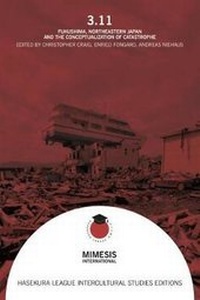
3.11
Fukushima, Northeastern Japan and the Conceptualization of Catastrophe
Published on 31. January 2020
Book
Paperback/Softback
184 pages
978-88-6977-220-7 (ISBN)
Description
The Great East Japan Earthquake and Tsunami of March 11, 2011 was a complex event. It was a disaster of multiple dimensions, unleashing the linked forces of seismic shock, tsunami, and nuclear radiation. This confluence left a varied array of damage in its wake. The personal traumas of death and loss combined with the social trauma of ruptured families, the economic trauma resulting from the physical destruction, and the psychic trauma arising from an uncertain future. Such a complex disaster demands a multifaceted exploration into its nature, implications, and meaning. The essays in this collection cross academic and geographic boundaries to explore the Great East Japan Earthquake and Tsunami from a wide range of perspectives and to apply the analytical and interpretive tools of multiple disciplines to the study of the disaster and the various forms of trauma it inflicted.
More details
Series
Language
English
Place of publication
MI
Italy
Target group
Professional and scholarly
Product notice
Paperback (trade)
Unsewn / adhesive bound
Dimensions
Height: 208 mm
Width: 142 mm
Thickness: 18 mm
Weight
227 gr
ISBN-13
978-88-6977-220-7 (9788869772207)
Copyright in bibliographic data and cover images is held by Nielsen Book Services Limited or by the publishers or by their respective licensors: all rights reserved.
Schweitzer Classification
Persons
Christopher Craig is associate professor of Japanese history at Tohoku University in Japan. Enrico Fongaro is associate professor of Italian and Western aesthetics at Tohoku University in Japan. Andreas Niehaus is associate professor of Japanese language and culture at Ghent University in Belgium.
Content
PART I
CONCEPTUALIZING CATASTROPHE
- Techne, Catastrophe, and the Buddha-Nature
- Forget the Unforgettable or Recall the Unrecollectable? How to Commemorate Fukushima's Nuclear Disaster (If Time Has Gone out of Joint)
- After 3.11: Toward a Rehabilitation ofthe Mind
- Ango, Mishima, War, and Nuclear Power 59
PART II
DISASTER IN HISTORY AND EXPERIENCE
- Trauma Mediated: The 1933 Sanriku Earthquake and Tsunami in the Press
- 3.11 and Historical Studies: Developments in Japanese Historiography
- Dark, Cold and Hungry, but Full of Mutual Trust:
- Manners Among the 2011 Great East Japan Earthquake Victims
PART III
STUDENT PAPERS
- Disaster and Its Representation in Pompeii
- An Analysis and Interpretation ofthe Descriptions of Miyako in Heike Monogatari
- The transmission ofimages in East Asia: The role of Pictorial Models for Buddhist Statues
- The Ideal Heian Capital as Portrayed in Daidairizu kosho
CONCEPTUALIZING CATASTROPHE
- Techne, Catastrophe, and the Buddha-Nature
- Forget the Unforgettable or Recall the Unrecollectable? How to Commemorate Fukushima's Nuclear Disaster (If Time Has Gone out of Joint)
- After 3.11: Toward a Rehabilitation ofthe Mind
- Ango, Mishima, War, and Nuclear Power 59
PART II
DISASTER IN HISTORY AND EXPERIENCE
- Trauma Mediated: The 1933 Sanriku Earthquake and Tsunami in the Press
- 3.11 and Historical Studies: Developments in Japanese Historiography
- Dark, Cold and Hungry, but Full of Mutual Trust:
- Manners Among the 2011 Great East Japan Earthquake Victims
PART III
STUDENT PAPERS
- Disaster and Its Representation in Pompeii
- An Analysis and Interpretation ofthe Descriptions of Miyako in Heike Monogatari
- The transmission ofimages in East Asia: The role of Pictorial Models for Buddhist Statues
- The Ideal Heian Capital as Portrayed in Daidairizu kosho