

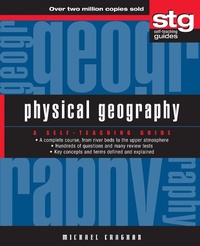
Physical Geography
A Self-Teaching Guide
1st Edition
Published on 10. October 2003
Book
Paperback/Softback
288 pages
978-0-471-44566-1 (ISBN)
Description
Learn physical geography at your own pace
What is atmospheric pressure? How does latitude indicate the type of climate a specific place will have? Where are volcanic eruptions or strong earthquakes most likely to occur? With Physical Geography: A Self-Teaching Guide, you'll discover the answers to these questions and many more about the basics of how our planet operates.
Veteran geography teacher Michael Craghan takes you on a guided tour of Earth's surface, explaining our planet's systems and cycles and their complex interactions step by step. From seasonal changes to coastal processes, from effluvial basins to deep sea fissures, Craghan puts the emphasis on comprehension of the topics. He also includes more than 100 specially commissioned illustrations and 50 photographs to help clarify difficult concepts. The clearly structured format of Physical Geography makes it fully accessible, providing an easily understood, comprehensive overview for everyone from the student to the amateur geographer to the hobbyist.
Like all Self-Teaching Guides, Physical Geography allows you to build gradually on what you have learned-at your own pace. Questions and self-tests reinforce the information in each chapter and allow you to skip ahead or focus on specific areas of concern. Packed with useful, up-to-date information, this clear, concise volume is a valuable learning tool and reference source for anyone who wants to improve his or her understanding of physical geography.
What is atmospheric pressure? How does latitude indicate the type of climate a specific place will have? Where are volcanic eruptions or strong earthquakes most likely to occur? With Physical Geography: A Self-Teaching Guide, you'll discover the answers to these questions and many more about the basics of how our planet operates.
Veteran geography teacher Michael Craghan takes you on a guided tour of Earth's surface, explaining our planet's systems and cycles and their complex interactions step by step. From seasonal changes to coastal processes, from effluvial basins to deep sea fissures, Craghan puts the emphasis on comprehension of the topics. He also includes more than 100 specially commissioned illustrations and 50 photographs to help clarify difficult concepts. The clearly structured format of Physical Geography makes it fully accessible, providing an easily understood, comprehensive overview for everyone from the student to the amateur geographer to the hobbyist.
Like all Self-Teaching Guides, Physical Geography allows you to build gradually on what you have learned-at your own pace. Questions and self-tests reinforce the information in each chapter and allow you to skip ahead or focus on specific areas of concern. Packed with useful, up-to-date information, this clear, concise volume is a valuable learning tool and reference source for anyone who wants to improve his or her understanding of physical geography.
More details
Series
Language
English
Place of publication
New York
United States
Target group
College/higher education
Product notice
Paperback (trade)
Unsewn / adhesive bound
Dimensions
Height: 235 mm
Width: 191 mm
Thickness: 16 mm
Weight
546 gr
ISBN-13
978-0-471-44566-1 (9780471445661)
Copyright in bibliographic data and cover images is held by Nielsen Book Services Limited or by the publishers or by their respective licensors: all rights reserved.
Schweitzer Classification
Other editions
Additional editions
E-Book
09/2011
Wiley
€14.99
Available for download
E-Book
04/2004
Wiley
€14.99
Available for download
Person
MICHAEL CRAGHAN, PhD, holds a doctorate in geography and has been teaching in the geography department at Rutgers University since 1995.
Content
Acknowledgments. Introduction.
1. Earth and Sun.
2. Insolation and Temperature.
3. The Atmosphere and Atmospheric Water.
4. Pressure and Wind.
5. General Circulation of the Atmosphere.
6. Air Masses and Storms.
7. Climate.
8. Plate Tectonics.
9. Plate Interactions.
10. Volcanoes and Earthquakes.
11. Weathering.
12. Groundwater.
13. Streams.
14. Wind and Ice.
15. Waves and Tides.
Appendix 1:The Ancient Explanation of Earth-Sun Relationships.
Appendix 2: Coriolis Force.
Index.
1. Earth and Sun.
2. Insolation and Temperature.
3. The Atmosphere and Atmospheric Water.
4. Pressure and Wind.
5. General Circulation of the Atmosphere.
6. Air Masses and Storms.
7. Climate.
8. Plate Tectonics.
9. Plate Interactions.
10. Volcanoes and Earthquakes.
11. Weathering.
12. Groundwater.
13. Streams.
14. Wind and Ice.
15. Waves and Tides.
Appendix 1:The Ancient Explanation of Earth-Sun Relationships.
Appendix 2: Coriolis Force.
Index.