


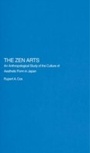
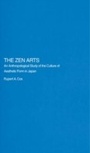
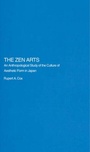
The Zen Arts
An Anthropological Study of the Culture of Aesthetic Form in Japan
1st Edition
Published on 3. October 2002
Book
Hardback
296 pages
978-0-7007-1475-9 (ISBN)
Description
The tea ceremony and the martial arts are intimately linked in the popular and historical imagination with Zen Buddhism, and Japanese culture. They are commonly interpreted as religio-aesthetic pursuits which express core spiritual values through bodily gesture and the creation of highly valued objects. Ideally, the experience of practising the Zen arts culminates in enlightenment.
This book challenges that long-held view and proposes that the Zen arts should be understood as part of a literary and visual history of representing Japanese culture through the arts. Cox argues that these texts and images emerged fully as systems for representing the arts during the modern period, produced within Japan as a form of cultural nationalism and outside Japan as part of an orientalist discourse.
Practitioners' experiences are in fact rarely referred to in terms of Zen or art, but instead are spatially and socially grounded. Combining anthropological description with historical criticism, Cox shows that the Zen arts are best understood in terms of a dynamic relationship between an aesthetic discourse on art and culture and the social and embodied experiences of those who participate in them.
This book challenges that long-held view and proposes that the Zen arts should be understood as part of a literary and visual history of representing Japanese culture through the arts. Cox argues that these texts and images emerged fully as systems for representing the arts during the modern period, produced within Japan as a form of cultural nationalism and outside Japan as part of an orientalist discourse.
Practitioners' experiences are in fact rarely referred to in terms of Zen or art, but instead are spatially and socially grounded. Combining anthropological description with historical criticism, Cox shows that the Zen arts are best understood in terms of a dynamic relationship between an aesthetic discourse on art and culture and the social and embodied experiences of those who participate in them.
More details
Series
Language
English
Place of publication
London
United Kingdom
Publishing group
Taylor & Francis Ltd
Target group
College/higher education
Dimensions
Height: 234 mm
Width: 156 mm
Weight
710 gr
ISBN-13
978-0-7007-1475-9 (9780700714759)
Copyright in bibliographic data and cover images is held by Nielsen Book Services Limited or by the publishers or by their respective licensors: all rights reserved.
Schweitzer Classification
Other editions
Additional editions
E-Book
11/2013
1st Edition
Routledge
€64.49
Available for download
E-Book
11/2013
1st Edition
Routledge
€64.49
Available for download
Book
04/2006
1st Edition
Routledge
€77.03
Shipment within 15-20 days
Person
Rupert A. Cox is a member of the Department of Anthroplogy and the European Japan Research Centre, Oxford Brookes University.
Content
Introduction - Japan, the Zen Arts and Myself 1. Orientalism - An Idea and an Ideal of Japan 2. A World Apart - Ascetic Reclusion and Aesthetic Enchantment in the History of the Zen Arts 3. The Word and the body in Practice - Aesthetics as Form and as Experience 4. Mimesis and Visuality - The Imitation and Imagination of Aesthetic Value 5. Structuring Relations - The Power of Person and Place 6. Distinguishing Persons - The Code of and for Becoming a Practitioner 7. Culture as Aesthetic Value - Ideological Dispositions and Commercial Affiliations in the Zen Arts 8. Cracking Culture - Authenticity is a Cultural Choice