

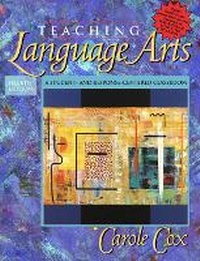
Teaching Language Arts
A Student- and Response-Centered Classroom (with Student Activities Planner)
4th Edition
Published on 14. March 2002
Book
978-0-205-36220-2 (ISBN)
Description
Teaching Language Arts continues its emphasis on a student-and response-centered approach to literature-based teaching in today's culturally and linguistically diverse classrooms.
Carole Cox uses a strong theoretical base that covers content in a wide and in-depth manner. This provides a balance of student-centered and teacher-directed instruction that includes many examples from today's classrooms. Teaching Language Arts continues to be an eloquent and well-researched text that students and teachers will find empowering.
Carole Cox uses a strong theoretical base that covers content in a wide and in-depth manner. This provides a balance of student-centered and teacher-directed instruction that includes many examples from today's classrooms. Teaching Language Arts continues to be an eloquent and well-researched text that students and teachers will find empowering.
More details
Edition
4th edition
Language
English
Place of publication
United States
Publishing group
Pearson Education (US)
Target group
Professional and scholarly
Weight
1000 gr
ISBN-13
978-0-205-36220-2 (9780205362202)
Copyright in bibliographic data and cover images is held by Nielsen Book Services Limited or by the publishers or by their respective licensors: all rights reserved.
Schweitzer Classification
Other editions
New editions
Carole Cox
Teaching Language Arts
A Student- and Response-Centered Classroom (with Student Activities Planner)
Book
08/2004
5th Edition
Pearson
€84.36
Article exhausted; check for reprint
Previous edition

Book
09/1998
3rd Edition
Allyn & Bacon
€69.51
The article will not be published
Content
All chapters include "Questions," "Answers," "Looking Further," and 169Children's Books and Films." I. CONSTRUCTING A FOUNDATION FOR TEACHING LANGUAGE ARTS.
1. Learning, Teaching, and Assessing Language Arts.
The Language Arts.
Learning Language Arts.
Teaching Language Arts.
Assessing Language Arts.
2. Children and Language Development.
Language Development.
Language Learning in the Inclusive Classroom.
Language Structure and Systems.
Vocabulary Development.
3. Multicultural Education and Language Diversity.
Multicultural Education.
Language Diversity.
4. Emergent Literacy.
How Young Children Become Literate.
The Emergent Literacy Classroom.
Assessing Emergent Literacy.
II. SPOKEN LANGUAGE.
5. Listening and Talking.
Listening and Talking in the Classroom.
Critical Thinking and Oral Communication.
Teaching and Assessing Listening and Talking.
6. Drama and Media Literacy.
Drama and Learning.
Teaching and Assessing Drama.
Media and Learning.
Teaching and Assessing Media Literacy.
III. LITERATURE AND READING.
7. Teaching with Literature.
Reader Response to Literature.
Response-Centered, Integrated Teaching with Literature.
Literature Units.
Assessing Teaching with Literature.
8. The Reading Process.
Reading as Meaning Construction.
Teaching Reading with Literature and Writing.
Assessing Reading.
IV. WRITTEN LANGUAGE.
9. The Writing Process.
What Children Do in the Writing Process.
Assessing and Teaching Writing as a Process.
10. Reading and Writing.
Reading and Writing Connections.
Aesthetic Reading and Writing: Literary Texts.
Efferent Reading and Writing: Informational Texts.
11. Grammar, Punctuation, and Handwriting.
Grammar.
Punctuation.
Handwriting.
12. Spelling.
The English Writing System.
Stages of Spelling Development.
Spelling and Literacy Development.
Assessing and Teaching Spelling.
V. INTEGRATED TEACHING.
13. Technology in the Classroom.
Technology and Language Arts.
Word Processing.
Multimedia Projects.
Technology Issues.
14. Language across the Curriculum.
Learning to Use Language and Using Language to Learn.
Tools for Teaching and Assessing Language across the Curriculum.
1. Learning, Teaching, and Assessing Language Arts.
The Language Arts.
Learning Language Arts.
Teaching Language Arts.
Assessing Language Arts.
2. Children and Language Development.
Language Development.
Language Learning in the Inclusive Classroom.
Language Structure and Systems.
Vocabulary Development.
3. Multicultural Education and Language Diversity.
Multicultural Education.
Language Diversity.
4. Emergent Literacy.
How Young Children Become Literate.
The Emergent Literacy Classroom.
Assessing Emergent Literacy.
II. SPOKEN LANGUAGE.
5. Listening and Talking.
Listening and Talking in the Classroom.
Critical Thinking and Oral Communication.
Teaching and Assessing Listening and Talking.
6. Drama and Media Literacy.
Drama and Learning.
Teaching and Assessing Drama.
Media and Learning.
Teaching and Assessing Media Literacy.
III. LITERATURE AND READING.
7. Teaching with Literature.
Reader Response to Literature.
Response-Centered, Integrated Teaching with Literature.
Literature Units.
Assessing Teaching with Literature.
8. The Reading Process.
Reading as Meaning Construction.
Teaching Reading with Literature and Writing.
Assessing Reading.
IV. WRITTEN LANGUAGE.
9. The Writing Process.
What Children Do in the Writing Process.
Assessing and Teaching Writing as a Process.
10. Reading and Writing.
Reading and Writing Connections.
Aesthetic Reading and Writing: Literary Texts.
Efferent Reading and Writing: Informational Texts.
11. Grammar, Punctuation, and Handwriting.
Grammar.
Punctuation.
Handwriting.
12. Spelling.
The English Writing System.
Stages of Spelling Development.
Spelling and Literacy Development.
Assessing and Teaching Spelling.
V. INTEGRATED TEACHING.
13. Technology in the Classroom.
Technology and Language Arts.
Word Processing.
Multimedia Projects.
Technology Issues.
14. Language across the Curriculum.
Learning to Use Language and Using Language to Learn.
Tools for Teaching and Assessing Language across the Curriculum.