

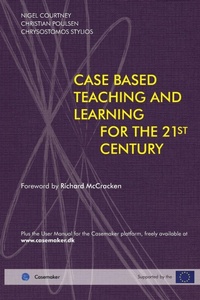
Cased-Based Teaching and Learning for the 21st Century
Published on 26. January 2015
Book
Paperback/Softback
326 pages
978-1-909818-56-9 (ISBN)
Description
Case-based
learning has become a common instructional method across higher education and
is likely to be encountered in all disciplines. Its essence is a focus on real
situations which require diagnosis and treatment. In Case-based Learning in Higher Education it is explored by the
Editors and contributors within the three separate but interrelated themes of
concepts, theories and outcomes.
The advantages of using cases are that they tend to
resonate with students because of their realism and authenticity, and their
experiential nature provides specific examples of theory in context. They also
require students to practise their analytical, logical, and other high-order
thinking skills, and provide opportunities for work in teams. The downside is
that cases are not personal, so students have no stake in the 'company' or
'organisation' and cannot truly empathise with the protagonists.
But overall, the strength and value of the case method is
clear, as is demonstrated by these eleven detailed descriptions of its use in a
variety of different contexts internationally. Each of the cases described here
contains key lessons about the value of case-based learning and the benefits it
delivers. There are also ideas about
design approaches which can increase the effectiveness of cases. One of the key
conclusions is that, since case-based learning requires students to negotiate, argue, and reflect on
their knowledge, they develop more responsibility and independence, thereby
improving their personal and interpersonal skills. This process can have a demonstrable impact on student self-esteem and
self-confidence, both of which increase a student's employability in the professional world which faces
today's and tomorrow's graduates from higher education.
learning has become a common instructional method across higher education and
is likely to be encountered in all disciplines. Its essence is a focus on real
situations which require diagnosis and treatment. In Case-based Learning in Higher Education it is explored by the
Editors and contributors within the three separate but interrelated themes of
concepts, theories and outcomes.
The advantages of using cases are that they tend to
resonate with students because of their realism and authenticity, and their
experiential nature provides specific examples of theory in context. They also
require students to practise their analytical, logical, and other high-order
thinking skills, and provide opportunities for work in teams. The downside is
that cases are not personal, so students have no stake in the 'company' or
'organisation' and cannot truly empathise with the protagonists.
But overall, the strength and value of the case method is
clear, as is demonstrated by these eleven detailed descriptions of its use in a
variety of different contexts internationally. Each of the cases described here
contains key lessons about the value of case-based learning and the benefits it
delivers. There are also ideas about
design approaches which can increase the effectiveness of cases. One of the key
conclusions is that, since case-based learning requires students to negotiate, argue, and reflect on
their knowledge, they develop more responsibility and independence, thereby
improving their personal and interpersonal skills. This process can have a demonstrable impact on student self-esteem and
self-confidence, both of which increase a student's employability in the professional world which faces
today's and tomorrow's graduates from higher education.
More details
Language
English
Place of publication
Faringdon
United Kingdom
Target group
Adult education
College/higher education
Professional and scholarly
Dimensions
Height: 229 mm
Width: 152 mm
Thickness: 21 mm
Weight
536 gr
ISBN-13
978-1-909818-56-9 (9781909818569)
Copyright in bibliographic data and cover images is held by Nielsen Book Services Limited or by the publishers or by their respective licensors: all rights reserved.
Schweitzer Classification
Persons
Nigel Courtney is an Honorary Senior Visiting Fellow at Cass Business School, City University London, UK. He is a chartered engineer, a certified management consultant and a certified IT professional, with extensive experience in project and general management. His firm, Courtney Consulting, has served the European Commission, Transport for London, London Underground, the Higher Education Academy and the National Endowment for Science, Technology and the Arts. At Cass he teaches Business Information Management on the Executive MBA.