

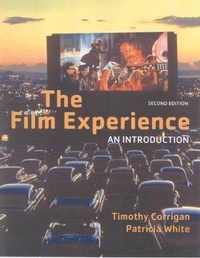
The Film Experience
An Introduction
2nd Edition
Published on 21. April 2009
Book
Paperback/Softback
256 pages
978-0-230-22329-5 (ISBN)
Description
Treating readers as avid film fans, this book combines beautiful design and an easy to navigate structure with all the key concepts and theory that students need for successful analysis of film. In "Focus and Concepts at Work" sections for deeper understanding of crucial film concepts and issues are presented. This book offers clear and accessible writing style with thorough explanation of concepts. Key terms are highlighted. It features over 900 images, including a special 4 colour plates section about cinematography.The second edition of this accessible book continues to examine how we can extract a broad range of meanings from the films we watch. With an improved structure, better pedagogy and more examples from popular film, this new edition continues to give students of film the vocabulary, context and critical tools they need for serious film study.
Reviews / Votes
'Rather than the often dry or unwelcoming books on the history of cinema which occasionally appear to daunt the budding film scholar, this book recognises that not everyone goes to watch French arthouse films in darkened cinemas with just a handful of others...With chapters covering editing, sound, genre, critical theories and how to write a film essay, this is a fantastic starting point for anyone who perhaps wants to take their love of film a step further to take a course on the subject or even become a critic.' - Jonathan Melville, Edinburgh Evening NewsMore details
Edition
2nd Revised edition
Language
English
Place of publication
Basingstoke
United Kingdom
Target group
College/higher education
Edition type
Revised edition
Dimensions
Height: 277 mm
Width: 216 mm
Thickness: 18 mm
Weight
1113 gr
ISBN-13
978-0-230-22329-5 (9780230223295)
Copyright in bibliographic data and cover images is held by Nielsen Book Services Limited or by the publishers or by their respective licensors: all rights reserved.
Schweitzer Classification
Other editions
Previous edition
Book
07/2015
Palgrave
€65.26
Article exhausted; check for reprint
Persons
TIMOTHY CORRIGAN is Professor of Cinema Studies, English, and History of Art at the University of Pennsylvania, USA. His numerous books include New German Film: The Displaced Image, A Cinema without Walls: Movies and Culture after Vietnam, The Films of Werner Herzog: Between Mirage and History, A Short Guide to Writing about Film 4e, and Film and Literature: An Introduction and Reader. He is also one of the three editors of the journal Adaptation: The Journal of Literature on Screen Studies and serves on the editorial board of Cinema Journal. He has taught film at the University of Amsterdam, Temple University, University of Iowa, and at campuses in Tokyo, Rome, Paris, and London. PATRICIA WHITE is Associate Professor and Chair of the Program in Film and Media Studies at Swarthmore College. She is the author of Uninvited: Classical Hollywood Cinema and Lesbian Representability and numerous articles and chapters on film theory and culture.
Content
Preface PART I: FILM CONTEXTS: MAKING, WATCHING AND STUDYING MOVIES Introduction to the Film Experience Preparing Viewers and Views: Distribution, Production, Promotion, and Exhibition PART II : COMPOSITIONS: FILM SCENES, SHOTS, CUTS AND SOUNDS Exploring a Material World: Mise-en-Scene Seeing through the Image: Cinematography Relating Images: Editing Listening to the Cinema: Film Sound PART III: ORGANIZATIONAL STRUCTURES: FROM STORIES TO GENRES Telling Stories about Time: Narrative Film Representing Reality: Documentary Films Experimental Screens: Avant-garde Film, Video Art, and New Media Rituals, Conventions, Archetypes, and Formulas: Movie Genres PART IV: HISTORIES: HOLLYWOOD AND BEYOND Conventional Film History: Evolutions, Masterpieces, and Periodization Global and Local: Inclusive Histories of the Movies PART V: REACTIONS: READING AND WRITING ABOUT FILM Reading about Film: Critical Methods and Theories Writing a Film Essay: Observations, Arguments, Research, and Analysis Glossary Index