

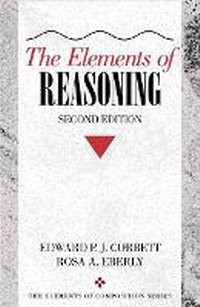
Elements of Reasoning, The
2nd Edition
Published on 12. June 2000
Book
Paperback/Softback
160 pages
978-0-205-31511-6 (ISBN)
Description
The second edition of The Elements of Reasoning retains the accessible and succinct approach that made the first edition the best treatment of the essentials of argumentation. It presents the principles that govern the composition of effective argumentative discourse and includes brief examples, with analyses that show students the underlying structure of the argument presented and the ways in which the rhetor was persuasive.
More details
Other editions
New editions

Edward P. Corbett | Rosa A. Eberly | William A. Covino
The Elements of Reasoning
Book
10/2006
3rd Edition
Pearson
€14.87
Article is exhausted; no reprint
Content
Preface.
1.Reasoning: Are You For It or Against It?
The Powers of Reasoning.
Elemental Questions.
Pluto and Plato.
Fine Language and Geometry
Ethos, Logos, and Pathos.
The End of Reasoning.
Internal and External Reasoning: An Example.
Rhetorical Inventions Beyond "For or Against."
Reasoning Practice.
2.Invention: Places, Paths, and Structures of Reasoning.
An Introduction to the Specific Elements.
Places of Reasoning: Topoi.
Paths of Reasoning: The Stases.
Structures of Reasoning.
From Invention to Judgment.
Stases and Time.
Reasoning Practice.
3.Conjectures: Places to Begin.
The Primary Stasis.
A Trove of Conjectural Claims.
How to Spot a Conjectural Claim.
Three Types of Conjectural Claims.
Reasoning Practice.
4.Definitions: They Can Change Everything.
Rhetoric and Definitions.
Dictionary Definitions.
Neologisms.
Stipulative Definitions.
Specific Means of Defining.
Reasoning Practice.
5.Causes and Consequences: A Sense of How the World Works.
How Could This Happen?
Reasoning from Effect to Cause.
Reasoning from Cause to Effect.
Antecedence-Subsequence.
Post-Hoc, Ergo Propter Hoc.
Chance as a Causal Factor.
Chance and Causality, Myth and Cosmology.
Some Guideline for Causal Reasoning.
Causality and the Ends of Reasoning.
Reasoning Practice.
6.Values: Judgments Grounded in Nature and Consequences.
Criteria.
Supporting Value Claims: Nature and Consequences.
One Example of Claims about Value: Music.
Another Example: Family Farms.
Weighting Criteria.
Guidelines for Reasoning about Values.
Reasoning Practice.
7.Procedures and Proposals: Actualizing the Potential for Change.
Ready?
"Houston: We Have a Problem."
A Modest Proposal.
Feasibility, Plausibility, Credibility.
Guidelines for Reasoning about Procedures and Proposals.
Reasoning Practice.
8.Becoming a Citizen Critic: Where Rhetoric Meets the Road.
Diversions of Reasoning.
Spectator Culture, Consumer Culture, Democratic Culture.
Reasoning to Invoke Citizen Critics.
What Is a Citizen? And a Citizen of What?
The Enthymemes of This Book.
Reasoning Practice.
Index.
1.Reasoning: Are You For It or Against It?
The Powers of Reasoning.
Elemental Questions.
Pluto and Plato.
Fine Language and Geometry
Ethos, Logos, and Pathos.
The End of Reasoning.
Internal and External Reasoning: An Example.
Rhetorical Inventions Beyond "For or Against."
Reasoning Practice.
2.Invention: Places, Paths, and Structures of Reasoning.
An Introduction to the Specific Elements.
Places of Reasoning: Topoi.
Paths of Reasoning: The Stases.
Structures of Reasoning.
From Invention to Judgment.
Stases and Time.
Reasoning Practice.
3.Conjectures: Places to Begin.
The Primary Stasis.
A Trove of Conjectural Claims.
How to Spot a Conjectural Claim.
Three Types of Conjectural Claims.
Reasoning Practice.
4.Definitions: They Can Change Everything.
Rhetoric and Definitions.
Dictionary Definitions.
Neologisms.
Stipulative Definitions.
Specific Means of Defining.
Reasoning Practice.
5.Causes and Consequences: A Sense of How the World Works.
How Could This Happen?
Reasoning from Effect to Cause.
Reasoning from Cause to Effect.
Antecedence-Subsequence.
Post-Hoc, Ergo Propter Hoc.
Chance as a Causal Factor.
Chance and Causality, Myth and Cosmology.
Some Guideline for Causal Reasoning.
Causality and the Ends of Reasoning.
Reasoning Practice.
6.Values: Judgments Grounded in Nature and Consequences.
Criteria.
Supporting Value Claims: Nature and Consequences.
One Example of Claims about Value: Music.
Another Example: Family Farms.
Weighting Criteria.
Guidelines for Reasoning about Values.
Reasoning Practice.
7.Procedures and Proposals: Actualizing the Potential for Change.
Ready?
"Houston: We Have a Problem."
A Modest Proposal.
Feasibility, Plausibility, Credibility.
Guidelines for Reasoning about Procedures and Proposals.
Reasoning Practice.
8.Becoming a Citizen Critic: Where Rhetoric Meets the Road.
Diversions of Reasoning.
Spectator Culture, Consumer Culture, Democratic Culture.
Reasoning to Invoke Citizen Critics.
What Is a Citizen? And a Citizen of What?
The Enthymemes of This Book.
Reasoning Practice.
Index.