

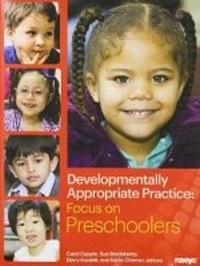
Developmentally Appropriate Practice
Focus on Preschoolers
Published on 12. September 2013
Book
Paperback/Softback
192 pages
978-1-928896-96-8 (ISBN)
Description
Teachers of preschoolers can use this resource to learn about developmentally appropriate practice (DAP) so they can apply DAP in their work with preschoolers. Filled with information, practical ideas, and inspiration, this is a book that every preschool teacher will want!
Chapters include:
What Is Developmentally Appropriate Practice?
Key messages of NAEYC's position statement
To Be an Excellent Teacher
Connecting DAP to excellent teaching
An Overview of Developmentally Appropriate Practice in the Preschool Years
Overview of preschoolers' learning and development
Developmentally Appropriate Examples to Consider
Examples of key DAP practices, as well as contrasting practices that are less likely to serve children well
FAQs About Developmentally Appropriate Practice
Responses to common questions
Young Children Articles
Seven articles from Young Children that provide examples of applying developmentally appropriate practice when working with preschoolers.
Chapters include:
What Is Developmentally Appropriate Practice?
Key messages of NAEYC's position statement
To Be an Excellent Teacher
Connecting DAP to excellent teaching
An Overview of Developmentally Appropriate Practice in the Preschool Years
Overview of preschoolers' learning and development
Developmentally Appropriate Examples to Consider
Examples of key DAP practices, as well as contrasting practices that are less likely to serve children well
FAQs About Developmentally Appropriate Practice
Responses to common questions
Young Children Articles
Seven articles from Young Children that provide examples of applying developmentally appropriate practice when working with preschoolers.
More details
Series
Language
English
Place of publication
Washington DC
United States
Target group
Professional and scholarly
Product notice
Paperback (trade)
Illustrations
56 illustrations
Dimensions
Height: 279 mm
Width: 216 mm
ISBN-13
978-1-928896-96-8 (9781928896968)
Copyright in bibliographic data and cover images is held by Nielsen Book Services Limited or by the publishers or by their respective licensors: all rights reserved.
Schweitzer Classification
Other editions
New editions
Iliana Alans | Toni Sturdivant
Focus on Developmentally Appropriate Practice
Equitable and Joyful Learning in Preschool
Book
06/2023
National Association for the Education of Young Children
€32.00
Shipment within 3-4 weeks
Persons
Carol Copple is a highly respected early childhood education author, educator, and consultant. For 16 years she served as a senior staff member at NAEYC, and her responsibilities included directing the books program. She has taught at Louisiana State University and the New School for Social Research, and she codeveloped and directed a research-based model for preschool education at the Educational Testing Service. With Sue Bredekamp, Carol is coeditor of Developmentally Appropriate Practice in Early Childhood Programs (1997; 2009). Among her other books are Learning to Read and Write: Developmentally Appropriate Practices for Young Children (NAEYC); Growing Minds: Building Strong Cognitive Foundations in Early Childhood (NAEYC); and Educating the Young Thinker: Classroom Strategies for Cognitive Growth (Lawrence Erlbaum). She received her doctorate from Cornell University.
Sue Bredekamp is an early childhood education specialist from Washington, DC. She serves as a consultant on developmentally appropriate practice, curriculum, teaching, and professional development for many state and national organizations, including NAEYC, the Council for Professional Recognition, Head Start, and Sesame Workshop. From 1981 to 1998, she was director of accreditation and professional development for NAEYC. Sue is the primary author of the 1987 edition of Developmentally Appropriate Practice in Early Childhood Programs, and coeditor (with Carol Copple) of the 1997 and 2009 revisions. She is the author of the introductory textbook Effective Practices in Early Childhood Education: Building a Foundation, 2nd Edition (Pearson). Sue was a member of the National Research Council's Committee on Early Childhood Mathematics, and she holds a PhD in curriculum and instruction from the University of Maryland.
Derry Koralek, chief publishing officer of NAEYC, oversees the development of all print and digital publishing, including books, brochures, periodicals, professional development guides, posters, and websites for educators and families. Derry is editor in chief of Young Children and TYC-Teaching Young Children.
Kathy Charner is editor in chief of NAEYC's Books and Related Resources department, with responsibility for the content, management, publication, and general excellence of the books and brochures published by NAEYC. Before joining NAEYC, Kathy was editor in chief at Gryphon House for more than 20 years.
Sue Bredekamp is an early childhood education specialist from Washington, DC. She serves as a consultant on developmentally appropriate practice, curriculum, teaching, and professional development for many state and national organizations, including NAEYC, the Council for Professional Recognition, Head Start, and Sesame Workshop. From 1981 to 1998, she was director of accreditation and professional development for NAEYC. Sue is the primary author of the 1987 edition of Developmentally Appropriate Practice in Early Childhood Programs, and coeditor (with Carol Copple) of the 1997 and 2009 revisions. She is the author of the introductory textbook Effective Practices in Early Childhood Education: Building a Foundation, 2nd Edition (Pearson). Sue was a member of the National Research Council's Committee on Early Childhood Mathematics, and she holds a PhD in curriculum and instruction from the University of Maryland.
Derry Koralek, chief publishing officer of NAEYC, oversees the development of all print and digital publishing, including books, brochures, periodicals, professional development guides, posters, and websites for educators and families. Derry is editor in chief of Young Children and TYC-Teaching Young Children.
Kathy Charner is editor in chief of NAEYC's Books and Related Resources department, with responsibility for the content, management, publication, and general excellence of the books and brochures published by NAEYC. Before joining NAEYC, Kathy was editor in chief at Gryphon House for more than 20 years.
Content
About the Editors
Acknowledgments
Editors' Preface
1. What Is Developmentally Appropriate Practice?
Key Messages of the Position Statement
Core Considerations of Developmentally Appropriate Practice
Principles of Child Development and Learning
2. To Be an Excellent Teacher
Excellence in All Areas of Practice
Seeing the Bigger Picture
Bridging Cultural Differences
Both/And Thinking in Early Childhood Practice
3. An Overview of Developmentally Appropriate Practice in the Preschool Years
Physical Development
Social and Emotional Development
Cognitive Development
Language and Literacy Development
4. Developmentally Appropriate Examples to Consider
Creating a Caring Community of Learners
Teaching to Enhance Development and Learning
Planning Curriculum to Achieve Important Goals
Assessing Children's Development and Learning
stablishing Reciprocal Relationships With Families
5. FAQs About Developmentally Appropriate Practice
6. Young Children Articles
Intentionality in Action: A Strategy That Benefits Preschoolers and Teachers
Positive Verbal Environments: Setting the Stage for Young Children's Social Development
Solving the Puzzle: Dual Language Learners With Challenging Behaviors
Assessing and Scaffolding Make-Believe Play
Supporting Preschoolers' Vocabulary Learning: Using a Decision-Making Model to Select Appropriate Words and Methods
The Patterns of Music: Young Children Learning Mathematics Through Beat, Rhythm, and Melody
From STEM to STEAM: How Early Childhood Educators Can Apply Fred Rogers's Approach
References
Acknowledgments
Editors' Preface
1. What Is Developmentally Appropriate Practice?
Key Messages of the Position Statement
Core Considerations of Developmentally Appropriate Practice
Principles of Child Development and Learning
2. To Be an Excellent Teacher
Excellence in All Areas of Practice
Seeing the Bigger Picture
Bridging Cultural Differences
Both/And Thinking in Early Childhood Practice
3. An Overview of Developmentally Appropriate Practice in the Preschool Years
Physical Development
Social and Emotional Development
Cognitive Development
Language and Literacy Development
4. Developmentally Appropriate Examples to Consider
Creating a Caring Community of Learners
Teaching to Enhance Development and Learning
Planning Curriculum to Achieve Important Goals
Assessing Children's Development and Learning
stablishing Reciprocal Relationships With Families
5. FAQs About Developmentally Appropriate Practice
6. Young Children Articles
Intentionality in Action: A Strategy That Benefits Preschoolers and Teachers
Positive Verbal Environments: Setting the Stage for Young Children's Social Development
Solving the Puzzle: Dual Language Learners With Challenging Behaviors
Assessing and Scaffolding Make-Believe Play
Supporting Preschoolers' Vocabulary Learning: Using a Decision-Making Model to Select Appropriate Words and Methods
The Patterns of Music: Young Children Learning Mathematics Through Beat, Rhythm, and Melody
From STEM to STEAM: How Early Childhood Educators Can Apply Fred Rogers's Approach
References