

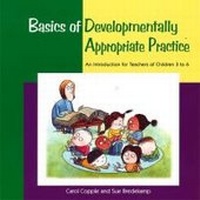
Basics of Developmentally Appropriate Practice
An Introduction for Teachers of Children 3 to 7
Published on 19. January 2006
Book
Paperback/Softback
112 pages
978-1-928896-26-5 (ISBN)
Description
Developmentally appropriate practice is so fundamental to the early childhood field that all new educators need a sound grasp from the very start. While DAP's basic concepts aren't difficult or arcane, they can be understood wrongly or incompletely-and often are! This engaging little book describes the core concepts and makes them meaningful to everyday practice for preschool teachers. College instructors, directors, and trainers will find this an invaluable tool for introducing learners to the foundation of the early childhood field.
Reviews / Votes
"I am delighted with Basics of Developmentally Appropriate Practice! It is a practical and easy-to-read guide for beginners and also wonderful for experienced practitioners trying to be more responsive to the children they teach. I appreciate the great examples, which make the concepts come to life, and the FAQ section clears up some major misconceptions. The book is a welcome contribution to the tools we have for improving the knowledge and skills of teachers of young children." -Eva Moravcik, associate professor at Honolulu Community College"From my years working with the CDA credentialing program, I know how important it is to have resources like this that are simple and succinct, yet sound. This introduction to the basic principles of developmentally appropriate practice gives teachers an exciting starting place for building rich and enduring learning experiences for young children." -Carol Brunson Day, editor of Essentials for Child Development Associates Working with Young Children
More details
Series
Language
English
Place of publication
Washington DC
United States
Product notice
Paperback (trade)
Illustrations
8 B&W illustrations
Dimensions
Height: 216 mm
Width: 216 mm
ISBN-13
978-1-928896-26-5 (9781928896265)
Copyright in bibliographic data and cover images is held by Nielsen Book Services Limited or by the publishers or by their respective licensors: all rights reserved.
Schweitzer Classification
Persons
Carol Copple is Director of Publications and Initiatives in Educational Practice at NAEYC. She taught at Louisiana State University and the New School for Social Research and at the Educational Testing Service co-developed and directed a research-based model for preschool education. With Sue Bredekamp, Dr. Copple is co-editor of Developmentally Appropriate Practice in Early Childhood Programs (1997; 2009). Among her other books are Learning to Read and Write: Developmentally Appropriate Practices for Young Children (NAEYC) and Educating the Young Thinker: Classroom Strategies for Cognitive Growth (Erlbaum). She received her doctorate from Cornell University.
Sue Bredekamp is an early childhood education specialist from Washington, DC who serves as a consultant on developmentally appropriate practice, curriculum, teaching, and professional development for state and national organizations such as NAEYC, the Council for Professional Recognition, and Head Start. From 1981 to 1998, she was Director of Accreditation and Professional Development for NAEYC. She is the author of an introductory textbook Effective Practices in Early Childhood Education: Building a Foundation. Her doctorate is from the University of Maryland.
Sue Bredekamp is an early childhood education specialist from Washington, DC who serves as a consultant on developmentally appropriate practice, curriculum, teaching, and professional development for state and national organizations such as NAEYC, the Council for Professional Recognition, and Head Start. From 1981 to 1998, she was Director of Accreditation and Professional Development for NAEYC. She is the author of an introductory textbook Effective Practices in Early Childhood Education: Building a Foundation. Her doctorate is from the University of Maryland.
Content
About This Book
What Is Developmentally Appropriate Practice?
The Main Idea
Deciding What Is Developmentally Appropriate
How Young Children Learn and Develop
The Developmentally Appropriate Practitioner
Guidelines for Developmentally Appropriate Practice
1. Create a Caring Community of Learners
2. Teach to Enhance Development and Learning
3. Plan Appropriate Curriculum
4. Assess Children's Development and Learning
5. Develop Reciprocal Relationships with Families
FAQs
A Changing Picture: Children at 3, 4, and 5
References
Resources
What Is Developmentally Appropriate Practice?
The Main Idea
Deciding What Is Developmentally Appropriate
How Young Children Learn and Develop
The Developmentally Appropriate Practitioner
Guidelines for Developmentally Appropriate Practice
1. Create a Caring Community of Learners
2. Teach to Enhance Development and Learning
3. Plan Appropriate Curriculum
4. Assess Children's Development and Learning
5. Develop Reciprocal Relationships with Families
FAQs
A Changing Picture: Children at 3, 4, and 5
References
Resources