

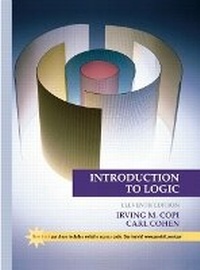
Introduction to Logic
Global Edition
11th Edition
Published on 10. July 2001
Book
Hardback
647 pages
978-0-13-033735-1 (ISBN)
Description
For an undergraduate-level course in Introduction to Logic.
This is the most complete and authoritative treatment of introductory logic-both deductive and inductive, classical and modern-prepares students to understand, recognize, and apply classical syllogistic logic and the more powerful techniques of modern symbolic logic. It explains all concepts and techniques clearly, accurately, and thoroughly, bringing them to life using a wealth of real-life examples of lively arguments and explanations.
Free interactive online tutorial!
Each text includes a free access code for-eLOGIC-a dynamic, interactive online tutorial program. New to this edition, this tutorial program combines a concise version of the text with animated examples, practice exercises, all text exercises, and a dynamic "logic toolkit" which enables students to solve logic problems.
This is the most complete and authoritative treatment of introductory logic-both deductive and inductive, classical and modern-prepares students to understand, recognize, and apply classical syllogistic logic and the more powerful techniques of modern symbolic logic. It explains all concepts and techniques clearly, accurately, and thoroughly, bringing them to life using a wealth of real-life examples of lively arguments and explanations.
Free interactive online tutorial!
Each text includes a free access code for-eLOGIC-a dynamic, interactive online tutorial program. New to this edition, this tutorial program combines a concise version of the text with animated examples, practice exercises, all text exercises, and a dynamic "logic toolkit" which enables students to solve logic problems.
More details
Edition
11th edition
Language
English
Place of publication
New York
United States
Publishing group
Taylor & Francis Inc
Target group
Professional and scholarly
Edition type
Revised edition
Dimensions
Height: 235 mm
Width: 178 mm
Weight
1000 gr
ISBN-13
978-0-13-033735-1 (9780130337351)
Copyright in bibliographic data and cover images is held by Nielsen Book Services Limited or by the publishers or by their respective licensors: all rights reserved.
Schweitzer Classification
Other editions
New editions
Irving M. Copi | Carl Cohen
Introduction to Logic
Book
08/2001
12th Edition
Routledge
€69.33
Article exhausted; check for reprint
Book
08/1998
10th Edition
Routledge
€64.38
Article exhausted; check for reprint
Additional editions

Irving M. Copi | Carl Cohen
Introduction to Logic
Book
01/1990
8th Edition
Routledge
€59.62
Article exhausted; check for reprint
Previous edition
Irving M. Copi | Carl Cohen
Introduction to Logic
Book
08/1997
10th Edition
Routledge
Unfortunately, price unknown
No shipping information available
Content
I. LOGIC AND LANGUAGE.
1. Basic Logical Concepts.
What Logic Is. Propositions and Sentences. Arguments, Premisses, and Conclusions. Analyzing Arguments. Recognizing Arguments. Arguments and Explanations. Deduction and Validity. Induction and Probability. Validity and Truth. Complex Argumentative Passages. Reasoning.
2. The Uses of Language.
Three Basic Functions of Language. Discourse Serving Multiple Functions. The Forms of Discourse. Emotive Words. Kinds of Agreement and Disagreement. Emotively Neutral Language.
3. Definition.
Disputes, Verbal Disputes, and Definitions. Kinds of Definition and the Resolution of Disputes. Extension and Intension. Extensional Definitions. Intensional Definitions. Rules for Definition by Genus and Difference.
4. Fallacies.
What Is a Fallacy? Fallacies of Relevance. Fallacies of Presumption. Fallacies of Ambiguity.
II. DEDUCTION.
5. Categorical Propositions.
The Theory of Deduction. Categorical Propositions and Classes. Quality, Quantity, and Distribution. The Traditional Square of Opposition. Further Immediate Inferences. Existential Import and the Interpretation of Categorical Propositions. Symbolism and Diagrams for Categorical Propositions.
6. Categorical Syllogisms.
Standard-Form Categorical Syllogisms. The Formal Nature of Syllogistic Argument. Venn Diagram Technique for Testing Syllogisms. Syllogistic Rules and Syllogistic Fallacies. Exposition of the 15 Valid Forms of the Categorical Syllogism. Deduction of the 15 Valid Forms of the Categorical Syllogism.
7. Arguments in Ordinary Language.
Syllogistic Arguments in Ordinary Language. Reducing the Number of Terms in a Syllogistic Argument. Translating Categorical Propositions into Standard Form. Uniform Translation. Enthymemes. Sorites. Disjunctive and Hypothetical Syllogisms. The Dilemma.
8. Symbolic Logic.
The Symbolic Language of Modern Logic. The Symbols for Conjunction, Negation, and Disjunction. Conditional Statements and Material Implication. Argument Forms and Arguments. Statement Forms and Material Equivalence. Logical Equivalence. The Paradoxes of Material Implication. The Three "Laws of Thought."
9. The Method of Deduction.
Formal Proof of Validity. The Rule of Replacement. Proof of Invalidity. Inconsistency.
10. Quantification Theory.
Singular Propositions. Quantification. Traditional Subject-Predicate Propositions. Proving Validity. Proving Invalidity. Asyllogistic Inference.
III. INDUCTION.
11. Analogy and Probable Inference.
Argument by Analogy. Appraising Analogical Arguments. Refutation by Logical Analogy.
12. Causal Connections: Mill's Methods of Experimental Inquiry.
Cause and Effect. Mill's Methods. Critique of Mill's Methods.
13. Science and Hypothesis.
The Values of Science. Explanations: Scientific and Unscientific. Evaluating Scientific Explanations. Seven Stages of Scientific Investigation. Scientists in Action: The Pattern of Scientific Investigation. Crucial Experiments and Ad Hoc Hypotheses. Classification as Hypothesis.
14. Probability.
Alternative Conceptions of Probability. The Probability Calculus. Probability of Joint Occurrences. Probability of Alternative Occurrences. Expected Value.
Solutions to Selected Exercises.
Special Symbols.
Glossary/Index.
1. Basic Logical Concepts.
What Logic Is. Propositions and Sentences. Arguments, Premisses, and Conclusions. Analyzing Arguments. Recognizing Arguments. Arguments and Explanations. Deduction and Validity. Induction and Probability. Validity and Truth. Complex Argumentative Passages. Reasoning.
2. The Uses of Language.
Three Basic Functions of Language. Discourse Serving Multiple Functions. The Forms of Discourse. Emotive Words. Kinds of Agreement and Disagreement. Emotively Neutral Language.
3. Definition.
Disputes, Verbal Disputes, and Definitions. Kinds of Definition and the Resolution of Disputes. Extension and Intension. Extensional Definitions. Intensional Definitions. Rules for Definition by Genus and Difference.
4. Fallacies.
What Is a Fallacy? Fallacies of Relevance. Fallacies of Presumption. Fallacies of Ambiguity.
II. DEDUCTION.
5. Categorical Propositions.
The Theory of Deduction. Categorical Propositions and Classes. Quality, Quantity, and Distribution. The Traditional Square of Opposition. Further Immediate Inferences. Existential Import and the Interpretation of Categorical Propositions. Symbolism and Diagrams for Categorical Propositions.
6. Categorical Syllogisms.
Standard-Form Categorical Syllogisms. The Formal Nature of Syllogistic Argument. Venn Diagram Technique for Testing Syllogisms. Syllogistic Rules and Syllogistic Fallacies. Exposition of the 15 Valid Forms of the Categorical Syllogism. Deduction of the 15 Valid Forms of the Categorical Syllogism.
7. Arguments in Ordinary Language.
Syllogistic Arguments in Ordinary Language. Reducing the Number of Terms in a Syllogistic Argument. Translating Categorical Propositions into Standard Form. Uniform Translation. Enthymemes. Sorites. Disjunctive and Hypothetical Syllogisms. The Dilemma.
8. Symbolic Logic.
The Symbolic Language of Modern Logic. The Symbols for Conjunction, Negation, and Disjunction. Conditional Statements and Material Implication. Argument Forms and Arguments. Statement Forms and Material Equivalence. Logical Equivalence. The Paradoxes of Material Implication. The Three "Laws of Thought."
9. The Method of Deduction.
Formal Proof of Validity. The Rule of Replacement. Proof of Invalidity. Inconsistency.
10. Quantification Theory.
Singular Propositions. Quantification. Traditional Subject-Predicate Propositions. Proving Validity. Proving Invalidity. Asyllogistic Inference.
III. INDUCTION.
11. Analogy and Probable Inference.
Argument by Analogy. Appraising Analogical Arguments. Refutation by Logical Analogy.
12. Causal Connections: Mill's Methods of Experimental Inquiry.
Cause and Effect. Mill's Methods. Critique of Mill's Methods.
13. Science and Hypothesis.
The Values of Science. Explanations: Scientific and Unscientific. Evaluating Scientific Explanations. Seven Stages of Scientific Investigation. Scientists in Action: The Pattern of Scientific Investigation. Crucial Experiments and Ad Hoc Hypotheses. Classification as Hypothesis.
14. Probability.
Alternative Conceptions of Probability. The Probability Calculus. Probability of Joint Occurrences. Probability of Alternative Occurrences. Expected Value.
Solutions to Selected Exercises.
Special Symbols.
Glossary/Index.