

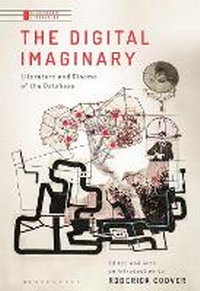
The Digital Imaginary
Literature and Cinema of the Database
Published on 20. May 2021
Book
Paperback/Softback
208 pages
978-1-5013-7940-6 (ISBN)
Description
This book is available as open access through the Bloomsbury Open Access programme and is available on www.bloomsburycollections.com.
Over the past half century, computing has profoundly altered the ways stories are imagined and told. Immersive, narrative, and database technologies transform creative practices and hybrid spaces revealing and concealing the most fundamental acts of human invention: making stories.
The Digital Imaginary illuminates these changes by bringing leading North American and European writers, artists and scholars, like Sharon Daniel, Stuart Moulthrop, Nick Montfort, Kate Pullinger and Geof Bowker, to engage in discussion about how new forms and structures change the creative process. Through interviews, commentaries and meta-commentaries, this book brings fresh insight into the creative process from differing, disciplinary perspectives, provoking questions for makers and readers about meaning, interpretation and utterance. The Digital Imaginary will be an indispensable volume for anyone seeking to understand the impact of digital technology on contemporary culture, including storymakers, educators, curators, critics, readers and artists, alike.
Over the past half century, computing has profoundly altered the ways stories are imagined and told. Immersive, narrative, and database technologies transform creative practices and hybrid spaces revealing and concealing the most fundamental acts of human invention: making stories.
The Digital Imaginary illuminates these changes by bringing leading North American and European writers, artists and scholars, like Sharon Daniel, Stuart Moulthrop, Nick Montfort, Kate Pullinger and Geof Bowker, to engage in discussion about how new forms and structures change the creative process. Through interviews, commentaries and meta-commentaries, this book brings fresh insight into the creative process from differing, disciplinary perspectives, provoking questions for makers and readers about meaning, interpretation and utterance. The Digital Imaginary will be an indispensable volume for anyone seeking to understand the impact of digital technology on contemporary culture, including storymakers, educators, curators, critics, readers and artists, alike.
Reviews / Votes
The Digital Imaginary remains a unique text ... Its interviews, commentaries and metacommentaries offer fresh insights on familiar concepts from new media studies ... It is this willingness to bear the unflattering marks of its experiments that makes the book an exhilarating and worthwhile exploration into electronic literature and digital art, one that opens exciting new avenues for academic edited collections. * C21 Literature: A Journal of Twenty-first Century Writings * The Digital Imaginary figures vital, and some of the best, aspects of an emergent world of Electronic Literature by creating just the kind of "discursive community" that its collection of interviews and essays - recursively, self-reflexively - celebrates. Artists who make meaning from computational media and new forms, from multimodality, from digitally-enabled collaboration, and from the transactional choices of their readers are placed in explicit, exploratory dialog with a number of these very readers. A further, generative layer of metacommentary from two widely differing perspectives adds voiceover - from visceral theory (Szilak) and code-level computation (Montfort) - to what is, in particular, an entanglement of cinematic, literary, and computational world-lines. And the whole is haunted by the cosmologically distancing vision of Steve Tomasula, a maker in these multimodal forms for whom the digital imaginary scales, ethically, beyond the horizons of received human culture and technology. * John Cayley, Professor and Chair of Literary Arts, Brown University, USA * Digitality has erupted the ambit of narratives with which we invent and interpret our being in the world, as well as the forms in which these narratives are expressed and experienced. The Digital Imaginary is an invaluable and elucidative analysis of the current 'state of this art' by authors and artists who are thinking and working at its leading edge. Its penetrating case studies and conversations map best current practices and beguiling future possibilities. * Jeffrey Shaw, Artist, Chair Professor of Media Art, City University of Hong Kong, Hong Kong *More details
Series
Language
English
Place of publication
New York
United States
Publishing group
Bloomsbury Publishing Plc
Target group
Professional and scholarly
Illustrations
28 bw illus
Dimensions
Height: 229 mm
Width: 152 mm
Weight
286 gr
ISBN-13
978-1-5013-7940-6 (9781501379406)
Copyright in bibliographic data and cover images is held by Nielsen Book Services Limited or by the publishers or by their respective licensors: all rights reserved.
Schweitzer Classification
Other editions
Additional editions
E-Book
11/2019
1st Edition
Bloomsbury Academic USA
€7.99
Available for download
Person
Roderick Coover is Professor of Film and Media Arts at Temple University, USA, and author or coauthor of numerous award-winning creative works featured in international arts venues, festivals and public institutions as well as scholarly works spanning fields of the arts, humanities and social sciences.
Content
Acknowledgements
Introduction
The Digital Imaginary
Part One: Database
Interviews
Connections And Coincidences In The End: Death In Seven Colors: A Conversation With David Clark
Emotional Proximity Through Inside The Distance: A Conversation With Sharon Daniel
Commentaries
Stuart Moulthrop: Now What: Sharon Daniel And David Clark On The Digital Imaginary.
Judith Aston: The Readerly And The Cinematic: Hybrid Reconfigurations Through
Digital Media Practice.
Part Two: Archive
Interviews
Pry As A Cinematic Novel: A Conversation With Samantha Gorman
The Generative Archive Of Encyclopedia: A Conversation With Hakan Jonson And Johannes Helden.
Commentaries
Lisa Swanstrom: The Taxonomy Is Imprecise.
Geoffrey C. Bowker: Reading The Endless Archive
Part Three: Multimodality
Interviews
Authorship In Inanimate Alice and Letter To An Unknown Soldier: A Conversation With Kate Pullinger
The Metamorphoses Of Front As A Narrative Told Through Social Media Interface: A Conversation With Donna Leishman.
Commentaries
Anastasia Salter: Collaborative Voices: Kate Pullinger's Digital Authorial Voice.
Mark C. Marino: What Holds Electronic Literature Together?
Metacommentaries
Illya Szilak: Do Cyborgs Dream Of Iphone Apps? The Body And Storytelling In The Digital Imaginary.
Nick Montfort: Computational Literary Practices And Processes And Imagination.
Afterword
Steve Tomasula: Haunting The Digital Imaginary.
Bibliography
Index
Introduction
The Digital Imaginary
Part One: Database
Interviews
Connections And Coincidences In The End: Death In Seven Colors: A Conversation With David Clark
Emotional Proximity Through Inside The Distance: A Conversation With Sharon Daniel
Commentaries
Stuart Moulthrop: Now What: Sharon Daniel And David Clark On The Digital Imaginary.
Judith Aston: The Readerly And The Cinematic: Hybrid Reconfigurations Through
Digital Media Practice.
Part Two: Archive
Interviews
Pry As A Cinematic Novel: A Conversation With Samantha Gorman
The Generative Archive Of Encyclopedia: A Conversation With Hakan Jonson And Johannes Helden.
Commentaries
Lisa Swanstrom: The Taxonomy Is Imprecise.
Geoffrey C. Bowker: Reading The Endless Archive
Part Three: Multimodality
Interviews
Authorship In Inanimate Alice and Letter To An Unknown Soldier: A Conversation With Kate Pullinger
The Metamorphoses Of Front As A Narrative Told Through Social Media Interface: A Conversation With Donna Leishman.
Commentaries
Anastasia Salter: Collaborative Voices: Kate Pullinger's Digital Authorial Voice.
Mark C. Marino: What Holds Electronic Literature Together?
Metacommentaries
Illya Szilak: Do Cyborgs Dream Of Iphone Apps? The Body And Storytelling In The Digital Imaginary.
Nick Montfort: Computational Literary Practices And Processes And Imagination.
Afterword
Steve Tomasula: Haunting The Digital Imaginary.
Bibliography
Index