

When Diversity Works
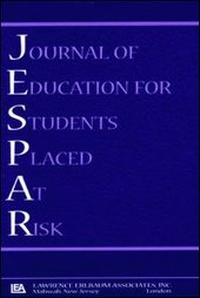
Bridging Families, Peers, Schools, and Communities at Crede. A Special Double Issue of the Journal of Education for Students Placed at Risk
Published on 1. March 2001
Book
Paperback/Softback
176 pages
978-0-8058-9727-2 (ISBN)
Description
In industrialized countries, students' pathways through school to work have been described as an "academic pipeline." Democracies hold an ideal of access to educational opportunites by choice and advancement by merit, but in reality, as students move through primary and secondary school to college, the numbers of ethnic minority and low-income youth in the academic pipeline shrink. This special double issue addresses the academic pipeline problem by focusing on three key themes: (a) involving all families in their children's schooling; (b) identifying ways the academic pipeline can be kept open for diverse students; and (c) helping students bridge their worlds of families, peers, schools, and communities. This volume contributes to both policy and practice in local, state, and national settings where concerns for making diversity work are at the top of schools' and youth organizations' agendas.
More details
Language
English
Place of publication
Mahwah
United States
Publishing group
Taylor & Francis Inc
Target group
College/higher education
Professional and scholarly
Dimensions
Height: 229 mm
Width: 152 mm
Weight
227 gr
ISBN-13
978-0-8058-9727-2 (9780805897272)
Copyright in bibliographic data and cover images is held by Nielsen Book Services Limited or by the publishers or by their respective licensors: all rights reserved.
Schweitzer Classification
Content
Volume 6, Numbers 1 & 2, 2001
Contents: C.R. Cooper, P. Gandara, Guest Editors' Introduction: When Diversity Works: Bridging Families, Peers, Schools, and Communities at CREDE. C.T. Adger, School-Community-Based Organization Partnerships for Language Minority Students' School Success. F.F. Collignon, M. Men, S. Tan, Finding Ways In: Community-Based Perspectives on Southeast Asian Family Involvement With Schools in a New England State. M. Azmitia, C.R. Cooper, Good or Bad? Peer Influences on Latino and European American Adolescents' Pathways Through Schools. P. Gandara, D. Gutierrez, S. O'Hara, Planning for the Future in Rural and Urban High Schools. R.P. Duran, J. Duran, D. Perry-Romero, E. Sanchez, Latino Immigrant Parents and Children Learning and Publishing Together in an After-School Setting. N. Gonzalez, R. Andrade, M. Civil, L.C. Moll, Bridging Funds of Distributed Knowledge: Creating Zones of Practices in Mathematics. R.C. Henze, Segregated Classrooms, Integrated Intent: How One School Responded to the Challenge of Developing Positive Interethnic Relations. COMMENTARIES: G.N. Garcia, The Holographic Properties of Diversity. J.L. Epstein, Building Bridges of Home, School, and Community: The Importance of Design.
Contents: C.R. Cooper, P. Gandara, Guest Editors' Introduction: When Diversity Works: Bridging Families, Peers, Schools, and Communities at CREDE. C.T. Adger, School-Community-Based Organization Partnerships for Language Minority Students' School Success. F.F. Collignon, M. Men, S. Tan, Finding Ways In: Community-Based Perspectives on Southeast Asian Family Involvement With Schools in a New England State. M. Azmitia, C.R. Cooper, Good or Bad? Peer Influences on Latino and European American Adolescents' Pathways Through Schools. P. Gandara, D. Gutierrez, S. O'Hara, Planning for the Future in Rural and Urban High Schools. R.P. Duran, J. Duran, D. Perry-Romero, E. Sanchez, Latino Immigrant Parents and Children Learning and Publishing Together in an After-School Setting. N. Gonzalez, R. Andrade, M. Civil, L.C. Moll, Bridging Funds of Distributed Knowledge: Creating Zones of Practices in Mathematics. R.C. Henze, Segregated Classrooms, Integrated Intent: How One School Responded to the Challenge of Developing Positive Interethnic Relations. COMMENTARIES: G.N. Garcia, The Holographic Properties of Diversity. J.L. Epstein, Building Bridges of Home, School, and Community: The Importance of Design.