

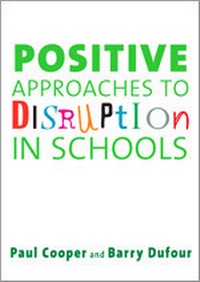
Positive Approaches to Disruption in Schools
1st Edition
Published in September 2008
Book
Paperback/Softback
256 pages
978-1-4129-1865-7 (ISBN)
Description
This unique guide to good practice gives a comprehensive review of successful
approaches to dealing with disruptive behaviour in schools. It also explores major social changes in the UK, beyond the school, which have had an impact on pupils' behaviour in school. Key research, theories and government policy relating to challenging behaviour are featured alongside proven practical advice on how to deal with bad behaviour in your classroom and school.
The book features:
o Useful case studies in every chapter
o Further reading
o Information about helpful websites and organizations
Teachers, PGCE students and educational advisors looking for a handy guide to tried-and-tested behaviour management strategies, as well as those wanting a resource for delivering INSET training on the subject, will find all they need in this book.
Paul Cooper is Professor of Education and Director of the School of Education at the University of Leicester. He is one of Britain's leading specialists on disruptive behaviour in schools.
Barry Dufour is a Visiting Fellow and teaches a wide range of education courses at the School of Education, University of Leicester, at De Montfort University, Leicester and at Loughborough University
approaches to dealing with disruptive behaviour in schools. It also explores major social changes in the UK, beyond the school, which have had an impact on pupils' behaviour in school. Key research, theories and government policy relating to challenging behaviour are featured alongside proven practical advice on how to deal with bad behaviour in your classroom and school.
The book features:
o Useful case studies in every chapter
o Further reading
o Information about helpful websites and organizations
Teachers, PGCE students and educational advisors looking for a handy guide to tried-and-tested behaviour management strategies, as well as those wanting a resource for delivering INSET training on the subject, will find all they need in this book.
Paul Cooper is Professor of Education and Director of the School of Education at the University of Leicester. He is one of Britain's leading specialists on disruptive behaviour in schools.
Barry Dufour is a Visiting Fellow and teaches a wide range of education courses at the School of Education, University of Leicester, at De Montfort University, Leicester and at Loughborough University
More details
Language
English
Place of publication
Thousand Oaks
United States
Target group
Professional and scholarly
Dimensions
Height: 242 mm
Width: 170 mm
ISBN-13
978-1-4129-1865-7 (9781412918657)
Copyright in bibliographic data and cover images is held by Nielsen Book Services Limited or by the publishers or by their respective licensors: all rights reserved.
Schweitzer Classification
Persons
Paul Cooper is Chair Professor of Special Education at the Hong Kong Institute of Educatiion, and Visiting Professor at the University of Malta. His former Professor of Education at the University of Leicester, and has held academic posts at Birmingham, Oxford and Cambridge Universities. His main interests are interventions for Social, Emotional and Behavioural Difficulties and mental health in schools, and applications of the biopsychosocial approach to these issues. He is Vice president of the Social, Emotional and Behavioural Difficulties Association; Founding co-Chair of the European network for Social Emotional Competence, and Co-editor of the International Journal of Emotional Education.
Content
PART ONE: DEFINITIONS, HISTORY AND INTERNATIONAL PERSPECTIVES
A Historical Perspective
An International Perspective
PART TWO: THE IMPACT OF CHANGES IN THE FAMILY AND SOCIETY
Changes in the Family and its Impact on Schools
Changes in the Social and Economic Structure
PART THREE: PSYCHOLOGY, INDIVIDUAL DEVELOPMENT AND HEALTH
Approaches to Understanding Social, Emotional and Behavioural Difficulties
Common Medical Problems
PART FOUR: UNDERSTANDING AND DEALING WITH LEARNING AND BEHAVIOURAL DIFFICULTIES
Behaviour and Underachievement
A Broader Definition of Social, Emotional and Behavioural Difficulties
Special Needs and Special Needs Education
PART FIVE: UNDERSTANDING AND DEALING WITH MAJOR PROBLEMS IN SCHOOLS
Bullying
Truancy
Violence
Vandalism
Exclusions
Drugs
Racism
Sexism
Arson
School Security
PART SIX: EFFECTIVE SYSTEMS IN SCHOOLS AND CLASSROOMS
The Rise and Use of Special Provision
Successful Whole-School Approaches to Misbehaviour
Successful Classroom Approaches to Misbehaviour
PART SEVEN: GOVERNMENT, SCHOOLS AND CLASSROOMS
A Comprehensive Strategy for Positive and Effective Approaches
A Historical Perspective
An International Perspective
PART TWO: THE IMPACT OF CHANGES IN THE FAMILY AND SOCIETY
Changes in the Family and its Impact on Schools
Changes in the Social and Economic Structure
PART THREE: PSYCHOLOGY, INDIVIDUAL DEVELOPMENT AND HEALTH
Approaches to Understanding Social, Emotional and Behavioural Difficulties
Common Medical Problems
PART FOUR: UNDERSTANDING AND DEALING WITH LEARNING AND BEHAVIOURAL DIFFICULTIES
Behaviour and Underachievement
A Broader Definition of Social, Emotional and Behavioural Difficulties
Special Needs and Special Needs Education
PART FIVE: UNDERSTANDING AND DEALING WITH MAJOR PROBLEMS IN SCHOOLS
Bullying
Truancy
Violence
Vandalism
Exclusions
Drugs
Racism
Sexism
Arson
School Security
PART SIX: EFFECTIVE SYSTEMS IN SCHOOLS AND CLASSROOMS
The Rise and Use of Special Provision
Successful Whole-School Approaches to Misbehaviour
Successful Classroom Approaches to Misbehaviour
PART SEVEN: GOVERNMENT, SCHOOLS AND CLASSROOMS
A Comprehensive Strategy for Positive and Effective Approaches