

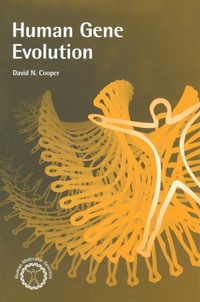
Human Gene Evolution
1st Edition
Published on 15. June 1999
Book
Hardback
510 pages
978-1-85996-151-3 (ISBN)
Description
The story of our evolutionary past is told in our genome sequence. Human Gene Evolution deals with the origins of human genes, describes their structure, function, organisation and expression. The text integrates our emerging knowledge of chromosome and genome structure, and discusses the nature of the mutational mechanisms underlying evolutionary change.
Reviews / Votes
"This book containing a wealth of information, has been written by the most competent author..I have no doubt that this book is masterfully written and excellently organised, it will serve as an encyclopaedic source of information". Human Genetics 200More details
Language
English
Place of publication
London
United Kingdom
Publishing group
Taylor & Francis Ltd
Target group
College/higher education
Professional and scholarly
Academic, Postgraduate, Professional, and Undergraduate
Product notice
sewn/stitched
Cloth over boards
Dimensions
Height: 234 mm
Width: 156 mm
Weight
1104 gr
ISBN-13
978-1-85996-151-3 (9781859961513)
Copyright in bibliographic data and cover images is held by Nielsen Book Services Limited or by the publishers or by their respective licensors: all rights reserved.
Schweitzer Classification
Other editions
Additional editions
David Cooper
Human Gene Evolution
E-Book
11/2024
1st Edition
Garland Science
€251.99
Available for download
David Cooper
Human Gene Evolution
E-Book
11/2024
1st Edition
Garland Science
€251.99
Available for download
Person
David N. Cooper , Institute of Medical Genetics, University of Wales College of Medicine, Cardiff, UK.
Content
Part 1. Introduction and Overview. 1. Structure and Function in the Human Genomes. 2. Evolution of the Human Genomes. Part 2. Evolution of Gene Structure. 3. Introns, Exons and Evolution. 4. Genes and Gene Families. 5. Promoters and Transcriptions Factors. 6. Pseudigenes and their Formation. Part 3. Mutational Mechanisms in Evolution. 7. Single Base-pair Substitutions. 8. Contractions and Expansions in Gene Size and Number. 9. Genes and Rearrangements. 10. Molecular Reconstruction of Ancient Genes/Proteins.