

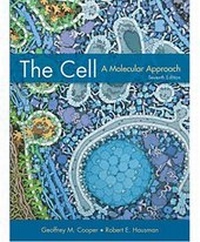
The Cell: A Molecular Approach
7th Edition
Published on 19. November 2015
Book
Hardback
500 pages
978-1-60535-563-4 (ISBN)
Description
The Cell, Seventh Edition provides a balance of concepts and details that meets the needs of today's students and their teachers. Written by an active scientist and experienced educator, this textbook combines readability and cohesiveness with comprehensive and up-to-date science.
In keeping with prior editions, the new Seventh Edition:
Is ideally suited in length and complexity for sophomore- and junior-level courses at the undergraduate level.
Can be covered in a single semester. Students can master the material in its entirety, rather than sampling a small fraction from a much larger text.
Is written in an efficient and compact style, covering a broad range of material in a direct and pedagogically approachable manner.
Focuses on the molecular biology of cells as a unifying theme, with topics such as developmental biology, the nervous system, the immune system, and plant biology being discussed as examples of more general principles.
Features 'Key Experiment' and 'Molecular Medicine' boxes that highlight the experimental nature of molecular and cellular biology and convey the excitement and medical relevance of research in this area.
In keeping with prior editions, the new Seventh Edition:
Is ideally suited in length and complexity for sophomore- and junior-level courses at the undergraduate level.
Can be covered in a single semester. Students can master the material in its entirety, rather than sampling a small fraction from a much larger text.
Is written in an efficient and compact style, covering a broad range of material in a direct and pedagogically approachable manner.
Focuses on the molecular biology of cells as a unifying theme, with topics such as developmental biology, the nervous system, the immune system, and plant biology being discussed as examples of more general principles.
Features 'Key Experiment' and 'Molecular Medicine' boxes that highlight the experimental nature of molecular and cellular biology and convey the excitement and medical relevance of research in this area.
More details
Other editions
Additional editions
Book
10/2015
7th Edition
Sinauer Associates Inc.,U.S.
€91.79
Article exhausted; check different version
Previous edition
Book
02/2013
6th Edition
Sinauer Associates Inc.,U.S.
€88.08
Article exhausted; check for reprint
Persons
Geoffrey M. Cooper is Professor of Biology and Associate Dean of the Faculty for Natural Sciences at Boston University. Receiving a Ph.D. in Biochemistry from the University of Miami in 1973, he pursued postdoctoral work with Howard Temin at the University of Wisconsin, where he developed gene transfer assays to characterize the proviral DNAs of Rous sarcoma virus and related retroviruses. He then joined the faculty of Dana-Farber Cancer Institute and Harvard Medical School in 1975, extending these studies to the identification of oncogenes in human tumors. Since moving to Boston University as Chair of Biology in 1998, Dr. Cooper has used The Cell in teaching undergraduate cell biology, as well as continuing his research and participating in a major expansion of the life sciences there. Dr. Cooper's research is focused on understanding the roles of oncogene proteins in the signaling pathways that regulate cell proliferation and programmed cell death. He has authored two textbooks on cancer and published over 100 research papers in the field of cell signaling and cancer research.
Content
Part I. Fundamentals and Foundations.- 1. An Overview of Cells and Cell Research.- New discussion of super-resolution light microscopy.- New Key Experiment: HeLa cells.- 2. Molecules and Membranes.- Reorganized to include discussion of enzymes and catalysis.- 3. Bioenergetics and Metabolism.- Reorganized to include discussion of the mechanisms of oxidative phosphorylation and photosynthesis.- 4. Fundamentals of Molecular Biology.- Additional discussion of real-time PCR.- New discussion of the CRISPR/Cas system.- 5. Genomics, Proteomics, and Systems Biology.- New chapter focusing on genomics, proteomics, and systems biology.- Added discussion of next-generation sequencing.- New section on Synthetic Biology.- New Molecular Medicine: Malaria and Synthetic Biology.- Part II. The Flow of Genetic Information.- 6. Genes and Genomes.- Updated discussion of noncoding RNAs.- New Key Experiment: The ENCODE Project.- 7. Replication, Maintenance, and Rearrangements of Genomic DNA.- New discussion of DNA rearrangement and yeast mating types.- 8. RNA Synthesis and Processing.- Discussion of the role of ?-ketoglutarate in catabolite repression.- Updated information on insulators and transcriptional domains.- New section on Chromatin and Epigenetics.- Updated discussion of lncRNAs.- 9. Protein Synthesis, Processing, and Regulation.- New discussion of prions.- Updated information on protein modification by ubiquitin and SUMO.- New Molecular Medicine: Alzheimer's Disease.- Part III. Cell Structure and Function.- 10. The Nucleus.- New information on the organization of chromosome domains within the nucleus.- Updated discussion of nuclear bodies.- 11. Protein Sorting and Transport: The Endoplasmic Reticulum, Golgi Apparatus, and Lysosomes.- Updated discussion of the insertion of membrane proteins in the ER.- New information on protein trafficking through the Golgi.- Updated discussion of vesicle docking and fusion.- 12. Mitochondria, Chloroplasts, and Peroxisomes.- Updated discussion of chloroplast genomes and protein import.- New information on peroxisome biogenesis.- New Molecular Medicine: Peroxisome Biogenesis Disorders.- 13. The Cytoskeleton and Cell Movement.- Updated discussion of actin filament remodeling at the leading edge.- 14. The Plasma Membrane.- Updated discussion of plasma membrane domains, lipid rafts and caveolae.- New information on clathrin-independent endocytosis.- Updated Molecular Medicine to include new information on drug treatment of cystic fibrosis.- 15. Cell Walls, the Extracellular Matrix, and Cell Interactions.- New discussion of the role of bacterial cytoskeletal proteins in cell wall synthesis and cell shape.- Updated information on a-catenin linkage to actin.- Part IV. Cell Regulation.- 16. Cell Signaling.- Chapter reorganized to focus on integrated signaling pathways.- 17. The Cell Cycle.- Expanded discussion of the initiation of DNA synthesis and role of APC/C.- New information on the spindle assembly checkpoint.- 18. Cell Death and Cell Renewal.- Expanded discussion of programmed cell death by autophagy and necroptosis.- New information on stem cell niches.- 19. Cancer.- Updated discussion of cancer genomics.- New information on targeted therapies.