

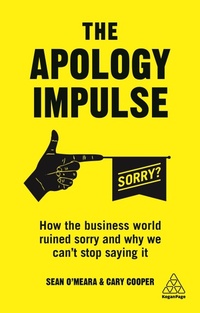
The Apology Impulse
How the Business World Ruined Sorry and Why We Can't Stop Saying It
1st Edition
Published on 3. October 2019
Book
Hardback
360 pages
978-1-78966-034-0 (ISBN)
Description
WINNER: American Book Fest Best Book Award 2020 - Communications/Public Relations
WINNER: NYC Big Book Award 2020 - Marketing and Public Relations
Saying sorry is in crisis. On one hand there are anxious PR aficionados and social media teams dishing out apologies with alarming frequency. On the other there are people and organizations who have done truly terrible things issuing much-delayed statements of mild regret.
We have become addicted to apologies but immune from saying sorry.
In January 2018 there were 35 public apologies from high-profile organizations and individuals. That's more than one per day. Between them, in 2017, the likes of Facebook, Mercedes Benz and United Airlines issued over 2,000 words of apologies for their transgressions. Alarmingly, the word 'sorry' didn't appear once.
This perfectly timed book examines the psychology, motivations and even the economic rationale of giving an apology in the age of outrage culture and on-demand contrition. It reveals the tricks and techniques we all use to evade, reframe and divert from what we did and demonstrates how professionals do it best. Providing lessons for businesses and organizations, you'll find out how to give meaningful apologies and know when to say sorry, or not say it at all.
The Apology Impulse is the perfect playbook for anyone - from social media executive through to online influencers and CEOs - who apologise way too much and say sorry far too infrequently.
WINNER: NYC Big Book Award 2020 - Marketing and Public Relations
Saying sorry is in crisis. On one hand there are anxious PR aficionados and social media teams dishing out apologies with alarming frequency. On the other there are people and organizations who have done truly terrible things issuing much-delayed statements of mild regret.
We have become addicted to apologies but immune from saying sorry.
In January 2018 there were 35 public apologies from high-profile organizations and individuals. That's more than one per day. Between them, in 2017, the likes of Facebook, Mercedes Benz and United Airlines issued over 2,000 words of apologies for their transgressions. Alarmingly, the word 'sorry' didn't appear once.
This perfectly timed book examines the psychology, motivations and even the economic rationale of giving an apology in the age of outrage culture and on-demand contrition. It reveals the tricks and techniques we all use to evade, reframe and divert from what we did and demonstrates how professionals do it best. Providing lessons for businesses and organizations, you'll find out how to give meaningful apologies and know when to say sorry, or not say it at all.
The Apology Impulse is the perfect playbook for anyone - from social media executive through to online influencers and CEOs - who apologise way too much and say sorry far too infrequently.
More details
Language
English
Place of publication
London
United Kingdom
Target group
College/higher education
Professional and scholarly
Product notice
Cloth over boards
Dimensions
Height: 222 mm
Width: 146 mm
Thickness: 32 mm
Weight
676 gr
ISBN-13
978-1-78966-034-0 (9781789660340)
Copyright in bibliographic data and cover images is held by Nielsen Book Services Limited or by the publishers or by their respective licensors: all rights reserved.
Schweitzer Classification
Other editions
Additional editions
Cary Cooper | Sean O'Meara
The Apology Impulse
How the Business World Ruined Sorry and Why We Can't Stop Saying It
Book
10/2019
1st Edition
Kogan Page Ltd
€19.00
Article exhausted; check different version
Persons
Sir Cary Cooper, CBE, is the 50th Anniversary Professor of Organizational Psychology and Health at the ALLIANCE Manchester Business School. He holds the office of president of the CIPD, the British Academy of Management, RELATE and Institute of Welfare.
Sean O'Meara is the founder and MD of Essential Content, a specialist content and PR agency. He's worked with leading organizations including The Co-Op Bank and the BBC.
Sean O'Meara is the founder and MD of Essential Content, a specialist content and PR agency. He's worked with leading organizations including The Co-Op Bank and the BBC.
Content
Chapter - 01: Introduction;
Chapter - 02: Who's been apologizing and what are they sorry about?;
Chapter - 03: The six reasons organizations apologize and the one reason they won't;
Chapter - 04: Culture, values and consumer expectations;
Chapter - 05: The definitive modern apology and why everyone ignored it;
Chapter - 06: If everyone's sorry, nobody is sorry;
Chapter - 07: How the experts apologize without saying sorry;
Chapter - 08: Schroedinger's apology, grammatical deflections and evasions;
Chapter - 09: Crisis fatigue and the case for rationing apologies;
Chapter - 10: It's not about you;
Chapter - 11: Keep trying;
Chapter - 12: 'Forced to apologize'?;
Chapter - 13: 'We got it wrong';
Chapter - 14: Self-service apologies;
Chapter - 15: Optics anxiety and apologizing for how things look;
Chapter - 16: The true cost of corporate atonement;
Chapter - 17: The economics of saying sorry:;
Chapter - 18: Crisis communications and the potential for mischief;
Chapter - 19: Apology laundering;
Chapter - 20: Apologizing on behalf of others;
Chapter - 21: GBP1 million in sales in four days;
Chapter - 22: Don't mistake kindness for weakness;
Chapter - 23: Conclusion;
Chapter - 02: Who's been apologizing and what are they sorry about?;
Chapter - 03: The six reasons organizations apologize and the one reason they won't;
Chapter - 04: Culture, values and consumer expectations;
Chapter - 05: The definitive modern apology and why everyone ignored it;
Chapter - 06: If everyone's sorry, nobody is sorry;
Chapter - 07: How the experts apologize without saying sorry;
Chapter - 08: Schroedinger's apology, grammatical deflections and evasions;
Chapter - 09: Crisis fatigue and the case for rationing apologies;
Chapter - 10: It's not about you;
Chapter - 11: Keep trying;
Chapter - 12: 'Forced to apologize'?;
Chapter - 13: 'We got it wrong';
Chapter - 14: Self-service apologies;
Chapter - 15: Optics anxiety and apologizing for how things look;
Chapter - 16: The true cost of corporate atonement;
Chapter - 17: The economics of saying sorry:;
Chapter - 18: Crisis communications and the potential for mischief;
Chapter - 19: Apology laundering;
Chapter - 20: Apologizing on behalf of others;
Chapter - 21: GBP1 million in sales in four days;
Chapter - 22: Don't mistake kindness for weakness;
Chapter - 23: Conclusion;