


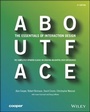
About Face 3
The Essentials of Interaction Design
3rd Edition
Published on 15. May 2007
Book
Paperback/Softback
648 pages
978-0-470-08411-3 (ISBN)
Description
When the first edition of About Face was published in 1995, the idea of designing products based on human goals was a revolutionary concept. Thanks to the work of Alan Cooper and other pioneers, interaction design is now widely recognized as a unique and vital discipline, but our work is far from finished.
This completely updated volume presents the effective and practical tools you need to design great desktop applications, Web 2.0 sites, and mobile devices. This book will teach you the principles of good product behavior and introduce you to Cooper's Goal-Directed Design method, from conducting user research to defining your product using personas and scenarios. In short, About Face 3 will show you how to design the best possible digital products and services.
This completely updated volume presents the effective and practical tools you need to design great desktop applications, Web 2.0 sites, and mobile devices. This book will teach you the principles of good product behavior and introduce you to Cooper's Goal-Directed Design method, from conducting user research to defining your product using personas and scenarios. In short, About Face 3 will show you how to design the best possible digital products and services.
More details
Edition
3., Auflage
Language
English
Place of publication
Chichester
United Kingdom
Publishing group
John Wiley and Sons Ltd
Target group
Professional and scholarly
Edition type
New edition
Illustrations
Illustrations
Dimensions
Height: 23.4 cm
Width: 18.8 cm
Thickness: 33 mm
Weight
879 gr
ISBN-13
978-0-470-08411-3 (9780470084113)
Schweitzer Classification
Other editions
New editions
Book
09/2014
4th Edition
Wiley
€57.50
Available immediately
Previous edition

Book
03/2003
1st Edition
Hungry Minds Inc,U.S.
€37.90
Article exhausted; check for reprint
Persons
For over 30 years Alan Cooper has been a pioneer of the modern computing era. His groundbreaking work in software design and construction has influenced a generation of programmers and business people--and helped a generation of users. He is best known as the "Father of Visual Basic," inventor of personas, and founder of Cooper, the leading design consultancy.
As Director of Design R&D at Cooper, Robert Reimann led dozens of design projects and helped develop many of the methods described in About Face 3. Currently, he is Manager of User Experience at Bose Corporation and President of IxDA, the Interaction Design Association.
David Cronin is Director of Interaction Design at Cooper, where he's led the design of products for such diverse users as surgeons, museum visitors, online shoppers, automobile drivers, financial analysts, and the elderly.
As Director of Design R&D at Cooper, Robert Reimann led dozens of design projects and helped develop many of the methods described in About Face 3. Currently, he is Manager of User Experience at Bose Corporation and President of IxDA, the Interaction Design Association.
David Cronin is Director of Interaction Design at Cooper, where he's led the design of products for such diverse users as surgeons, museum visitors, online shoppers, automobile drivers, financial analysts, and the elderly.
Content
1. Goal-Directed Design.
2. Implementation Models and Mental Models.
3. Beginners, Experts, and Intermediates.
4. Understanding Users: Qualitative Research.
5. Modeling Users: Personas and Goals.
6. The Foundations of Design: Scenarios and Requirements.
7. From Requirements to Design: the Interaction Framework and Design Refinement.
8. Patterns and Principles.
9. Platform and Posture.
10. Orchestration and Flow.
11. Eliminating Excise.
12. Making Software Considerate and Smart.
13. Metaphors and Idioms.
14. Visual Interface Design.
15. Searching and Finding: Improving Data Retrieval.
16. Understanding Undo.
17. Rethinking Files and Save.
18. Improving Data Entry.
19. Selection, Direct Manipulation and Mouse Interactions.
20. Window Behaviors.
21. Controls.
22. Menus.
23. Toolbars and ToolTips.
24. Dialogs.
25. Errors, Alerts, and Confirmation.
26. Designing for Different Needs.
Afterword.
Appendix A. Design Principles.
Appendix B. Bibliography.
2. Implementation Models and Mental Models.
3. Beginners, Experts, and Intermediates.
4. Understanding Users: Qualitative Research.
5. Modeling Users: Personas and Goals.
6. The Foundations of Design: Scenarios and Requirements.
7. From Requirements to Design: the Interaction Framework and Design Refinement.
8. Patterns and Principles.
9. Platform and Posture.
10. Orchestration and Flow.
11. Eliminating Excise.
12. Making Software Considerate and Smart.
13. Metaphors and Idioms.
14. Visual Interface Design.
15. Searching and Finding: Improving Data Retrieval.
16. Understanding Undo.
17. Rethinking Files and Save.
18. Improving Data Entry.
19. Selection, Direct Manipulation and Mouse Interactions.
20. Window Behaviors.
21. Controls.
22. Menus.
23. Toolbars and ToolTips.
24. Dialogs.
25. Errors, Alerts, and Confirmation.
26. Designing for Different Needs.
Afterword.
Appendix A. Design Principles.
Appendix B. Bibliography.