


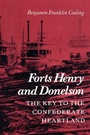
Forts Henry and Donelson
Key to the Confederate Heartland
Published on 1. April 1987
Book
Paperback/Softback
368 pages
978-1-57233-265-2 (ISBN)
Description
Reviewed in the United States on November 27, 2008
This book was a pretty easy read. It introduces and follows the first major campaign in the West from the point of view of the generals commanding. It did a good job documenting the early build up of the different armies as they built up their troops and defenses. In the case of the Union, the early development of the navy in the western rivers is described. There were lots of pictures and period lithographs. There were few maps but they were good and easy to read not dark fuzzy reproduction of Maps from the Official Records. The strength of this book was its examination of the commanders and their blunders. For the Confederates each commander was focused on his position and saw it as the key to the west. The author does a good job of telling you why the Cumberland and Tennessee rivers were vital to the North and South. The North could use these rivers to strike deep into the center of the rebellion. Johnston never visited Forts Henry and Donelson and didn't appreciate their importance until they were threatened. Grant had developed a good relationship the naval commander Foote that enabled them to get permission to attack For Henry. The description of the Naval action is excellent and allows you to understand why Foote thought the Key was to close to close range with his armored gunboats and why this increased the damage from Confederate guns. Find out why after defeating the gunboats and winning a battle with Grants army the confederates lost heart and surrendered the next day. I would recommend this book to any student of the early western campaigns, as it will give you fresh insight.
This book was a pretty easy read. It introduces and follows the first major campaign in the West from the point of view of the generals commanding. It did a good job documenting the early build up of the different armies as they built up their troops and defenses. In the case of the Union, the early development of the navy in the western rivers is described. There were lots of pictures and period lithographs. There were few maps but they were good and easy to read not dark fuzzy reproduction of Maps from the Official Records. The strength of this book was its examination of the commanders and their blunders. For the Confederates each commander was focused on his position and saw it as the key to the west. The author does a good job of telling you why the Cumberland and Tennessee rivers were vital to the North and South. The North could use these rivers to strike deep into the center of the rebellion. Johnston never visited Forts Henry and Donelson and didn't appreciate their importance until they were threatened. Grant had developed a good relationship the naval commander Foote that enabled them to get permission to attack For Henry. The description of the Naval action is excellent and allows you to understand why Foote thought the Key was to close to close range with his armored gunboats and why this increased the damage from Confederate guns. Find out why after defeating the gunboats and winning a battle with Grants army the confederates lost heart and surrendered the next day. I would recommend this book to any student of the early western campaigns, as it will give you fresh insight.
More details
Language
English
Place of publication
Chicago
United States
Target group
Professional and scholarly
Product notice
Paperback (trade)
Unsewn / adhesive bound
Dimensions
Height: 229 mm
Width: 162 mm
Thickness: 27 mm
Weight
553 gr
ISBN-13
978-1-57233-265-2 (9781572332652)
Copyright in bibliographic data and cover images is held by Nielsen Book Services Limited or by the publishers or by their respective licensors: all rights reserved.
Schweitzer Classification
Other editions
Additional editions
E-Book
05/2026
1st Edition
University of Tennessee Press
€20.49
Available for download