

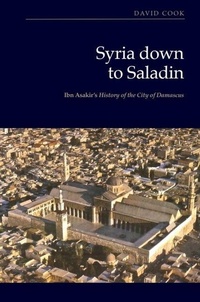
Syria down to Saladin
Ibn Asakir's History of the City of Damascus
Will be published approx. on 30. June 2026
Book
Hardback
728 pages
978-1-3995-6126-6 (ISBN)
Description
Syria down to Saladin is the first comprehensive historical study of post-Umayyad Syria based on Ibn ?Asakir's Ta'rikh madinat Dimashq (History of the City of Damascus). As the largest work that has ever appeared documenting pre-modern Syria, Ibn ?Asakir's History is a major source for the study of the region. It has, however, been underutilised for the simple reason that it is vast. This book makes this unique local history newly accessible to a broader scholarly audience.
Basing his analysis on 6,066 biographical entries from Ibn ?Asakir's text, David Cook reconstructs the history of Syria between the fall of the Umayyads and the rise of the Seljuqs. He provides vital context for pre-Crusader Syria, as well as offering new perspectives on Damascus during the First Latin Kingdom of Jerusalem. He considers topics such as the emergence of new elites, changes in religious and economic bases, and the narration of prophetic tradition, placing these events within a broader pan-Islamic context. Containing over 150 original genealogical tables, 40 maps and 7 appendices, this book stands as a monument to the intellectual and religious breadth of Ibn ?Asakir, highlighting how his text can shed light on a diversity of topics and inviting historians to use it systematically when discussing post-Umayyad Syria.
Basing his analysis on 6,066 biographical entries from Ibn ?Asakir's text, David Cook reconstructs the history of Syria between the fall of the Umayyads and the rise of the Seljuqs. He provides vital context for pre-Crusader Syria, as well as offering new perspectives on Damascus during the First Latin Kingdom of Jerusalem. He considers topics such as the emergence of new elites, changes in religious and economic bases, and the narration of prophetic tradition, placing these events within a broader pan-Islamic context. Containing over 150 original genealogical tables, 40 maps and 7 appendices, this book stands as a monument to the intellectual and religious breadth of Ibn ?Asakir, highlighting how his text can shed light on a diversity of topics and inviting historians to use it systematically when discussing post-Umayyad Syria.
Reviews / Votes
David Cook has accomplished a remarkable feat. The gigantic scale of his probing into Ibn ?Asakir's massive History is unprecedented, and the amount of new knowledge he infused in his new book will undoubtedly energise the field of medieval Islamic/Middle Eastern history. Syria down to Saladin will be an instant classic. -- Suleiman Mourad, Smith College David Cook's choice to organize Ibn ?Asakir's material chronologically and to situate it in the history and historiography of Abbasid Syria has made this important (yet very difficult to use work) easily accessible for anyone interested. This book will become the definitive go-to work on Ibn ?Asakir's Ta'rikh madinat Dimashq and his treatment of Abbasid Syria in particular. -- James Lindsay, Colorado State UniversityMore details
Language
English
Place of publication
Edinburgh
United Kingdom
Target group
Professional and scholarly
Illustrations
150 tables, 40 b/w maps
Dimensions
Height: 244 mm
Width: 170 mm
ISBN-13
978-1-3995-6126-6 (9781399561266)
Copyright in bibliographic data and cover images is held by Nielsen Book Services Limited or by the publishers or by their respective licensors: all rights reserved.
Schweitzer Classification
Person
David Cook is professor of religion at Rice University specializing in Islam. He did his undergraduate degrees at the Hebrew University in Jerusalem, and received his Ph.D. from the University of Chicago in 2001. His areas of specialization include early Islamic history and development, as well as Muslim apocalyptic literature and movements (classical and contemporary). His first book, Studies in Muslim Apocalyptic, was published by Darwin Press in the series Studies in Late Antiquity and Early Islam. Two further books, Understanding Jihad (University of California Press) and Contemporary Muslim Apocalyptic Literature (Syracuse University Press) were published during 2005, and Martyrdom in Islam (Cambridge University Press 2007) as well as The Syrian Muslim Apocalyptic Heritage: An Annotated Translation of Nu?aym b. ?ammad al-Marwazi's Kitab al-fitan (The Book of Tribulations) (Edinburgh University Press, 2018).
Content
List of Illustrations
Acknowledgements
Abbreviations
Outline of Ibn ?Asakir's life
Part 1: GENERAL INTRODUCTION
Chapter 1: Overview
Description of Damascus
Ibn ?Asakir and the History of the City of Damascus
Teachers and Sources
Social Realities of Damascene Muslims
Syria according to Ibn ?Asakir
Chapter 2: Rulers and Elites
Caliphs and Sultans: Authority from Afar
Governors and Rulers of Damascus
Damascene Judiciary and Religious Elite
Syrian Judiciary and Religious Elite
Chapter 3: Themes
Transmission of knowledge: circular, familial and popular
Syria-particular Tradition
Poetry in TMD
Chapter 4: Groups
Travelers and Foreigners in Damascus
Ascetics and Sufis
Pro-?Alids and Shi?ites
Chapter 5: Connections
Non-Muslims in TMD and non-Muslim states
Non-Syrian rulers and dynasties
Economic Sphere
Births, and Names, Ages, Deaths and Funerals
Methodology for the open-access material
Part 2: TMD ANALYSIS
ABBASID SYRIA
Chapter 6: The Early Abbasid Period (133-95/750-810)
Abbasids ruling in Syria: intimate enemies
Sources for this period
Post-Umayyad Syria
Ibn Abi al-?Aja'iz and the Umayyad survivors
Leaders: four portraits of TMD figures in Syria
a. al-Awza?i, the stern proto-Sunni, and Ibrahim b. Adham, the footloose ascetic
b. Abu al-Haydham, the indomitable hero, and Ibrahim b. al-Mahdi, the manipulative reconciler
Followers
Non-Muslims
Social currents in early Abbasid Damascus and Syria
Chapter 7: The Middle Abbasid Period (195-255/811-64)
Revolt of the Sufyani: An Umayyad anti-caliph
Sources for the middle Abbasid period
An Abbasid murder mystery
Religious and judicial trends
Preachers and ascetics
Social and economic trends of during middle Abbasid Syria
SHIFTING ALLEGIANCES: ABBASIDS and TURKS
Chapter 8: The ?ulunids (255-92/864-904)
Sources
The rise of Abu Zur?a al-Dimashqi
Judiciary and tradition during the ?ulunid period
Local Syrian elites of the Abbasid and post-Abbasid times
Sufis... at last
?ulunid Damascus
Judging ?ulunid Syria by its roads
Chapter 9: Intermediate Period (292-323/904-35)
What was the intermediate period?
Sources
Judicial reform in Damascus
Social and economic trends
Chapter 10: The Ikhshidids (323-57/935-968)
Sources: al-Razi, and the duo of Ibn Zabr and Ibn Yunus
al-Awza?i's rite comes to an end with the rise of Shafi?ism
Social and economic trends
The borderlands in TMD
Pre-Fatimid ascetics
Chapter 11: Qarma?ian interlude (357-70/968-80)
A complete rupture
Problematic sources
Damascus and Syria at a transition point
SHI?ITE DAMASCUS: The FATIMIDS
Chapter 12: The Early Fatimid Period (370-411/980-1021)
Sources
Fatimid Damascus: Collaboration or resistance?
Growth of traditionist Sunnism and Sufism during early Fatimid Syria
Syria under the Fatimids
Chapter 13: The Late Fatimid Period (411-68/1021-76)
Sources and biographies
Damascus under the later Fatimids
Ibn Abi Na?r's house
al-Kattani and the growth of Sufism
al-kha?ib al-Baghdadi's visits to Damascus and Tyre
Syria prior to the Seljuqs
TURKISH AND CRUSADER-ERA SYRIA
Chapter 14: Damascene Seljuqs and the Crusaders' Arrival (468-97/1076-1103)
Sources
Sunni Damascus, traditionists and its judiciary
The rise of the Ibn al-?a'igh
The early Ibn ?Asakir family and the ascetic circle of Na?r b. Ibrahim al-Maqdisi
Ibn al-Akfani and Damascene history collection
Coastland Syria: Tyre and the secretary/preacher Ghayth b. ?Ali
Appearance of the Crusaders
Chapter 15: The ?ughtakin atabaks (497-548/1103-54)
The Seljuq legacy to ?ughtakin
Youthful Ibn ?Asakir
Influences inside and outside of Damascus
al-Sam?ani in Syria
Mature Ibn ?Asakir
Ibn al-Mil?i's poetic recollections
The curious case of ?amdan al-Atharibi
Mystery of the Second Crusade
Economic and social realities of Damascus under the ?ughtakin atabaks
Biographical entry: No. 5852 ?amdan b. ?Abd al-Ra?im al-Atharibi (partial)
Chapter 16: The Zangids (548-95/1154-98)
The return of the king
Ibn ?Asakir and his friends' circle
Damascus judiciary: relatives: close, yet far away
Judicial reform during the Zangid period
Educational renewal during Ibn ?Asakir's time
Hanbalis inside and outside of TMD
Sufis and the popular religion in Damascus
Ibn ?Asakir's connections east and west
Zangid to Ayyubid rule: ?ala? al-Din
Conclusions
Times, renewal and apocalypse in TMD
Construction of TMD in accord with the concept
Inclusion and Exclusion in TMD
TMD as History
Glossary
Appendices
Bibliography
Index
Acknowledgements
Abbreviations
Outline of Ibn ?Asakir's life
Part 1: GENERAL INTRODUCTION
Chapter 1: Overview
Description of Damascus
Ibn ?Asakir and the History of the City of Damascus
Teachers and Sources
Social Realities of Damascene Muslims
Syria according to Ibn ?Asakir
Chapter 2: Rulers and Elites
Caliphs and Sultans: Authority from Afar
Governors and Rulers of Damascus
Damascene Judiciary and Religious Elite
Syrian Judiciary and Religious Elite
Chapter 3: Themes
Transmission of knowledge: circular, familial and popular
Syria-particular Tradition
Poetry in TMD
Chapter 4: Groups
Travelers and Foreigners in Damascus
Ascetics and Sufis
Pro-?Alids and Shi?ites
Chapter 5: Connections
Non-Muslims in TMD and non-Muslim states
Non-Syrian rulers and dynasties
Economic Sphere
Births, and Names, Ages, Deaths and Funerals
Methodology for the open-access material
Part 2: TMD ANALYSIS
ABBASID SYRIA
Chapter 6: The Early Abbasid Period (133-95/750-810)
Abbasids ruling in Syria: intimate enemies
Sources for this period
Post-Umayyad Syria
Ibn Abi al-?Aja'iz and the Umayyad survivors
Leaders: four portraits of TMD figures in Syria
a. al-Awza?i, the stern proto-Sunni, and Ibrahim b. Adham, the footloose ascetic
b. Abu al-Haydham, the indomitable hero, and Ibrahim b. al-Mahdi, the manipulative reconciler
Followers
Non-Muslims
Social currents in early Abbasid Damascus and Syria
Chapter 7: The Middle Abbasid Period (195-255/811-64)
Revolt of the Sufyani: An Umayyad anti-caliph
Sources for the middle Abbasid period
An Abbasid murder mystery
Religious and judicial trends
Preachers and ascetics
Social and economic trends of during middle Abbasid Syria
SHIFTING ALLEGIANCES: ABBASIDS and TURKS
Chapter 8: The ?ulunids (255-92/864-904)
Sources
The rise of Abu Zur?a al-Dimashqi
Judiciary and tradition during the ?ulunid period
Local Syrian elites of the Abbasid and post-Abbasid times
Sufis... at last
?ulunid Damascus
Judging ?ulunid Syria by its roads
Chapter 9: Intermediate Period (292-323/904-35)
What was the intermediate period?
Sources
Judicial reform in Damascus
Social and economic trends
Chapter 10: The Ikhshidids (323-57/935-968)
Sources: al-Razi, and the duo of Ibn Zabr and Ibn Yunus
al-Awza?i's rite comes to an end with the rise of Shafi?ism
Social and economic trends
The borderlands in TMD
Pre-Fatimid ascetics
Chapter 11: Qarma?ian interlude (357-70/968-80)
A complete rupture
Problematic sources
Damascus and Syria at a transition point
SHI?ITE DAMASCUS: The FATIMIDS
Chapter 12: The Early Fatimid Period (370-411/980-1021)
Sources
Fatimid Damascus: Collaboration or resistance?
Growth of traditionist Sunnism and Sufism during early Fatimid Syria
Syria under the Fatimids
Chapter 13: The Late Fatimid Period (411-68/1021-76)
Sources and biographies
Damascus under the later Fatimids
Ibn Abi Na?r's house
al-Kattani and the growth of Sufism
al-kha?ib al-Baghdadi's visits to Damascus and Tyre
Syria prior to the Seljuqs
TURKISH AND CRUSADER-ERA SYRIA
Chapter 14: Damascene Seljuqs and the Crusaders' Arrival (468-97/1076-1103)
Sources
Sunni Damascus, traditionists and its judiciary
The rise of the Ibn al-?a'igh
The early Ibn ?Asakir family and the ascetic circle of Na?r b. Ibrahim al-Maqdisi
Ibn al-Akfani and Damascene history collection
Coastland Syria: Tyre and the secretary/preacher Ghayth b. ?Ali
Appearance of the Crusaders
Chapter 15: The ?ughtakin atabaks (497-548/1103-54)
The Seljuq legacy to ?ughtakin
Youthful Ibn ?Asakir
Influences inside and outside of Damascus
al-Sam?ani in Syria
Mature Ibn ?Asakir
Ibn al-Mil?i's poetic recollections
The curious case of ?amdan al-Atharibi
Mystery of the Second Crusade
Economic and social realities of Damascus under the ?ughtakin atabaks
Biographical entry: No. 5852 ?amdan b. ?Abd al-Ra?im al-Atharibi (partial)
Chapter 16: The Zangids (548-95/1154-98)
The return of the king
Ibn ?Asakir and his friends' circle
Damascus judiciary: relatives: close, yet far away
Judicial reform during the Zangid period
Educational renewal during Ibn ?Asakir's time
Hanbalis inside and outside of TMD
Sufis and the popular religion in Damascus
Ibn ?Asakir's connections east and west
Zangid to Ayyubid rule: ?ala? al-Din
Conclusions
Times, renewal and apocalypse in TMD
Construction of TMD in accord with the concept
Inclusion and Exclusion in TMD
TMD as History
Glossary
Appendices
Bibliography
Index