

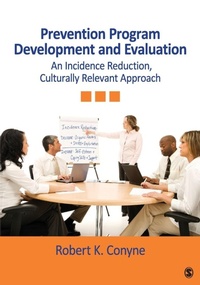
Prevention Program Development and Evaluation
An Incidence Reduction, Culturally Relevant Approach
1st Edition
Published on 1. September 2009
Book
Paperback/Softback
232 pages
978-1-4129-6680-1 (ISBN)
Description
The use of seatbelts, the requirements for smoke detectors, and other kinds of public health interventions have been highly successful in reducing disability, injuries, and premature mortality. Prevention in mental health- identifying and treating mental illnesses before they become full blown syndromes or identifying people at risk for a condition-is just as critical to public mental health. This research-based resource gives practitioners a nuts-and-bolts guide to designing and evaluating prevention programs in mental health that are culturally relevant and aimed at reducing the number of new problems that occur.
Key Features
Employs a 10-step prevention program development and evaluation model that emphasizes the concepts of community, collaboration, and cultural relevance
Offers a brief, practical, how-to approach that is based on rigorous research
Identifies specific prevention program development and evaluation steps
Highlights examples of "everyday prevention" practices as well as concrete prevention programs that have proven, effective implementation
Promotes hands-on learning with practical exercises, instructive figures, and a comprehensive reference list
Intended Audience
Written in a straightforward and accessible style, Prevention Program Development and Evaluation can be used as a core text in undergraduate courses devoted to prevention or in graduate programs aimed at practice issues. Current practitioners or policymakers interested in designing prevention programs will find this book to be an affable guide.
Key Features
Employs a 10-step prevention program development and evaluation model that emphasizes the concepts of community, collaboration, and cultural relevance
Offers a brief, practical, how-to approach that is based on rigorous research
Identifies specific prevention program development and evaluation steps
Highlights examples of "everyday prevention" practices as well as concrete prevention programs that have proven, effective implementation
Promotes hands-on learning with practical exercises, instructive figures, and a comprehensive reference list
Intended Audience
Written in a straightforward and accessible style, Prevention Program Development and Evaluation can be used as a core text in undergraduate courses devoted to prevention or in graduate programs aimed at practice issues. Current practitioners or policymakers interested in designing prevention programs will find this book to be an affable guide.
More details
Language
English
Place of publication
Thousand Oaks
United States
Target group
College/higher education
Dimensions
Height: 254 mm
Width: 178 mm
Thickness: 13 mm
Weight
449 gr
ISBN-13
978-1-4129-6680-1 (9781412966801)
Copyright in bibliographic data and cover images is held by Nielsen Book Services Limited or by the publishers or by their respective licensors: all rights reserved.
Schweitzer Classification
Other editions
Additional editions
Robert K. Conyne
Prevention Program Development and Evaluation
An Incidence Reduction, Culturally Relevant Approach
Book
09/2009
1st Edition
SAGE Publications Inc
€184.90
Shipment within 10-20 days
Person
Robert K. Conyne, Ph.D., William A. Allen Boeing Endowed Chair & Distinguished Professor, Seattle University, 2013-14 and Professor Emeritus from the University of Cincinnati, is a licensed psychologist, clinical counselor, and fellow of the Association for Specialists in Group Work (ASGW) and the American Psychological Association. He has amassed 42 years of professional experience as a university professor and department head, counselor, administrator, consultant, and trainer, and, most recently, as a consultant to military personnel and their families at U.S. installations both at home and overseas. Bob has received many awards, including Eminent Career Award from the ASGW; Lifetime Achievement Award in Prevention, Society of Counseling Psychology of the APA; Distinguished Alumni Award of Distinction from Purdue University; and has been designated a Soros International Scholar. He was the 2009 president of the APA's Division of Group Psychology and Group Psychotherapy, and in 1996 was president of the Association for Specialists in Group Work. With over 200 scholarly publications and presentations including 14 books in his areas of expertise (group work, prevention, and ecological counseling), along with broad international consultation in these areas, Bob is recognized as an expert in working with people and systems. With colleague (and wife), Lynn S. Rapin, Ph.D., he also helps people plan and prepare psychologically for their upcoming retirement, using the holistic approach they developed, "Charting Your Personal Future." His most recent publication is the Prevention Practice Kit, co-edited with Arthur M. Horne, Ph.D., immediately preceded by the Handbook of Group Counseling (edited, Oxford University Press, 2011). Forthcoming is the Group Work Practice Kit (edited, Sage). In all these edited books, Bob also authored contributions.
Content
Preface
List of Tables and Figures
PART I: PREVENTION FOUNDATION
Ch 1. Prevention in Everyday Life
Ch 2. Basic Tenets of Prevention
Ch 3. Criteria for Determining a Prevention Program
Ch 4. Reducing Incidence in Prevention
PART II: PROGRAM DEVELOPMENT AND EVALUATON
Ch 5. Program Development and Evaluation : Basic Understandings
Ch 6. Community-Based, Collaborative, Culturally Relevant PD&E
PART III: TEN-STEP PREVENTION PROGRAM DEVELOPMENT AND EVALUATION APPROACH
CH 7. Laying the Groundwork for Community, Collaboration, and Cultural Relevance Processes: Steps 1-8
Ch 8. Designing the Prevention Program and Evaluation Plan: Steps 9-10
Ch 9. Back to the Future: Applying Incidence Reduction to Problem Identification in Prevention Program Development and Evaluation
Ch 10. Analyzing and Learning From Prevention Programs
Appendix A: Ten-Step PPD&E Model
Appendix B: Laying the Groundwork (Steps 1-8) for Community, Collaboration, and Cultural Relevance
Appendix C: Implement and Evaluate (Steps 9-10)
Appendix D: PPD&E Step 9: Design the Prevention Program Plan
Appendix E: PPD&E Step 10: Design the Prevention Program Evaluation Plan
Appendix F. Basic Incidence Reduction Formulae
Appendix G. PPD&E Step 9b: Identify the Problem
Appendix H: Useful Web Sites
References
List of Tables and Figures
PART I: PREVENTION FOUNDATION
Ch 1. Prevention in Everyday Life
Ch 2. Basic Tenets of Prevention
Ch 3. Criteria for Determining a Prevention Program
Ch 4. Reducing Incidence in Prevention
PART II: PROGRAM DEVELOPMENT AND EVALUATON
Ch 5. Program Development and Evaluation : Basic Understandings
Ch 6. Community-Based, Collaborative, Culturally Relevant PD&E
PART III: TEN-STEP PREVENTION PROGRAM DEVELOPMENT AND EVALUATION APPROACH
CH 7. Laying the Groundwork for Community, Collaboration, and Cultural Relevance Processes: Steps 1-8
Ch 8. Designing the Prevention Program and Evaluation Plan: Steps 9-10
Ch 9. Back to the Future: Applying Incidence Reduction to Problem Identification in Prevention Program Development and Evaluation
Ch 10. Analyzing and Learning From Prevention Programs
Appendix A: Ten-Step PPD&E Model
Appendix B: Laying the Groundwork (Steps 1-8) for Community, Collaboration, and Cultural Relevance
Appendix C: Implement and Evaluate (Steps 9-10)
Appendix D: PPD&E Step 9: Design the Prevention Program Plan
Appendix E: PPD&E Step 10: Design the Prevention Program Evaluation Plan
Appendix F. Basic Incidence Reduction Formulae
Appendix G. PPD&E Step 9b: Identify the Problem
Appendix H: Useful Web Sites
References