

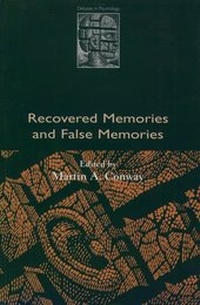
Recovered Memories and False Memories
Published on 20. March 1997
Book
Paperback/Softback
312 pages
978-0-19-852386-4 (ISBN)
Description
The question of whether memories can be lost, particularly as a result of trauma, and then "recovered" through psychotherapy has polarised the field of memory research. This is the first volume to bring together leading memory researchers and clinicians with the aiming of facilitating a resolution to this question. The volume offers a unique and timely summary of the theories of memory recovery, and how false memories may be created. Some of the first research relating to the phenomenal characteristics of memory recovered is reported in detail, suggesting important avenues for new research. Theories of autobiographical memory, implicit memory, reminiscence, and the effects of repeated recall on memory are included. Recovered memories and false memories provides the most current and authoritative thinking in this area, and will be an essential sourcebook for memory researchers and psychotherapists.
Reviews / Votes
For anyone who wants a review of much of the relevant evidence on the vagaries and distortions of human memory, placed in the context of memories of putative or real childhood sexual abuse, this will be a good and authoritative source. * The Times Higher *More details
Series
Language
English
Place of publication
Oxford
United Kingdom
Target group
Professional and scholarly
Illustrations
numerous line drawings
Dimensions
Height: 234 mm
Width: 156 mm
Thickness: 19 mm
Weight
500 gr
ISBN-13
978-0-19-852386-4 (9780198523864)
Copyright in bibliographic data and cover images is held by Nielsen Book Services Limited or by the publishers or by their respective licensors: all rights reserved.
Schweitzer Classification
Person
Content
1. Introduction: What are memories? ; 2. The troublesome unknowns about trauma and recovered memores ; 3. Events spoken and unspoken: implications of language and memory development for the recovered memory debate ; 4. The recovered memory debate: a cognitive neuroscience perspective ; 5. Suffering from reminiscences: exhumed memory, implicit memory, and the return of the repressed ; 6. Recovery of true and false memories: paradoxical effects of repeated testing ; 7. Past and present: recovered memories and false memories ; 8. Reasoning about repression: inferences from clinical and experimental date ; 9. Delayed memories of child sexual abuse: critique of the controversy and clinical guidelines ; 10. Remembering and forgetting traumatic experiences: a matter of survival ; 11. Taking the middle line: can we accommodate both fabricated and recovered memories of sexual abuse?