

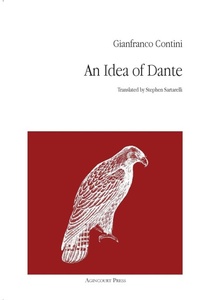
An Idea of Dante
Published on 20. December 2021
Book
Paperback/Softback
292 pages
978-1-946328-31-1 (ISBN)
Description
This volume brings together all of Gianfranco Contini's essays on Dante. The collection opens with his Introduction to the Rime of Dante, a text he wrote in 1938 that has remained a point of reference for Dantean exegesis ever since. It is followed by a close reading of a famous sonnet from La vita nuova; a portrait of Dante as both character and poet in the Divine Comedy; an essay on Dante's relevance to our times; a comprehensive critical survey he calls "One Interpretation of Dante"; a methodological analysis titled "Philology and Dantean exegesis"; a "guide" to the poetry of Cavalcanti, to his relations with Dante, and to his presence in the Divine Comedy; and close readings of two Cantos of the Divine Comedy, Inferno III and Paradiso XXVIII. A series of commentaries on specific questions concludes the volume, which stands as an ideal introduction to the Dantean universe.
More details
Language
English
Place of publication
United States
Product notice
Paperback (trade)
Unsewn / adhesive bound
Dimensions
Height: 210 mm
Width: 140 mm
Thickness: 17 mm
Weight
406 gr
ISBN-13
978-1-946328-31-1 (9781946328311)
Copyright in bibliographic data and cover images is held by Nielsen Book Services Limited or by the publishers or by their respective licensors: all rights reserved.
Schweitzer Classification
Person
Gianfranco Contini (1912-1990) was one of the foremost literary critics and Romance philologists of 20th century Italy, whose academic career allowed him to shine as well as a lecturer at the Universities of Freiburg and Florence and the Scuola Normale Superiore of Pisa. But he is perhaps best known as the scholar whose extensive comparative research and textual analysis has contributed largely to our contemporary understanding of the writings of Dante, methods which also informed his vital engagement with the principal Italian authors of his time, from Montale and Svevo to Pasolini and Gadda.