


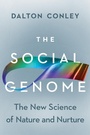
The Social Genome
The New Science of Nature and Nurture
Published on 2. May 2025
Book
Hardback
304 pages
978-1-324-09263-6 (ISBN)
Description
For decades, Dalton Conley tried to answer the big social questions-about why groups hold together, about inequality, and more-through the traditional tools of his first field, sociology. He eventually found that those tools could take him only so far. So he went back to school and got another PhD-in biology. Now, in The Social Genome, Conley explains how the new field he has helped to pioneer, sociogenomics, will upend our world. The key is the polygenic index, which allows us to analyse DNA to broadly predict a child's future-not just their height or their weight, but how they may be expected to fare in school, and much more. He argues that we should no longer think of nature versus nurture but of how our genes need nurture to work and how, in turn, our environments are made partly from the genes of other people. The implications of this new science-for our sense of self, for our social policies-are vast.
Reviews / Votes
"[A] mind-twisting journey... The Social Genome will have you pondering all the genes and judgments that drove what you presumed were random coincidences, hard-won successes and measured choices." -- The New York Times "A compelling refutation of the conventional nature-nurture dichotomy while transforming our understanding of what shapes human behavior." -- Psychology TodayMore details
Language
English
Place of publication
New York
United States
Dimensions
Height: 232 mm
Width: 155 mm
Thickness: 34 mm
Weight
568 gr
ISBN-13
978-1-324-09263-6 (9781324092636)
Copyright in bibliographic data and cover images is held by Nielsen Book Services Limited or by the publishers or by their respective licensors: all rights reserved.
Schweitzer Classification
Other editions
Additional editions
E-Book
03/2025
W. W. Norton & Company
€27.99
Available for download